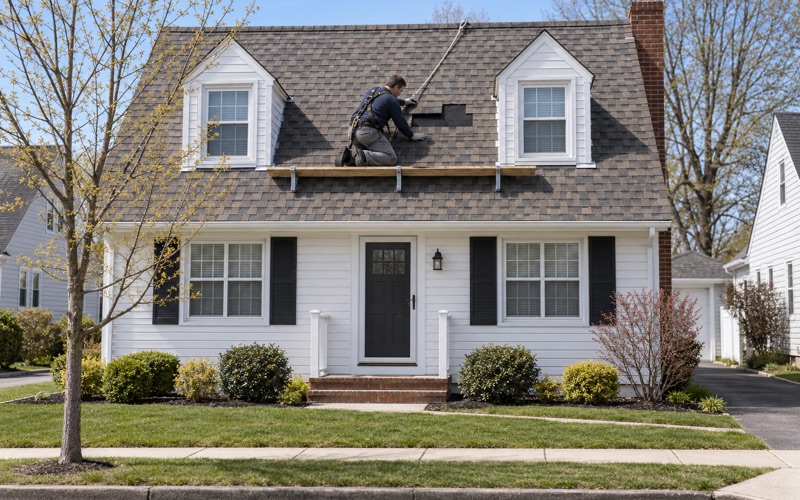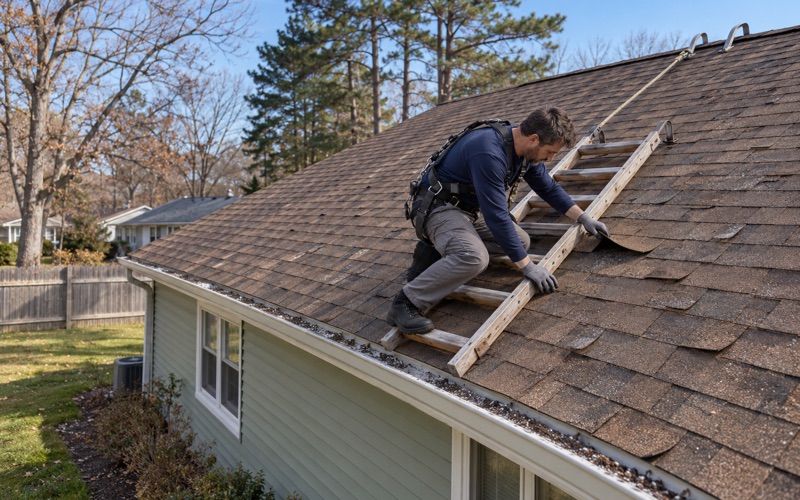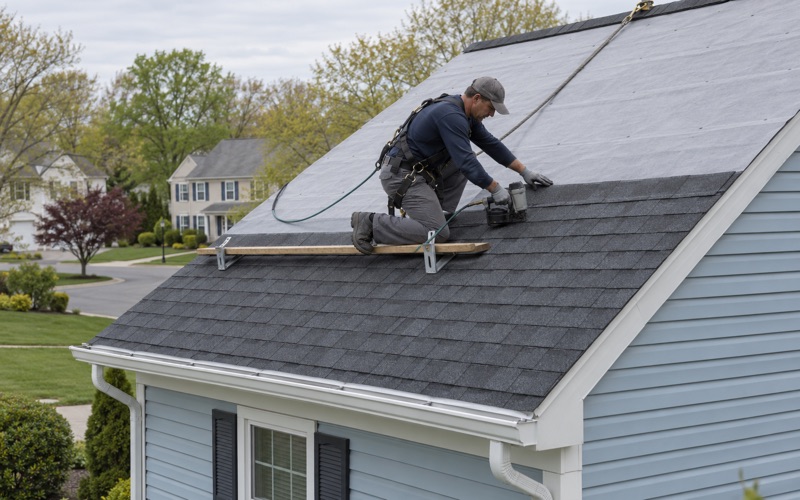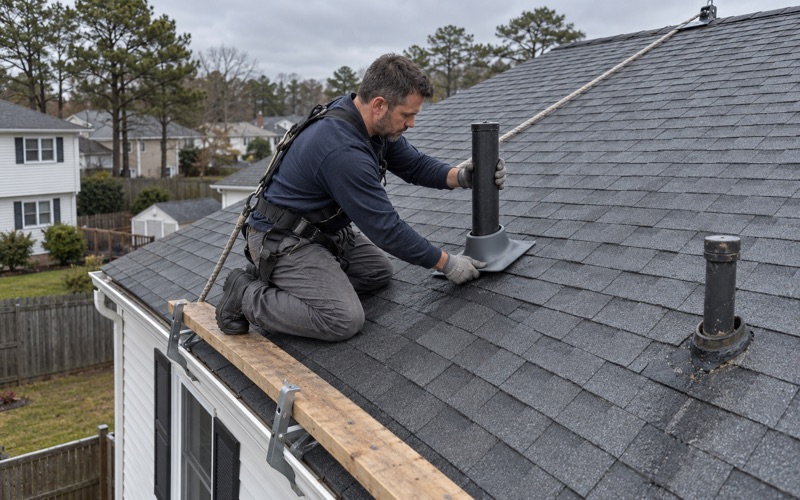
Brick Roofing has handled roofing in West Belmar and the surrounding shore towns for more than 20 years, and on the older houses here most of our planning goes into what sits under the shingles rather than the shingles themselves. A roof that has been replaced several times keeps its history hidden until the old layers come off. We price the work so that history does not become a surprise on the second day of the job.
Our written estimates break a replacement into separate lines for tear-off, decking, underlayment, flashing, ventilation and gutters. That lets you set our number beside another contractor’s and see exactly where the two differ, instead of comparing two totals that quietly cover different work.
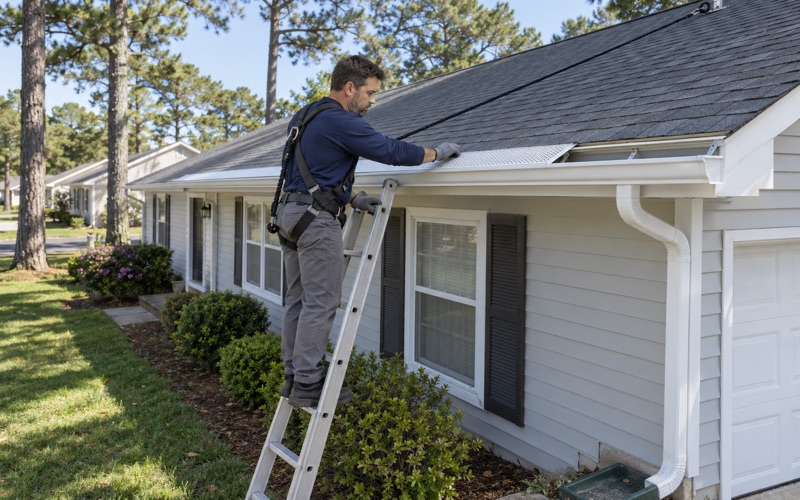
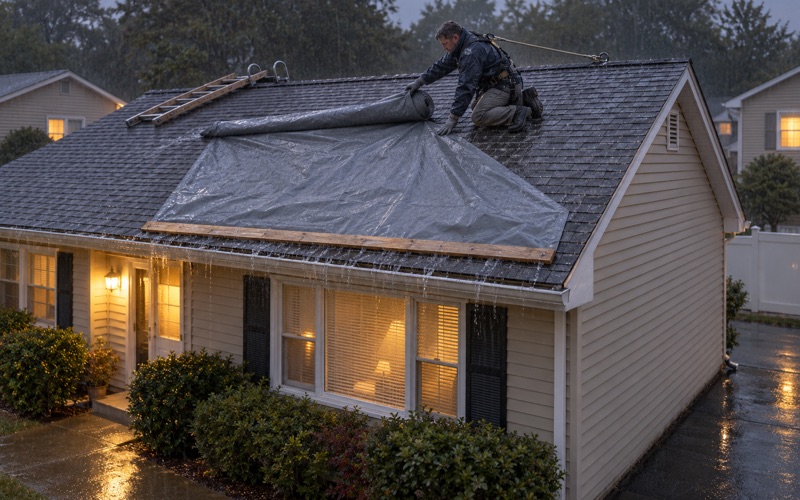
If you called about a leak rather than a whole roof, we start with whether it can be repaired. We check the attic as well as the roof surface, follow the water back to where it actually gets in, and give you a straight answer on repair before replacement is ever part of the conversation.
West Belmar’s Prewar Houses
A Neighborhood Built Before the War
West Belmar holds one of the older stocks of housing in this part of the shore. Of the 1,240 housing units counted in the Census Bureau’s 2024 five-year American Community Survey, 567 were built in 1939 or earlier, which is 45.7 percent. Add the 188 built during the 1940s and the total reaches 755 units, or 60.9 percent, standing before 1950.
The census history tells the same story from another direction. Wikipedia records 2,058 people here at the 1950 census, against 2,459 in the 2020 census, so the neighborhood was already largely settled more than 70 years ago. Most of the houses we would be working on have sheltered families for three generations or more.
Detached Houses, Each With Its Own Roof
The same survey counts 1,158 of those units, or 93.4 percent, as one-unit detached houses. That matters for planning because every roof is its own project with its own past, rather than one section of a shared building. Two houses on the same block may have been reroofed in different decades with different materials and different shortcuts.
Most of these homes are lived in by their owners, so the person who hires us is usually the person who will live under the result for the next 20 or 30 years. We write the scope with that in mind, aiming for a roof that suits the house rather than the quickest pass over it.
Part of Wall Township
West Belmar is a census-designated place inside the Township of Wall in Monmouth County, not part of Belmar borough, even though it shares the 07719 ZIP code. Its western edge is Route 35, also called River Road, and Route 71 runs through its east side. When a question about local rules comes up, Wall Township is the government that answers it.
Looking for roofing closer to Pine Lake Park? See Roofing in Pine Lake Park.
What a Tear-Off Finds on an Older Roof
More Than One Generation of Roofing
A house built in 1939 or earlier has very likely worn several roofs by now. Some of those replacements were full tear-offs, and some were done by nailing new shingles straight over the old ones, a common shortcut for decades. No record describes what lies under any particular West Belmar roof, so we treat the layer count as something to confirm rather than assume.
We look at the eaves, the rakes and any spot where the layers show before we write a number. That gives a reasonable estimate, but the real count is only settled once the crew strips the roof. New Jersey’s rehabilitation subcode, N.J.A.C. 5:23-6, calls for a tear-off rather than another overlay when two or more layers are already in place, so a hidden second layer changes the job.
Why We Take It Down to the Deck
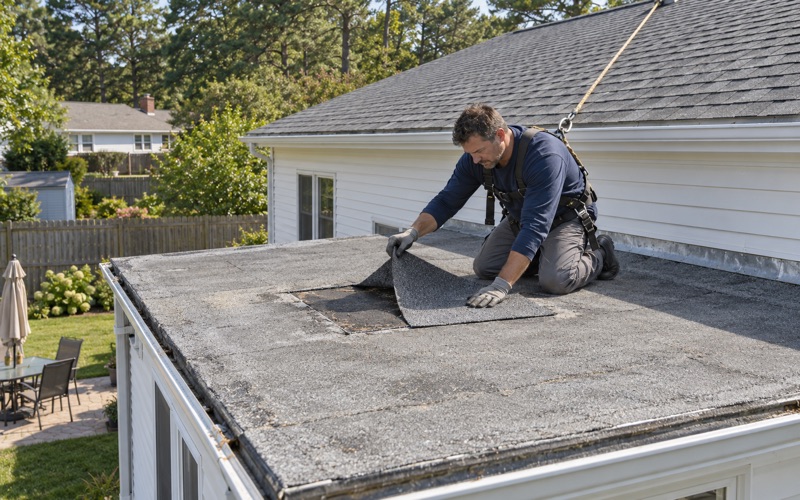
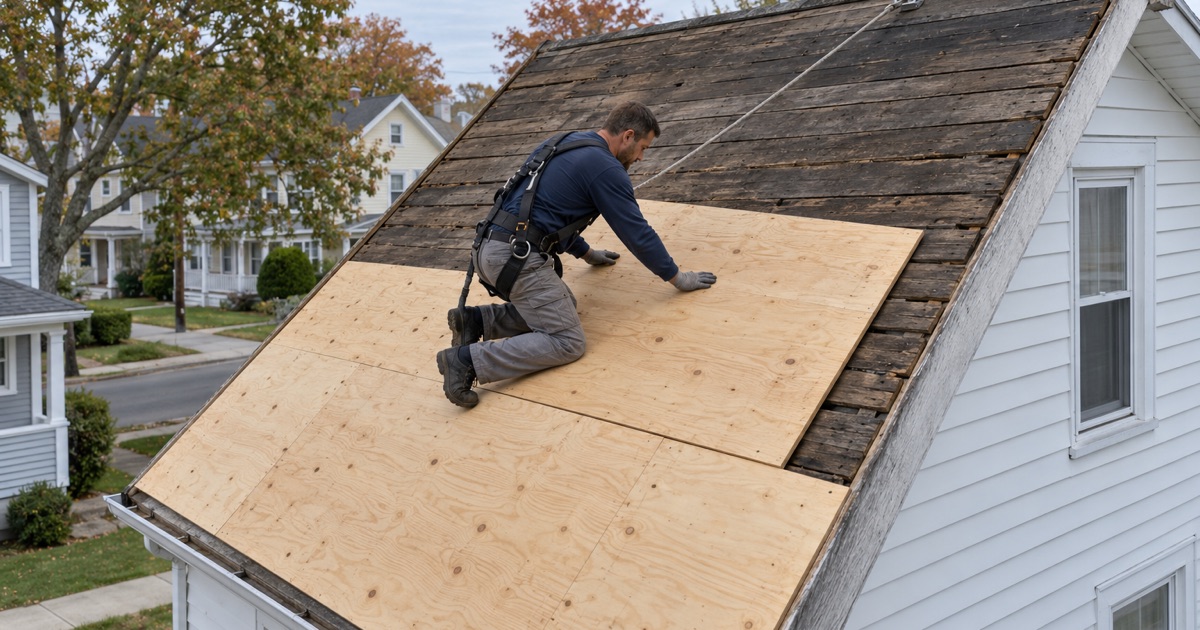
On a roof this old we nearly always recommend a complete tear-off. An overlay hides the condition of the boards, adds weight to framing that has been carrying roofs for decades, and leaves nothing to inspect. Stripping the old material lets us see the sheathing, the rafters and the flashing details before anything new is fastened down.
Removing several layers also produces more debris than a newer house would, from shingles, old felt and loose nails. Our crew cleans the yard, driveway and gutters at the end of each working day and runs a magnet sweep for roofing nails, so a multi-day job never leaves the property hazardous overnight.
What We Photograph When It Comes Off
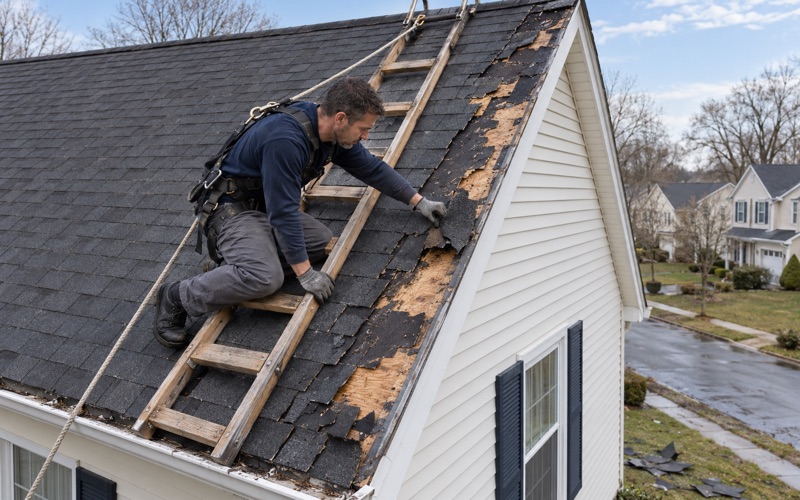
Anything we find once the roof is open is photographed and shown to you before it is fixed. That includes soft or broken decking, staining from old leaks around the chimney, and any framing that looks like it has shifted. You see the same evidence we do, and the decision about what happens next stays with you.
Board Decking, New Plywood and Older Rafters
Boards Under the Shingles
Many houses from the prewar decades were sheathed with individual boards instead of plywood sheets, which became common later. We cannot say which West Belmar houses have board decking until the old roofing is off, but on homes of this age it is a likely find. Boards can be perfectly sound, yet they often have gaps between them, split ends and holes left by each earlier roof’s nails.
Today’s shingles are designed to be fastened into a continuous, solid deck. Where the boards are in good shape, we may sheathe over them with new plywood so every nail has consistent holding power. Where they are rotted or badly split, the damaged boards come out first and the new deck goes on over sound wood.
Pricing Re-Decking Fairly
Because nobody can know the condition of the deck in advance, our contract sets a per-sheet price for replacement decking before work starts. If the crew finds damage, you get photographs and a count, and the cost follows the agreed rate rather than a figure written on the spot. If the decking turns out to be sound, you pay for none of it.
On an older home, this is the line that most often separates two estimates. One contractor may include a full re-deck, while another includes nothing and adds it once the roof is open. Because we list decking apart from tear-off and underlayment, you can see exactly what each quote assumes about the wood underneath.
Rafters That Have Carried Several Roofs
The rafters on an 80-year-old house have held up every roof it has worn, sometimes two or three layers at once. Once the deck is exposed, we look for sagging lines, cracked members and old repairs. Many are perfectly serviceable, but any that need attention are flagged before new sheathing covers them again for another few decades.
Framing work is treated differently from the roof covering itself. In New Jersey, replacing the roof covering on a detached one- or two-family house is ordinary maintenance that needs no permit under N.J.A.C. 5:23-2.7(c)1.x, but work affecting the structure is excluded under 5:23-2.7(b). If a rafter needs repair, we explain what that changes before any of it goes ahead.
Planning an Estimate on an 80-Year-Old House
What We Look At Before Quoting
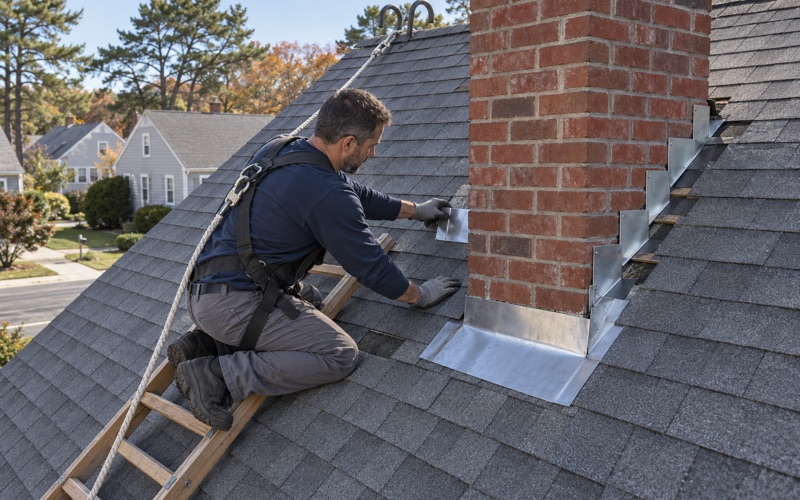
Our visit starts in the attic, where the underside of the deck tells us more than the shingles do. Water stains, daylight between boards and darkened rafters point to where trouble has been. On the roof we check the chimney flashing, the valleys, the drip edge and the vents, because older houses often carry mixed details from several repair eras.
Ventilation deserves its own look on a prewar house. Many were built long before ridge vents with soffit intake were standard practice, so the attic may have very little airflow. We note what exists and write any ventilation change as its own line, so you can weigh it separately from the shingles.
Wind, Salt Air and Materials
West Belmar sits in the National Weather Service’s Eastern Monmouth forecast zone, NJZ014, covered by the Mount Holly office. For shingle choice we go further than a zone: we match the shingle’s wind rating to the design wind speed for your exact address, using an ASTM D3161 Class F or ASTM D7158 Class H product where the address calls for it.
This close to the coast, fasteners and flashing metal matter as much as the shingle. We choose drip edge, flashing and nails suited to salt air and name the metal in the estimate, so you know what is going onto the roof instead of taking it on trust.
Your Contract and Schedule
Our contracts follow New Jersey’s home improvement rules, including written notice of your three-business-day right to cancel. The per-sheet decking price is written in before the first shingle comes off, and you have time to read every line against any other quote before you sign.
If you are away for part of the year, or the house is rented out, we can inspect and photograph the roof while you are elsewhere and send the report the same day. That makes it practical to plan a replacement on an older home here without being on site for every step.
- 20+ Years in Roofing
- Attic and Roof Leak Checks
- Line-Item Written Scopes