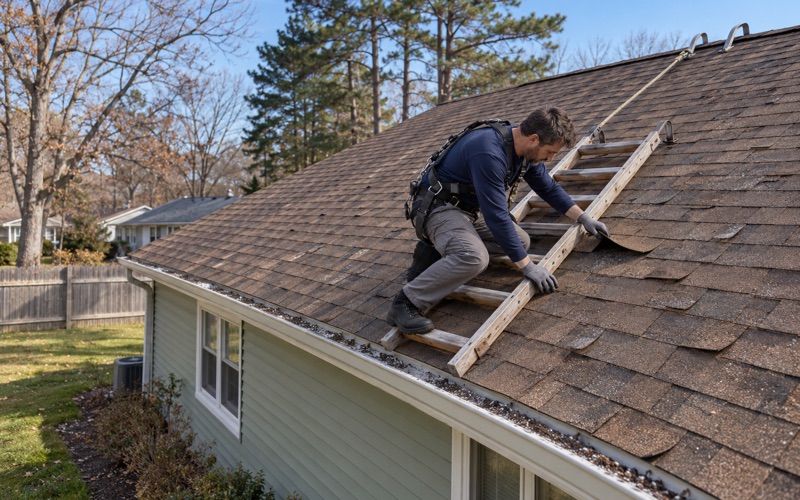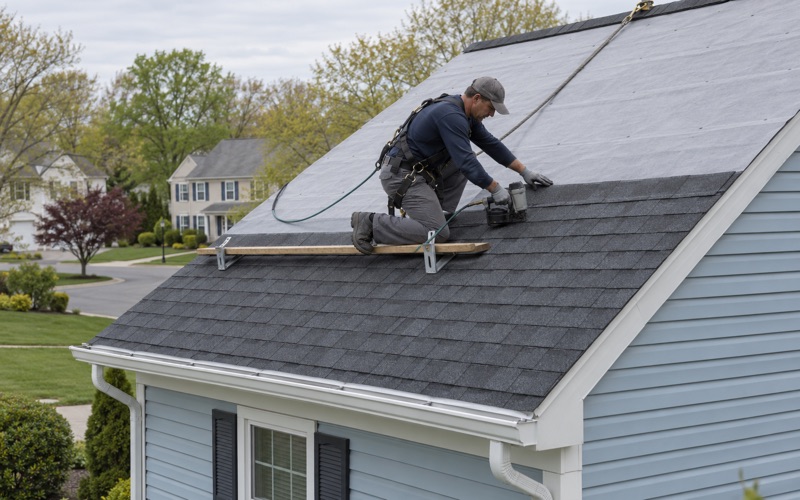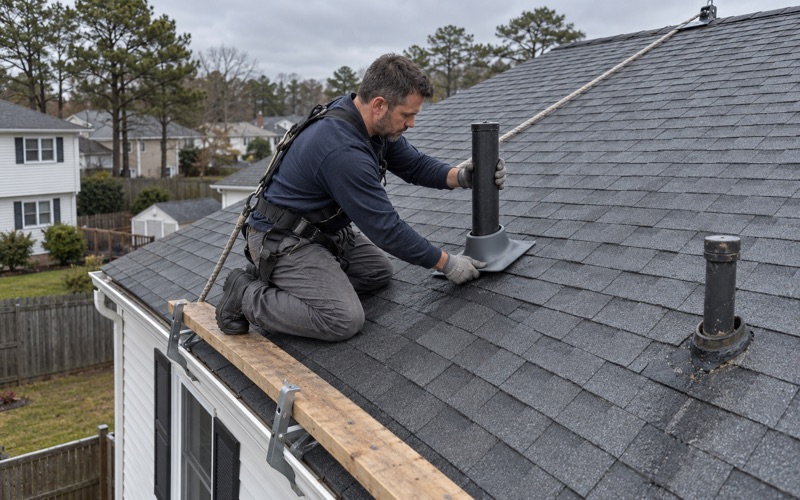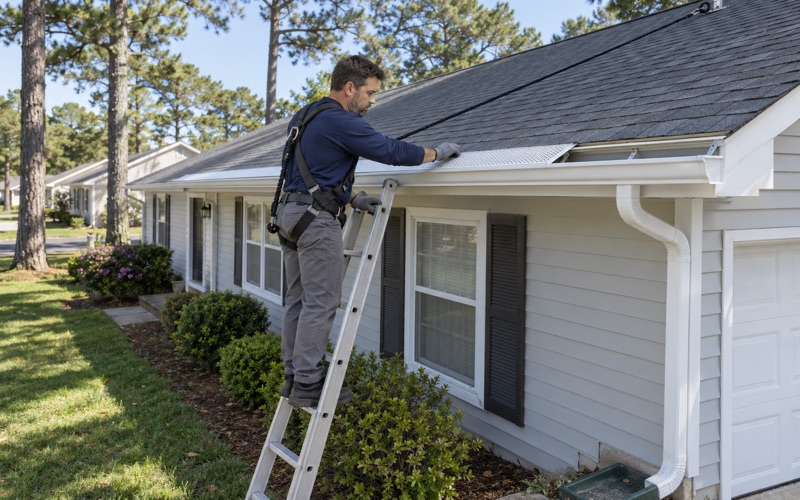
Brick Roofing has handled roofing in Tinton Falls and across the surrounding shore region for more than 20 years, and a growing share of the roofs we look at now carry, or are about to carry, a solar array. That changes the order of decisions. A roof that will sit under panels for decades should be judged before the first rail is bolted down, not after.
We are roofers, not a solar company. We don’t design arrays, draw solar plans or deal with the borough on an installer’s behalf. What we do is tell an owner, plainly, whether the shingles and decking under a proposed array have enough life left to outlast it, and if not, whether a repair will carry the roof or a replacement makes more sense first.
When a roof that already has panels needs work, we build the panel removal and reinstall into the schedule from the first conversation. That way the cost and the timing sit in the written estimate where an owner can see them, rather than turning up as a surprise on the morning the crew arrives.
What Tinton Falls Zoning Says About Rooftop Solar
Twelve Inches on a Pitched Roof
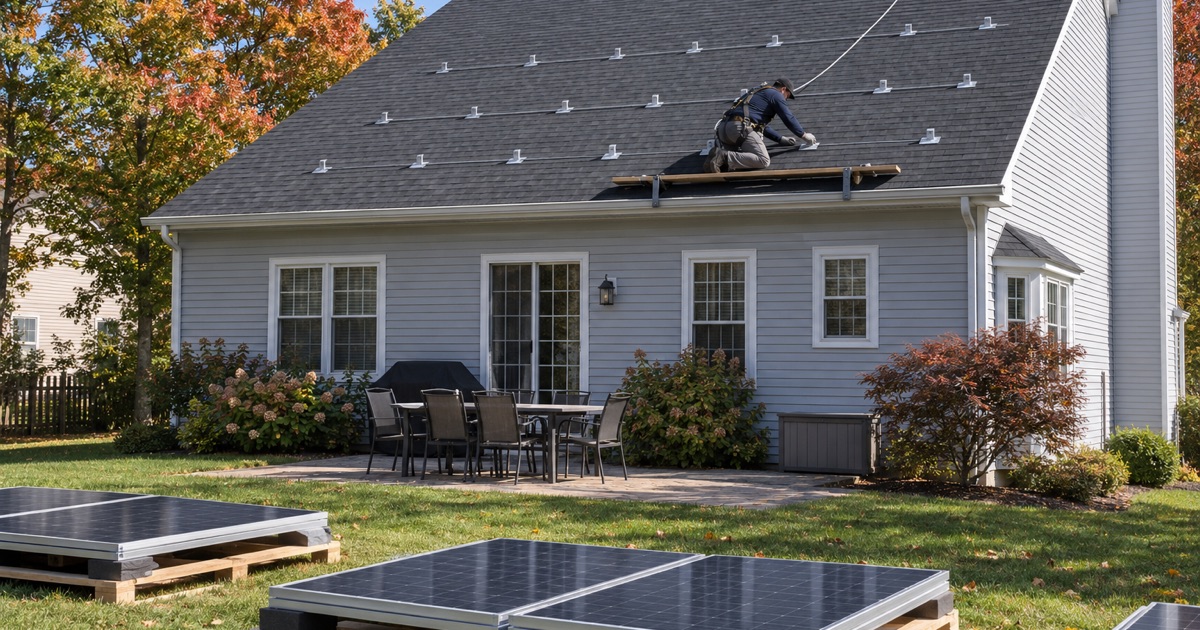
The Borough of Tinton Falls Zoning Office sets a clear limit for arrays on sloped roofs. Its ‘Zoning Permits Required’ page states that rooftop solar arrays shall not exceed a height of 12 inches from the existing roof surface of a peaked roof. On most houses here, that means the panels sit low and tight to the shingles, with little room underneath.
From a roofer’s side, that tight gap matters. Twelve inches leaves space for airflow and racking, but not enough to slide tear-off tools, new underlayment and fresh shingles under a mounted array. Anything beneath the panels is effectively locked in place until the panels themselves come off, which is why the timing of a re-roof deserves thought before installation.
Four Feet on a Flat Roof
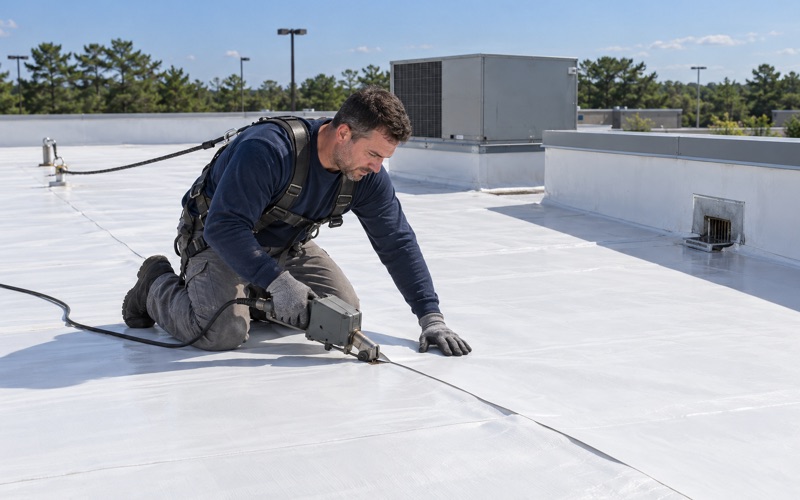
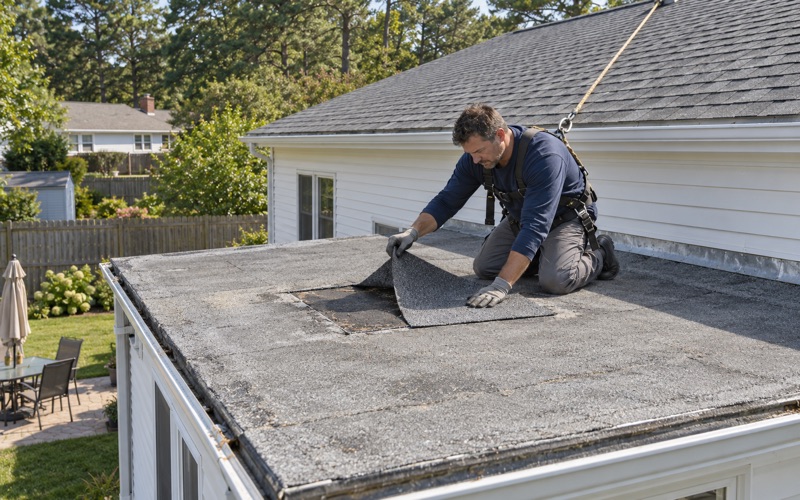
Flat roofs get a different number. The same page says an array on a flat roof may not exceed four feet from the existing roof surface, which allows tilted racking on low-slope membranes such as EPDM, TPO or modified bitumen. Those systems often rest on ballast or attach through the membrane, and both details affect how the roof under them ages.
Even at four feet, the membrane below is hard to inspect and harder to replace. Ponding, seam failure and worn flashing at penetrations tend to go unnoticed when racking blocks the view. We look at a flat roof’s seams, drains and edge metal closely before an array goes up, because getting back to them later means moving equipment.
Plans, Wind Turbines and Ground Mounts
The zoning page also requires that plans for roof-mounted panels include the height of the panels off the roof, and it lists those plans as prepared by the solar company. That paperwork belongs to the installer. Our role is the roof itself, and we stay out of the zoning file entirely, leaving it to the people who design the array.
Two other rules round out the picture. The borough states that wind energy systems shall not be permitted as a rooftop installation, so a turbine is off the table for any house here. Ground-mounted solar is allowed, but no more than 10% of a lot may be devoted to it, which limits how much of a yard an array can take.
Looking for roofing closer to Eatontown? See Roofing Services in Eatontown.
Why a Low-Mounted Array Has to Come Off for a Re-Roof
No Room to Work Underneath
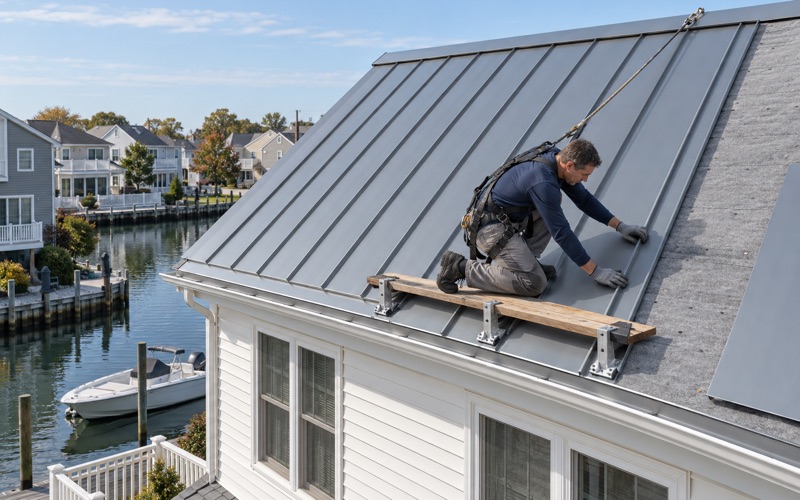
Replacing a roof under panels is not a patch job done around the racking. Tear-off has to reach the deck, damaged sheets have to be cut out, and new drip edge, underlayment and shingles have to run continuously across the whole slope. None of that can happen with an array sitting a few inches above the surface.
General practice across the trade is the same: the panels and racking come off, the roof is replaced, and the array is reset on the new surface. The mounts themselves are part of the roof’s weatherproofing, so each attachment point has to be sealed into the new roof as the panels go back on rather than left to chance.
Mounts Are Roof Penetrations
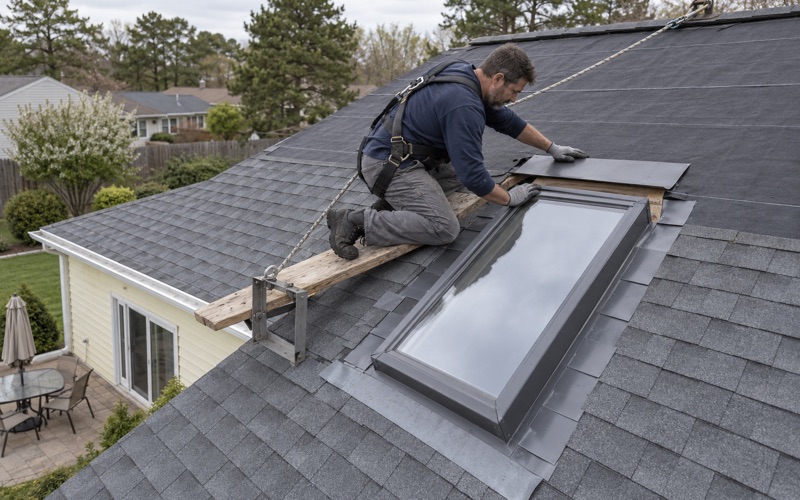
Every rail foot bolted through shingles is a hole in the roof. Done well, each one is flashed and sealed so water sheds around it. Done poorly, or disturbed during a later repair, those penetrations are a common leak source that can stay hidden under the panels for months before a stain finally shows on a ceiling.
When we trace a leak on a solar roof, we start in the attic as well as on the roof. Water stains on decking or rafters below a mount tell us where the water is getting in before anyone prices a repair, and they often point to a single attachment rather than the whole field of shingles.
Sequencing the Work With the Array
A re-roof under an existing array works best as a sequence everyone agrees on in advance. We put the panel removal and reset in our schedule, so the array comes down before tear-off begins and goes back up only after the new roof and its flashing are finished. We confirm that timing with the owner and whoever handles the array before fixing a start date.
Our written scopes list tear-off, decking, underlayment, flashing, ventilation and gutters as separate lines. On a solar roof, that breakdown makes it clear which costs belong to the roof and which belong to moving the panels, so an owner comparing two estimates can line them up item by item instead of guessing.
Judging the Roof’s Remaining Life Before Panels Go Up
A Housing Stock Built Mostly Since 1980
Tinton Falls grew quickly in the decades after it became a borough. The census counted 7,740 residents in 1980 and 15,053 by 2000, and Census Bureau estimates show 6,947 of the borough’s 9,124 housing units were built in 1980 or later. Of all those units, 4,057 are detached houses, each with a roof its owner has to plan around.
A large share of that stock dates from the 1980s and 1990s. Some of those houses are on a second roof by now, while others still carry an aging first one. Either way, the age of the existing shingles, rather than the age of the house, is what matters when an array is about to be mounted on top of them.
What We Check Before the Array
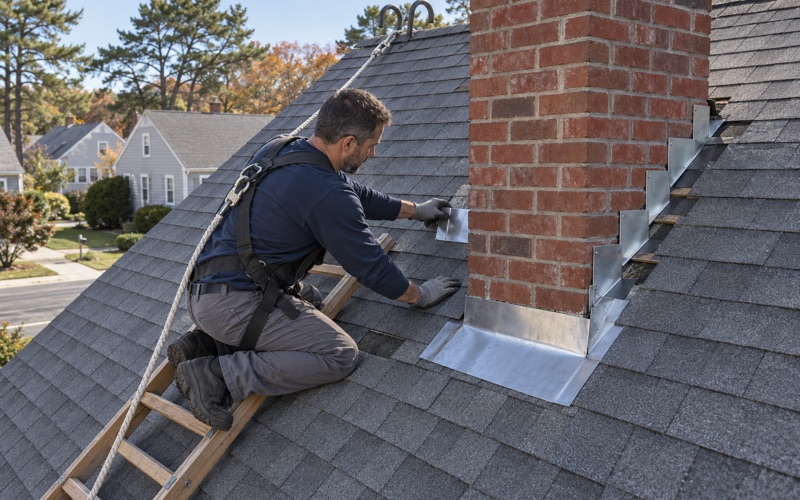
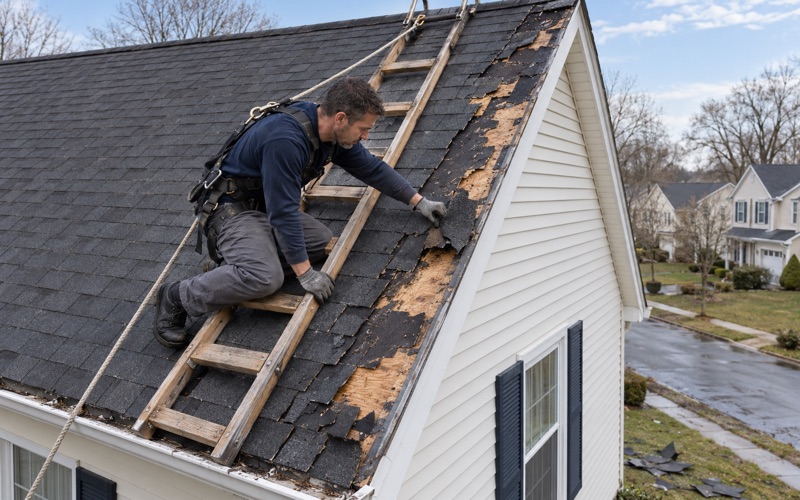
Before panels go up, we inspect the shingles for granule loss, curling and brittle tabs, and we check the decking from the attic for soft spots, delamination or past water staining. We also look at the flashing at chimneys, walls and vents, since those are the details a low-mounted array will make hard to reach later.
We check ventilation too. A roof with poor soffit intake or a blocked ridge vent ages faster, and the shade from a solar array changes how the surface heats and cools through the day. Fixing an airflow problem while the roof is clear is far simpler than discovering it once panels cover most of the slope.
Repair, or Replace First
We give a straight answer on whether a roof can be repaired before replacement ever comes up. If the shingles have years of service left and the problems are local, a repair and a careful flashing check may be enough. If the roof is near the end of its life, replacing it before the array goes on usually avoids paying to move the panels later.
Where replacement makes sense, we match shingle wind ratings to the design wind speed for the exact address rather than a borough-wide assumption. The borough sits in the National Weather Service’s Western Monmouth forecast zone, but the rating that counts is the one tied to the house itself, under New Jersey’s address-specific design wind speed approach.
Pricing Panel Removal and Reset Into a Later Roof
Put It in the Estimate From the Start
If an array is already on the roof, any replacement estimate should account for lifting and resetting it. We list that work on its own line so it is not buried in a lump sum, and we schedule it alongside tear-off and installation rather than treating it as an afterthought added once the crew is already on site.
We do not quote incentive values, energy savings or payback figures, and owners should get those from the solar company and their own advisers. Our estimates stick to roof work: materials, labor, decking, flashing around the mounts, and the coordination needed to get the panels off and back on without damaging the new surface.
Decking and Flashing Under the Panels
Decking under a long-mounted array can hide damage that only shows once the shingles come off. When we find it, we photograph the damaged sheets and show the owner before replacing them, at the per-sheet price already set in the contract. That keeps a hidden cost from becoming an open-ended one.
We also plan the layers the reset array will sit on. Self-adhering ice and water barrier goes where the roof needs it, and the attachment points are laid out with the new underlayment and shingles in mind, so the penetrations are sealed into the new system rather than patched over it afterward.
Contracts, Permits and Cleanup
Replacing the roof covering on a detached one- or two-family house is ordinary maintenance under N.J.A.C. 5:23-2.7 and needs no construction permit. Work that affects structure goes beyond that, and the borough’s Construction Department at 556 Tinton Avenue handles those cases. Our contracts follow New Jersey’s home improvement rules, including the three-day cancellation notice.
At the end of every work day, we clean the yard, driveway and gutters and run a magnet sweep for nails. On a solar job that matters twice: once after tear-off, and again after the panels are reset, so nothing is left behind on the lawn or in the gutters once the roof is finished.
- 20+ Years in Roofing
- Attic and Roof Leak Checks
- Line-Item Written Scopes