
Brick Roofing provides storm damage roof repair in Brick, NJ, serving surrounding cities including Point Pleasant, Leisure Village East, Brielle, Point Pleasant Beach and Leisure Village. Over 20+ years we have worked through nor’easters, tropical storms and the long recovery after Sandy, and we know how a storm’s wind, rain and falling trees actually break a roof at the shore.
Storm work has two parts, and both matter. The first is the record: dated photographs and a written description of what the storm did, which you will need for an insurance claim. The second is the repair itself, done with materials and fastening suited to the wind your house actually faces, so the same weak point does not fail again in the next storm.
We are straight about what we find. Some roofs come through a storm with damage that is easily repaired. Others were already worn, and the storm simply exposed that. Our report separates storm damage from existing wear, because mixing the two up is one of the most common reasons roof claims get questioned.
Types of Storm Damage
Wind Damage
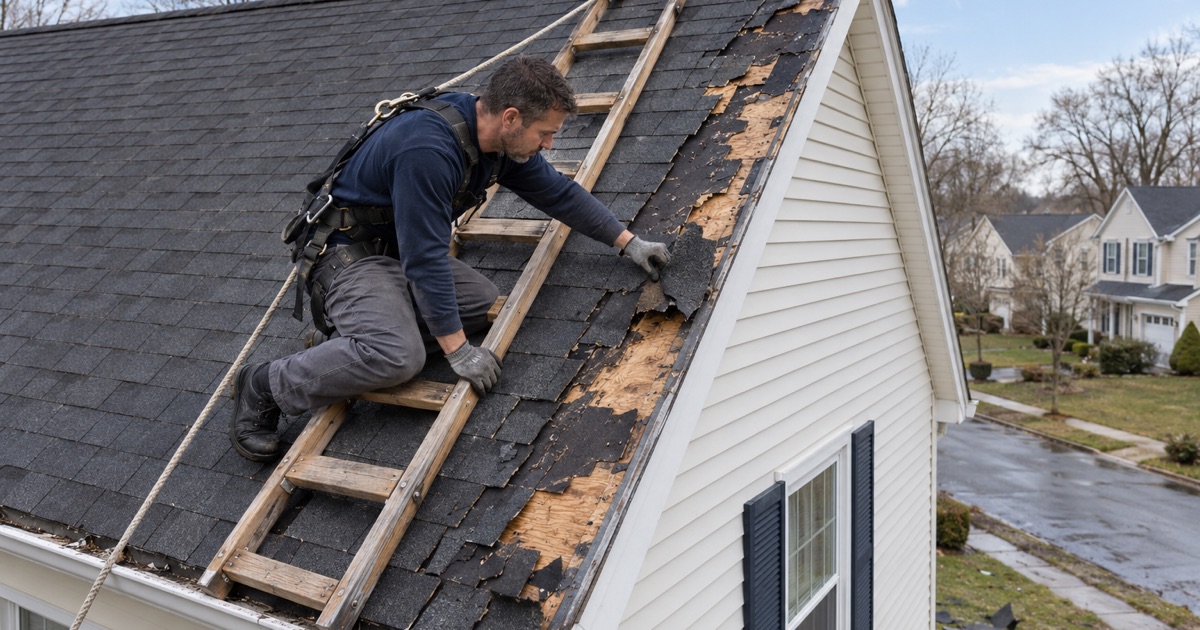
Wind lifts shingles, breaks the adhesive strips that hold them down, and tears off tabs, ridge caps and edge pieces. A shingle that has been lifted and creased may lie back down looking normal, but its seal is broken and it will lift again easily. We check slopes facing the storm closely, along with ridges, rakes and eaves, where wind damage usually starts.
Wind-driven rain is the other half of the problem. During a nor’easter, rain blows sideways for hours and gets under shingles and flashing that keep ordinary rain out. Leaks that only appear in these storms usually trace back to a lifted shingle or a gap in the flashing on the windward side.
Fallen Trees and Branches
Limbs and whole trees can puncture the roof deck, crack rafters and tear gutters away. Even a branch that bounced off may have cracked shingles or dented flashing. We inspect the full impact area, including the attic, because framing damage often reaches well beyond the visible hole in the roof.
Flashing, Vents and Gutters
Storms pull chimney and wall flashing loose, dent and dislodge vents, and bend or rip gutters from the fascia. These are easy to miss from the ground and often lead to leaks weeks later. Our inspection covers every penetration, every flashed joint and the full run of the gutters.
Documenting the Damage
Photographs and a Written Report
We photograph the damage from the roof and from inside the attic, with dates, and write up what was found and what repair it needs. The report separates storm damage, such as creased, torn or missing shingles and impact marks, from existing wear like granule loss and curling, so your claim describes what the storm actually did.
Meeting Your Adjuster
When you ask, we meet your insurance adjuster at the house and show them the damage directly. Seeing the creased shingles, torn flashing or cracked decking in person tends to settle questions faster than a description relayed by phone. We provide the documentation; the negotiation of the claim stays with you, your insurer or a licensed public adjuster you choose to hire.
Hurricane Deductibles and Your Policy
New Jersey allows a separate hurricane deductible only when the National Weather Service declares a named hurricane with 74 mph sustained winds measured in the state. After Hurricane Irene, DOBI Bulletin 11-16 confirmed no hurricane deductible could be applied, and Sandy deductibles were barred as well. Most storms that damage roofs here are nor’easters or windstorms under your ordinary deductible.
Repairing After a Storm
Stopping Further Damage First
Where the roof is open, we tarp and secure it straight away, extending the cover well beyond the damage and fastening it into the structure so it holds in the next wind. Keeping more water out protects ceilings, insulation and belongings and shows that reasonable steps were taken to limit the loss.
Wind-Rated Repairs
Permanent repairs use shingles and fastening suited to the design wind speed for your exact address, which New Jersey points to through the ASCE 7 hazard tool referenced in DCA Bulletin 19-1. On exposed homes we use the high-wind nailing pattern, so replacement shingles hold to their rating rather than lifting again in the next storm.
Near the ocean, Barnegat Bay and the rivers, we also replace storm-damaged flashing and drip edge with metal and fasteners suited to salt air. Storms often reveal fasteners that were already corroding, and replacing them with the right material makes the repaired area stronger than it was before.
Repair or Replacement
If the damage is limited, a repair is the right answer. If the storm damaged most of the slopes, or the roof was already near the end of its life, replacement may make more sense. We tell you which applies and why, with photographs, before any work is priced.
Storms at the Shore
Lessons From Sandy
Hurricane Sandy damaged thousands of homes in Brick in October 2012, with the heaviest losses on the barrier island. Many homes were later raised or rebuilt, with more than 1,000 residents applying for RREM funding. Raised homes need lift access, staging and fall protection for storm repairs, which we plan before work starts.
Flood Zones and Substantial Damage
For homes in FEMA flood zones VE and AE, the total cost of storm repairs can matter. When repairs reach 50 percent of the building’s market value, the substantial improvement rule can bring elevation and other requirements. Our itemized scopes give township Engineering and your own advisers an accurate repair figure.
Seasonal Homes After a Storm
If you are away when a storm passes, we can inspect and photograph your roof, secure any openings and send the report the same day. You can start a claim and plan the repair without driving down to the shore first, and the damage is contained before it spreads through an empty house.
- 20+ Years in Roofing
- Attic and Roof Leak Checks
- Line-Item Written Scopes