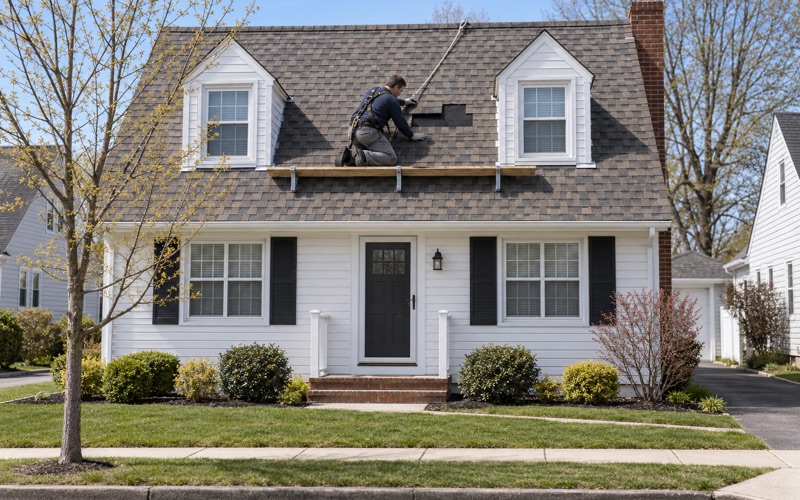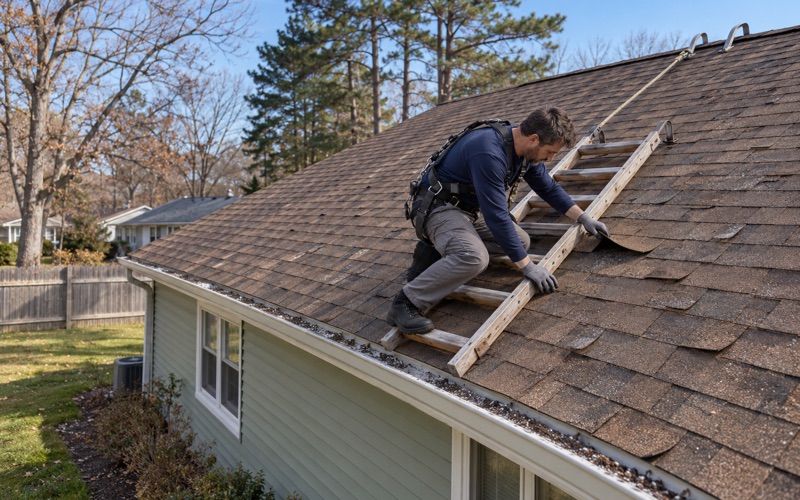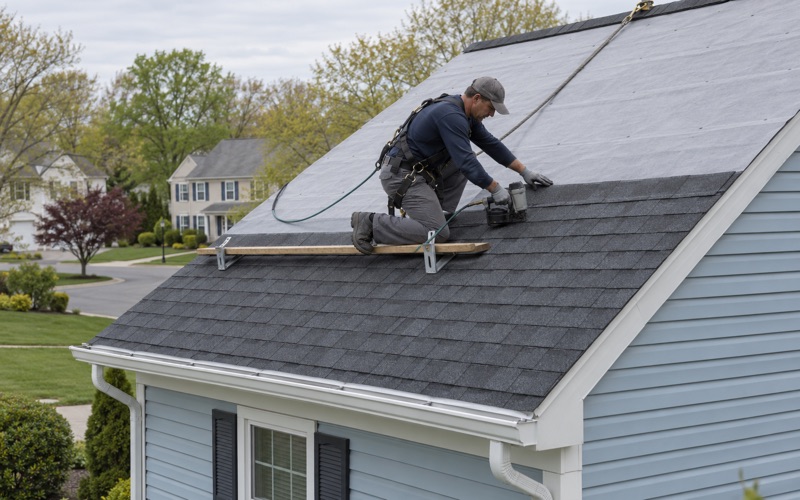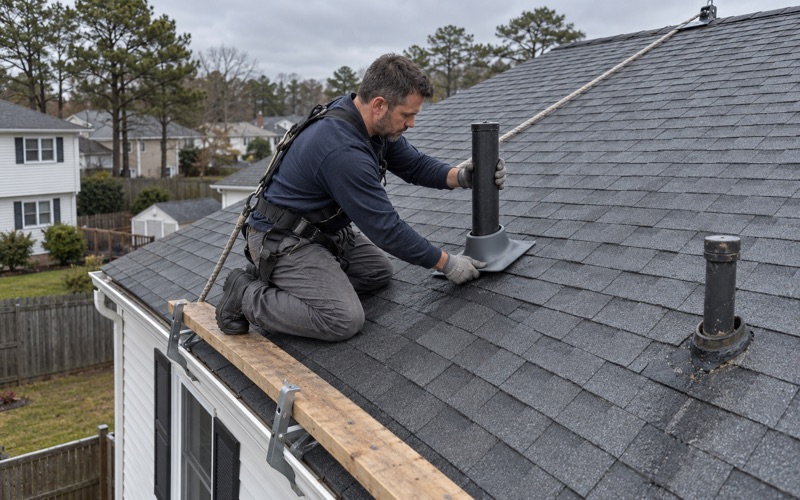
Brick Roofing has spent more than 20 years on roofing in Spring Lake Heights and the surrounding shore towns, and a large share of the calls we take here come from people who own a building rather than live in one. A landlord with a stain on a top-floor ceiling needs the same thing a homeowner does: someone who finds the water, says plainly what it will take to stop it, and writes that down in a form that can be checked.
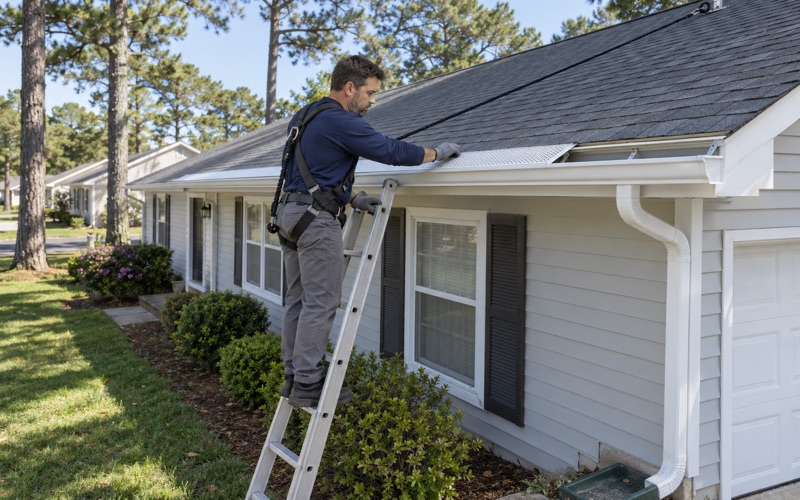
Our first visit on any leak goes both directions. We climb the roof, and we also get into the attic or the top-floor ceiling space, because water that shows up over one unit often entered several feet away. Tracing it before we price anything is how a small flashing repair stays a small flashing repair, instead of turning into a quote for a roof that still had years left in it.
If a roof can be repaired, we tell you that first. Replacement comes up only when the repair would be throwing money at material that has run out of life, and when it does, the estimate breaks tear-off, decking, underlayment, flashing, ventilation and gutters into their own lines so an owner can lay it beside another bid and compare it item by item.
A Borough of Apartment Buildings as Much as Houses
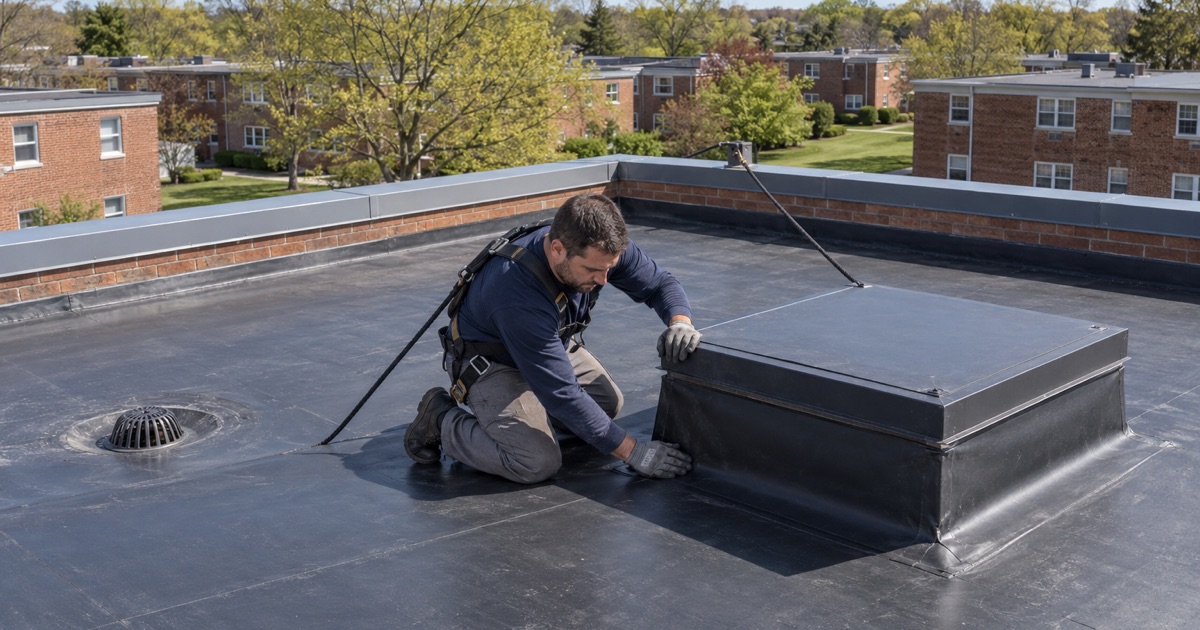
Spring Lake Heights reads like a small residential borough on a map, but its housing tells a different story. According to the Census Bureau’s 2024 five-year American Community Survey, 928 of the borough’s 2,777 homes sit in buildings of three or more units. That includes 315 homes in buildings of 10 to 19 units and 258 in buildings of 50 or more, so a roofer working here spends real time on roofs that cover many households at once.
Who lives under those roofs
The same survey counts 938 renter households in the borough, about 38.4% of occupied homes, and 833 of them live in buildings of three or more units. That means nearly every renter in town depends on a landlord, a management company or an owner group to keep the roof overhead sound. When that roof fails, it is rarely one family’s problem; it is a hallway, a stairwell and several ceilings.
For the owner, that changes the arithmetic of a repair. A leak left for a season over a top-floor apartment can mean drywall, insulation and a tenant complaint on top of the roofing itself. We plan our visits around occupied buildings, give notice for work above living space, and leave the grounds, parking areas and gutters cleaned each evening, including a magnet sweep for loose nails where tenants walk and park.
The age of the building stock
Most of the housing in Spring Lake Heights went up between 1960 and 1989, roughly 1,822 units or about 65.6% of the total. Roofs on buildings from that era have usually been replaced at least once, and some carry more than one layer. Under New Jersey’s rehabilitation subcode, a roof with two or more existing layers has to be torn off rather than covered again, which affects both the scope and the price.
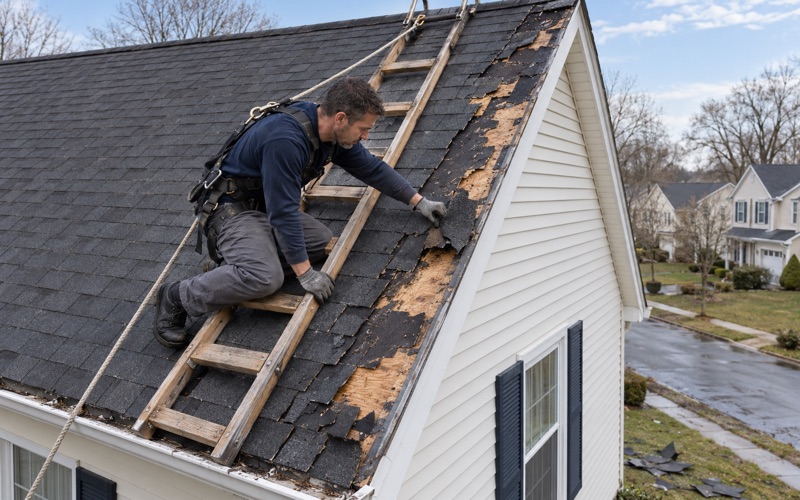
Older decking is the other thing we watch for. Once the old covering is off, we photograph any sheathing that is soft or delaminated and show it to the owner before it is replaced, at a per-sheet price already written into the contract. On a large apartment roof, that single clause is often the difference between a predictable job and an argument halfway through it.
Looking for roofing closer to Wall? See Roofing in Wall.
When New Jersey Treats a Building as a Multiple Dwelling
New Jersey draws a firm line at three dwelling units. Hotels and multiple-family buildings of three or more units fall under the Department of Community Affairs Bureau of Housing Inspection, and the state calls them multiple dwellings. That category covers condominiums, cooperatives and mutual housing corporations as well as ordinary rental buildings.
Registration and the five-year cycle
Owners of a multiple dwelling register each building with the Bureau of Housing Inspection and recertify it every year. The law also calls for a five-year cyclical inspection of these buildings. For a landlord in Spring Lake Heights, that means the condition of the building, roof included, is part of a recurring state process rather than something that only matters when a tenant calls.
There are exceptions, and they matter. A condominium section of not more than four units with owner-occupied homes can be exempt, so not every three-unit building ends up in the same position. The state also runs a program called SLCHIP that lets participating municipalities perform these inspections; we have not confirmed whether the borough takes part, so owners should check with the bureau about how their own building is handled.
Where we fit, and where we do not
We are roofers, not inspectors, and we play no role in the state’s housing inspection process. What we can do is give an owner an honest written account of the roof’s condition: what is failing, what is wearing, what still has life, and what it would cost to deal with each. That record is useful whenever the owner is planning ahead for maintenance, budgeting a capital project or answering a tenant.
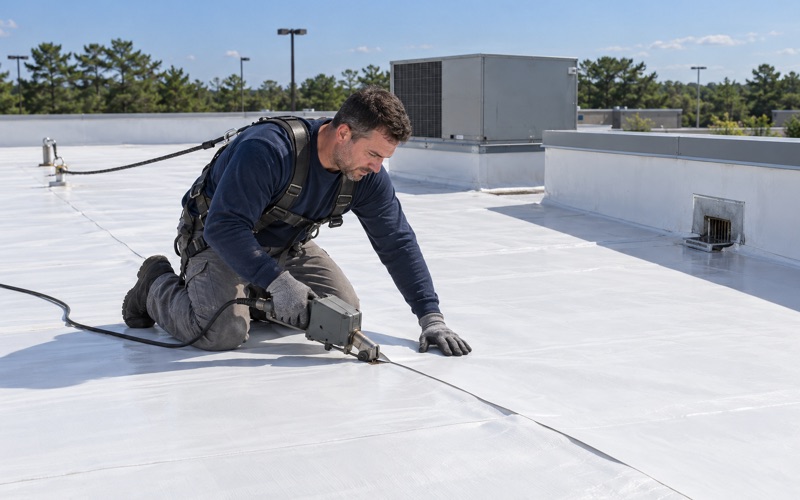
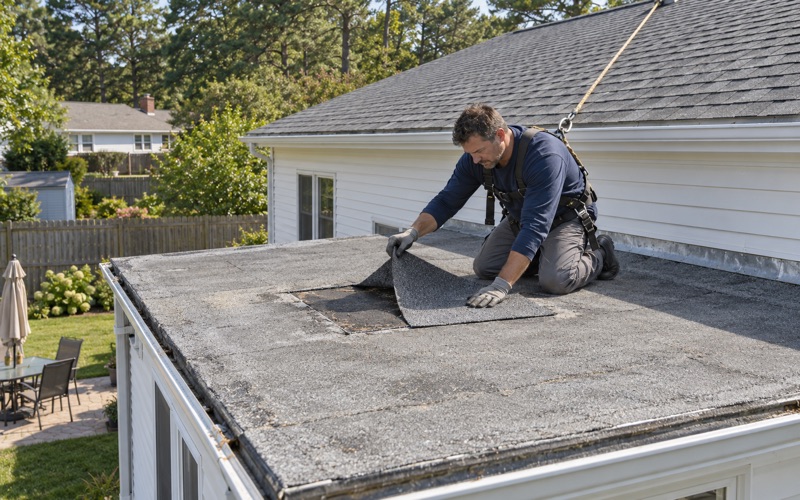
When we inspect an apartment roof, we photograph the field, the edges, every penetration and the flashing at walls and parapets. The report goes to the owner the same day, with the photos attached and the findings separated into repair items and longer-term items. An out-of-town owner gets the same report without having to drive down for the visit.
What the State Maintenance Code Asks of a Roof
The New Jersey maintenance code for multiple dwellings, N.J.A.C. 5:10, is specific about the exterior shell. Section 5:10-7.4 lists roofs alongside exterior walls, windows and skylights as parts that must keep water out. It also requires that damaged or badly worn material be repaired or replaced, and that areas showing rot, leakage, deterioration or corrosion be treated or restored.
Reading the roof against that standard
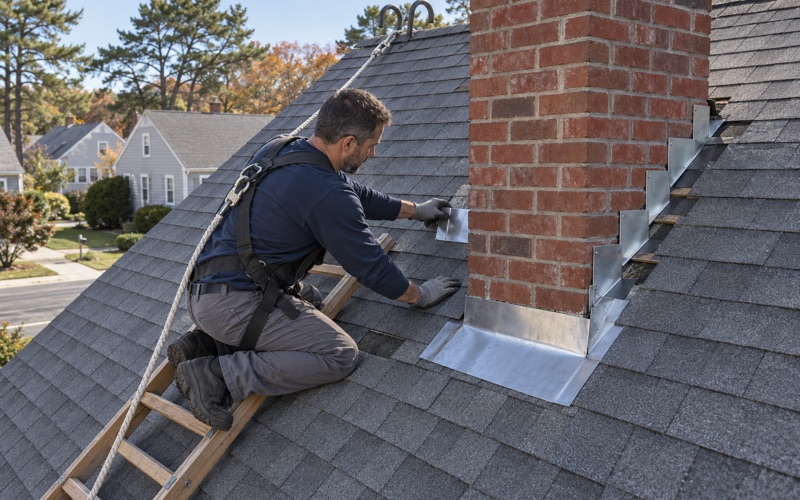
In practice, the code’s language maps onto the things we look for on every visit. Badly worn material means shingles that have lost granules down to the mat, membrane seams that have opened, or flashing that has pulled away from a wall. Corrosion means rusted drip edge, failed fasteners and metal at the edges that no longer holds a seal.
We write our findings in those terms so an owner can see which items speak to keeping water out and which are cosmetic. A leaking pipe boot or a split seam goes at the top of the list. Faded shingles that still shed water go further down, with an honest note about how many seasons they likely have left.
Choosing materials that hold up near the coast
Spring Lake Heights sits in the National Weather Service Eastern Monmouth forecast zone, served by the Mount Holly office, close enough to the ocean that salt air reaches the roof. We choose fasteners, drip edge and flashing with that exposure in mind, using stainless steel or hot-dipped galvanized metal where it counts, and the estimate names the metal rather than leaving it to the day of the job.
Wind ratings get the same attention. New Jersey publishes design wind speeds by address, and we match shingle ratings to the wind speed for the building’s own location instead of guessing from a town-wide figure. On a pitched apartment roof, that can mean architectural shingles tested to ASTM D3161 Class F or ASTM D7158 Class H, installed with a high-wind six-nail pattern.
Why an Apartment Roof Replacement Is Permit Work
New Jersey lets a homeowner replace the roof covering on a detached one- or two-family house as ordinary maintenance, without a permit. That exemption in N.J.A.C. 5:23-2.7 stops there. A building with three or more units does not qualify, so replacing the roof on an apartment building in Spring Lake Heights is permit work and has to be planned that way from the start.
Building the permit into the schedule
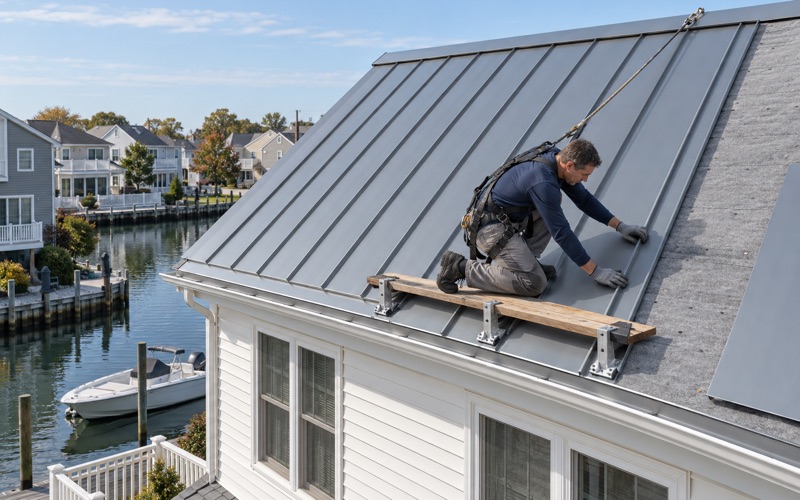
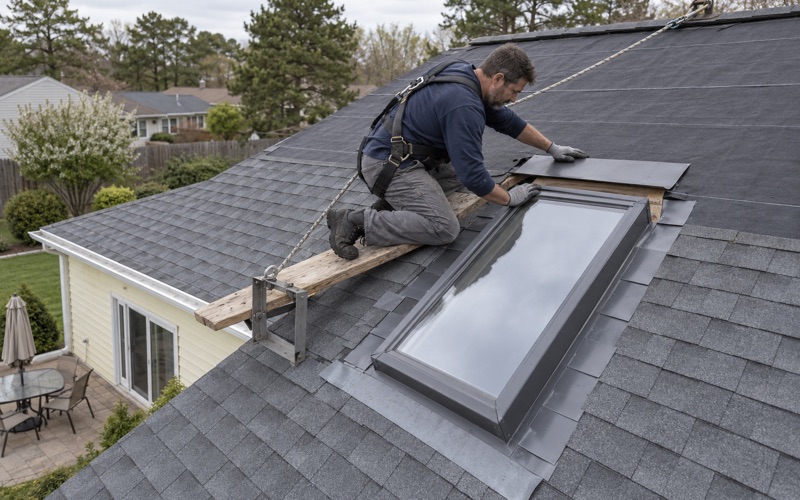
For a landlord, the permit step shapes the calendar. We put it into the timeline before we set a start date, so tenants are not given notice for work that cannot begin yet. We also plan staging, debris chutes, ladder and lift access and the protection of walkways around an occupied building, because those details decide how safely and quickly the crew can move on a tall roof.
The written contract follows New Jersey’s home improvement rules, including the three-business-day cancellation notice on contracts over $500. Each part of the job sits on its own line, from tear-off and decking to underlayment, ventilation and gutters, which makes it easier for an owner, a partner or a board to approve the work with a clear picture of where the money goes.
Storm damage on a building with tenants
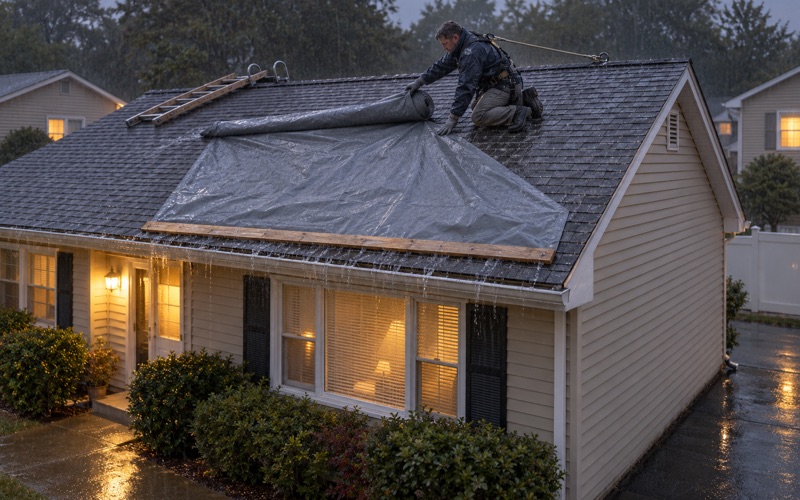
After a storm, an apartment owner needs facts quickly, both to protect tenants and to support a claim. We photograph the damage and write it up for the owner’s own insurance claim, and when asked, we meet the adjuster on site to walk the roof together. Temporary measures to stop water come first; the permanent repair or replacement follows once the scope is settled.
Whether the job is a single pipe boot over a top-floor unit or a full tear-off on a large building, the approach stays the same. We find where the water actually enters, tell the owner whether a repair will hold, and put every part of the work in writing before anyone picks up a tool. In a borough where so many residents live under a shared roof, that kind of clarity keeps everyone dry.
- 20+ Years in Roofing
- Attic and Roof Leak Checks
- Line-Item Written Scopes