Brick Roofing has spent more than 20 years on roofing in Silver Ridge and across Ocean County, and the work here starts with a question most homeowners never think to ask: whose roof is it, and what is it allowed to look like when the job is done? We answer that before anyone climbs a ladder, because in this community the paperwork shapes the roof as much as the weather does.
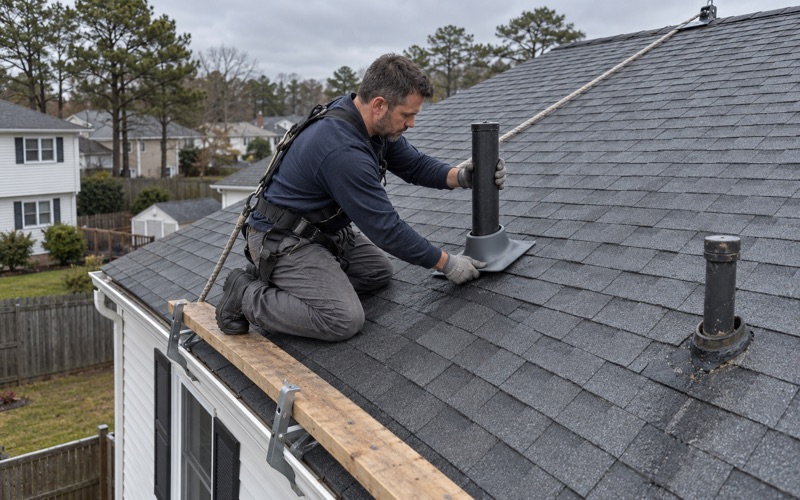
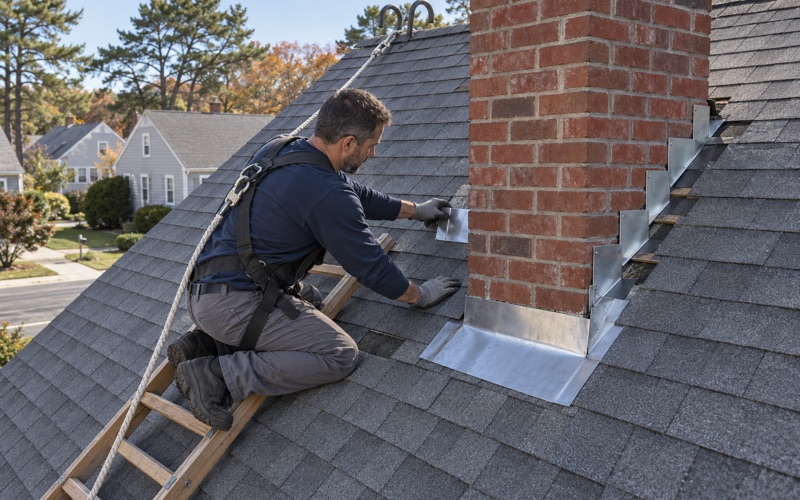
When a leak shows up, we look in the attic as well as on the shingles, so the water is traced to the spot where it actually enters before a price is written. You get a plain answer on whether the roof can be repaired, and only after that do we talk about replacement. Plenty of calls end with a flashing fix or a few new pipe boots rather than a whole new roof.
When a replacement is the right call, the estimate breaks tear-off, decking, underlayment, flashing, ventilation and gutters into separate lines. That way you can hold our number next to anyone else’s and compare them item by item instead of guessing what a single total leaves out.
A Neighborhood of One-Story Homes With Owner-Paid Roofs
What the houses have in common
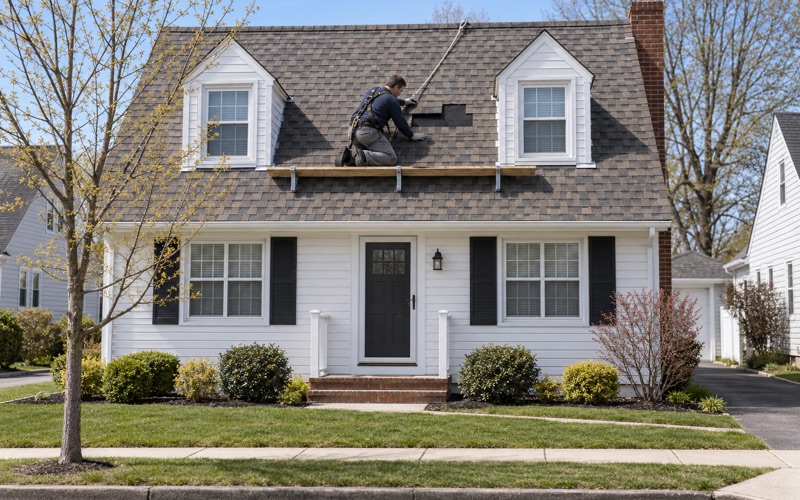
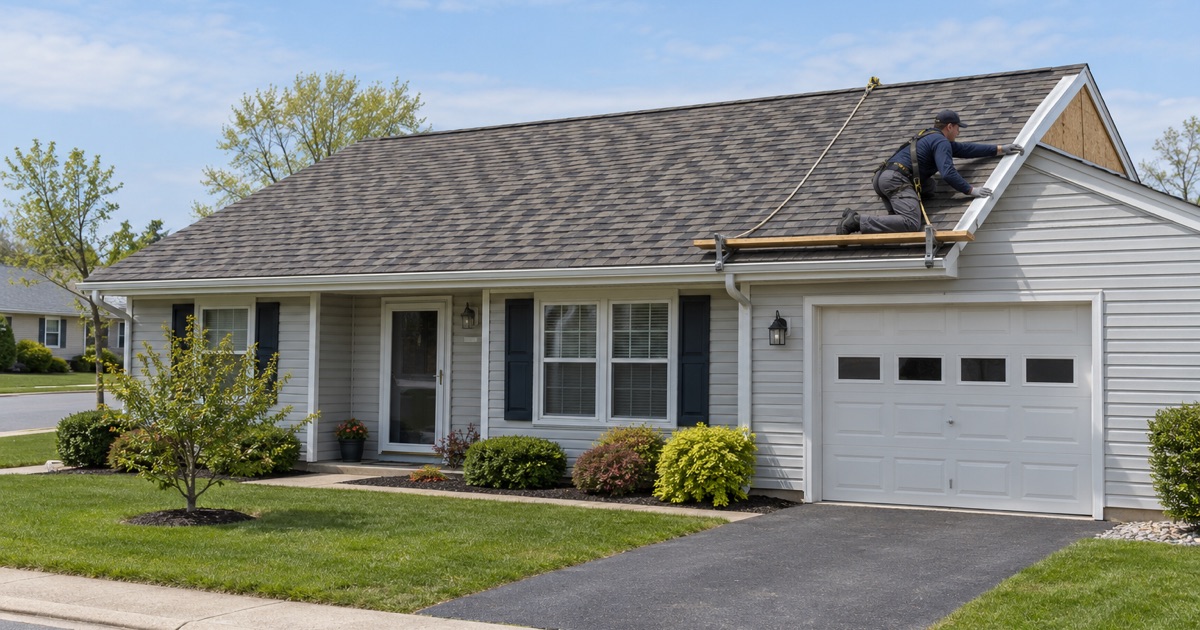
Silver Ridge is a census-designated place inside Berkeley Township, and its housing stock is unusually uniform. The Census Bureau’s 2024 five-year American Community Survey counts 886 homes in the CDP, and every one of them is a one-unit detached house. Of those 886, the survey dates 590 to the 1970s, which makes this a 1970s neighborhood above all else.
That sameness matters on the roof. The homes were built by R.F. Doss, Inc., the developer named in the Silver Ridge Park Association (East) declaration of August 5, 1968, recorded in Deed Book 2817 at page 184. A one-story house from that builder tends to share its slope, its eave detail and its gable layout with the house next door, which is part of why the association later decided to protect that look in writing.
Article 9 puts the roof on the owner
Under Article 9 of the East association’s declaration, the owner is solely responsible for exterior maintenance and its costs, and the text spells out that this includes the duty to paint, repair, replace and care for roofs, gutters and downspouts. The association does not budget for your shingles. When the roof wears out, the bill is yours.
The same article gives the association a backstop. If an exterior condition could cause injury or property damage, the association may correct it at the owner’s expense and place a lien on the lot. A slow leak that turns into rotted fascia or a loose gutter hanging over a walkway is the kind of problem worth catching before it reaches that point.
Checking which documents apply to your house
Silver Ridge Park is split among four separate associations, known as East, West, Westerly Extension and North, and the rules we quote on this page come from the East association’s declaration and resolutions. We have not confirmed which sections fall inside the CDP boundary, and the other associations have their own governing papers. Before we scope a job, we read the master deed or bylaws that cover your address so you know exactly what is yours to maintain and what limits come with it.
Looking for roofing closer to Leisure Village West? See Roofing in Leisure Village West.
The 2015 Resolution That Fixes the Roof Pitch
What counts as roof pitch
In a resolution effective August 6, 2015, the East association defined roof pitch as the steepness, slope and shape of the roof of any living unit as constructed by the developer. In other words, the roof R.F. Doss built is the benchmark, not whatever a later owner might prefer. The rule prohibits any alteration that changes the degree of the roof pitch as it is visible from the public street.
The declaration adds a broader limit of its own: no changes are permitted to the front facade of the living unit. Read together, the two rules mean the street-facing roofline is meant to stay the way it was built. A taller ridge, a steeper front plane or a new gable facing the road would run against both.
The fines behind it
The 2015 resolution carries real penalties. A violation can draw a fine of up to $500, plus up to $100 for each day work continues, and up to $50 for each day the change is left unrestored. Those figures add up quickly, and the cost of undoing a reframed roof would come on top of them.
That is why we treat the original slope as a fixed requirement rather than a design choice. If you are hoping for a different roof shape, the time to raise it is with the association before any contract is signed, not after the old shingles are already in the dumpster.
What the rule leaves alone
The resolution is about pitch, slope and shape. It does not, in the documents we have read, say anything about shingle color, brand or product line, and those questions belong with the association rather than with us. Nothing in it stops an owner from replacing worn shingles, upgrading the underlayment or improving attic ventilation while keeping the same profile.
Working With the Architectural Control Committee
How a request moves through the committee
Article 7 of the East declaration sets out the Architectural Control Committee process. The owner files a request form with a drawing of the proposed change, the committee usually makes a site visit, and a final visit checks that the finished work matches what was approved. The 2015 resolution adds that prior written approval from the board or the committee is required before any exterior modification.
The committee also has a deadline. If it takes no action on a complete request within 60 days, the plans are deemed approved. Because that clock can run two months, any project that changes how the outside of the house looks should go in well before you want the crew on site.
Your request, our paperwork support
The request is the owner’s to file, and the decision is the committee’s to make. What we provide is the material that makes a request easy to read: a written scope, the product names, and a clear statement that the new roof follows the existing slope and shape. Many owners simply attach that scope to the form along with their drawing.
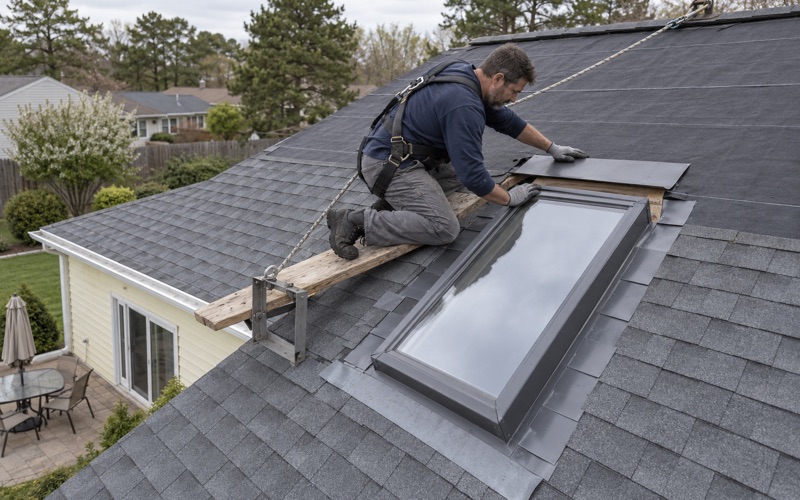
The association documents we have read do not say whether a same-pitch shingle replacement needs committee approval on its own. If your project touches anything visible beyond the roof covering, such as gutters, skylights or trim, the committee is the right place to ask, and asking costs far less than a fine.
Where the township fits in
Berkeley Township is the municipality and the local construction code enforcing agency for Silver Ridge. Under New Jersey’s ordinary maintenance rule, N.J.A.C. 5:23-2.7, replacing the roof covering on a detached one- or two-family house needs no construction permit. Work that does need a Berkeley permit, such as structural changes, is the kind of project where the committee issues a letter for the township.
Re-Roofing to the Original Slope and Shape
Tear-off and the deck underneath
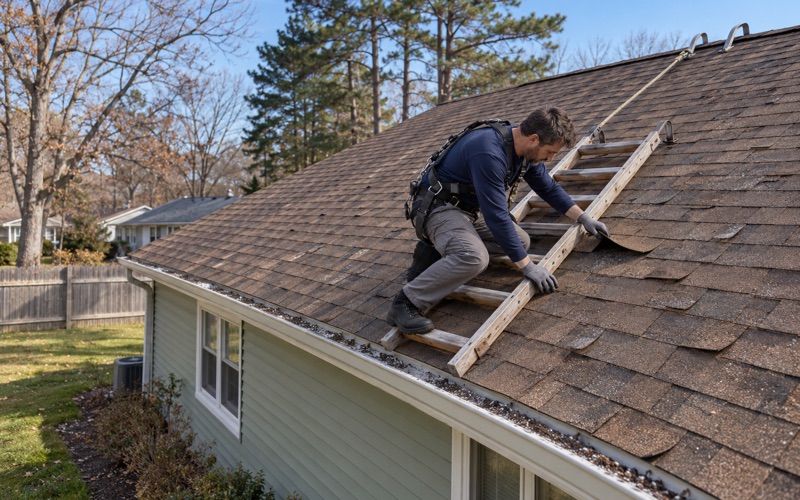
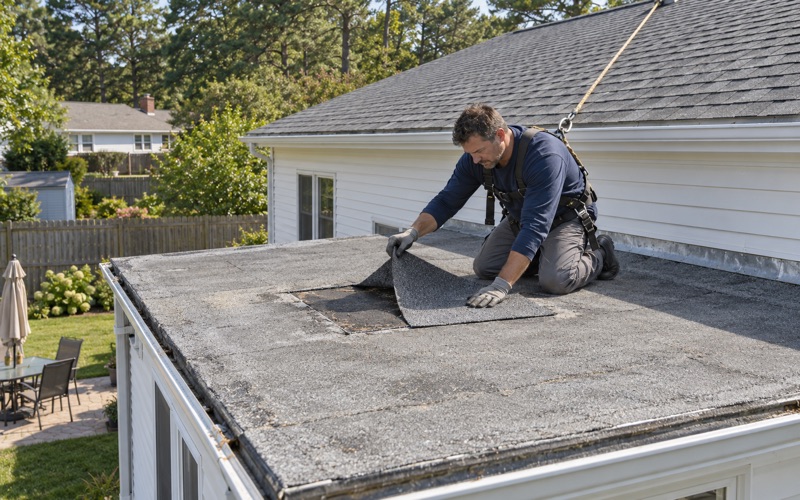
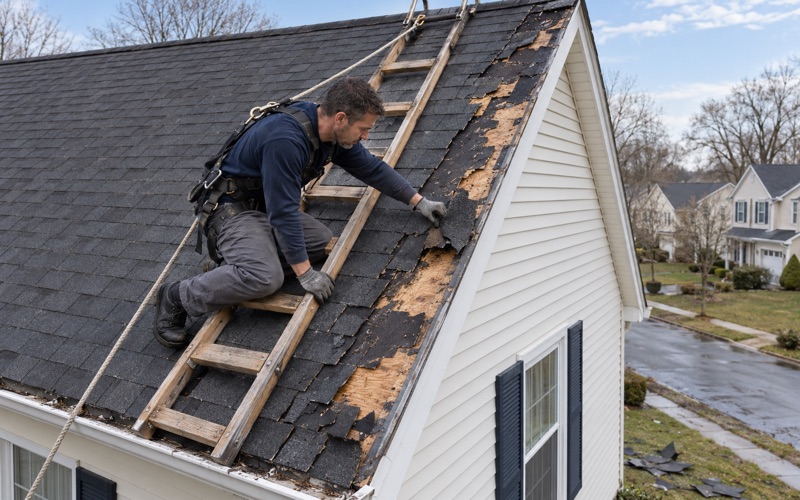
On a house built decades ago, the tear-off is where the surprises show up. Once the old shingles are off, any damaged decking is photographed and shown to you before a single sheet is replaced. The per-sheet price is set in the contract ahead of time, so the cost of a soft spot is never a negotiation on the day.
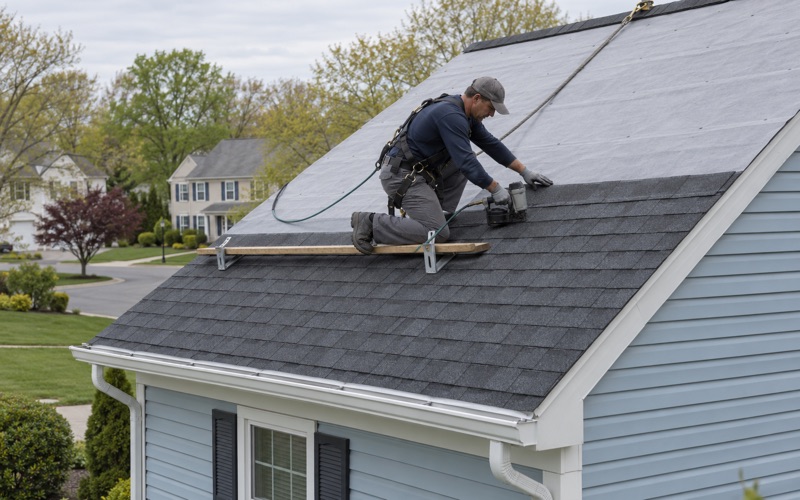
With the deck sound, we lay a self-adhering ice and water barrier meeting ASTM D1970 at the eaves and valleys and a synthetic underlayment over the field. New drip edge goes on at the eaves and rakes, and the flashing at walls, vents and pipe boots is replaced rather than reused, since old flashing is a common source of the leaks we trace.
Shingles rated for this address
Silver Ridge sits in the National Weather Service forecast zone NJZ020, Ocean, served by the Mount Holly office. Rather than pick a wind rating for the whole region, we look up the design wind speed for your exact address, following the approach in DCA Bulletin 19-1, and match it to the shingle’s rating. Architectural shingles such as GAF Timberline HDZ, Owens Corning Duration or CertainTeed Landmark carry wind ratings under ASTM D3161 or ASTM D7158.
On a one-story house the roof is low and easy to reach, but the wind still finds the edges. We pay close attention to starter courses at the eaves and rakes and use high-wind six-nail fastening where the rating calls for it, because a shingle that lifts at the edge is how a small repair becomes a large one.
Ventilation that keeps the same profile
When we check the attic, we also look at how it breathes. A ridge vent paired with soffit intake can improve airflow without changing the roof’s slope or shape, since it sits along the existing ridge line. We size the net free area to the attic rather than adding vents by habit.
Contracts and the end of each day
Our contracts follow New Jersey’s home improvement rules, including the three-business-day cancellation right on contracts over $500. You have time to read the scope, check it against the association’s rules and change your mind if something does not fit.
Every workday ends with the yard, driveway and gutters cleaned and a magnet sweep for stray roofing nails. That sweep covers walkways and the driveway apron as well as the lawn, because those are the places neighbors walk past.
- 20+ Years in Roofing
- Attic and Roof Leak Checks
- Line-Item Written Scopes