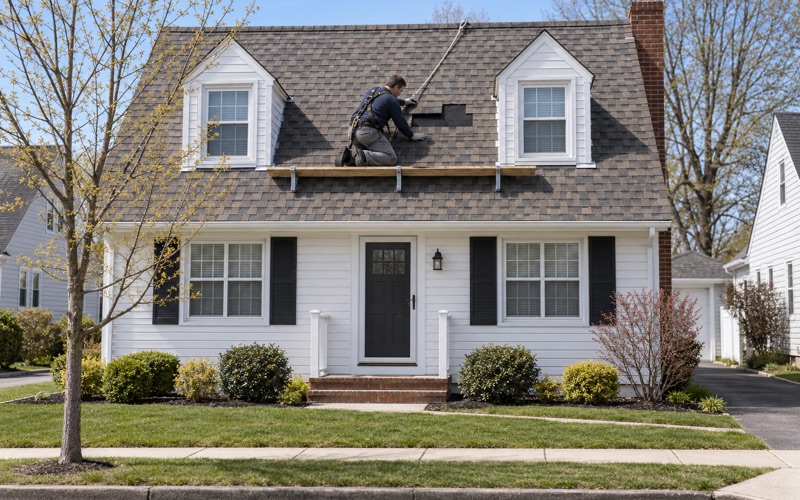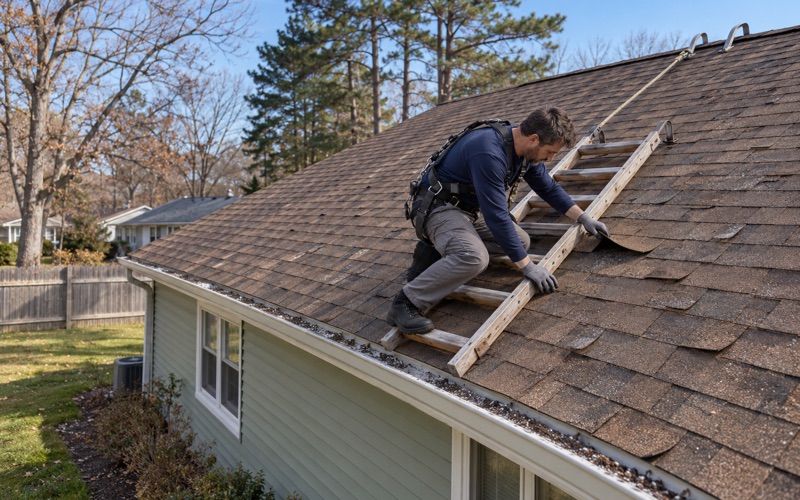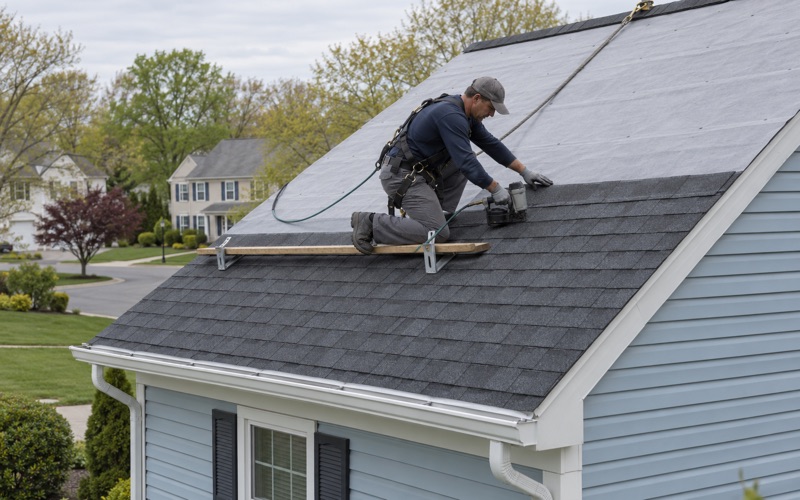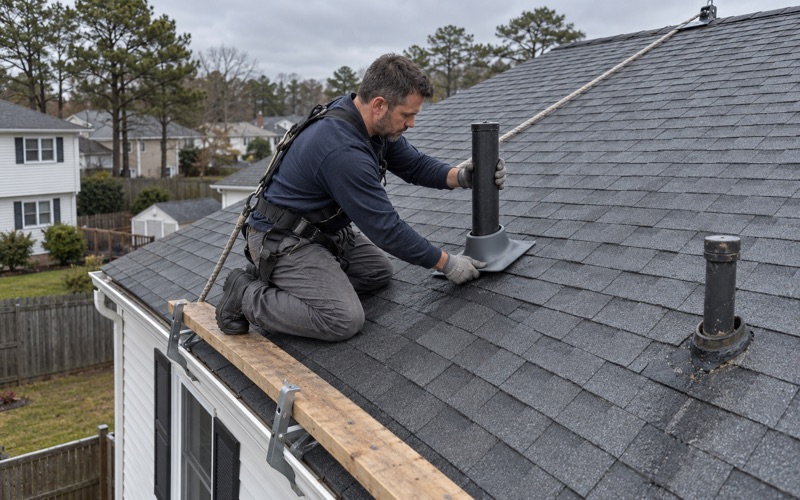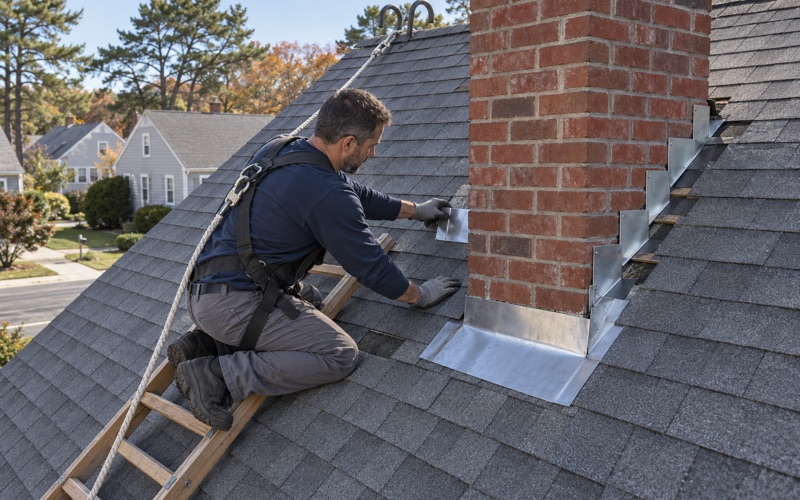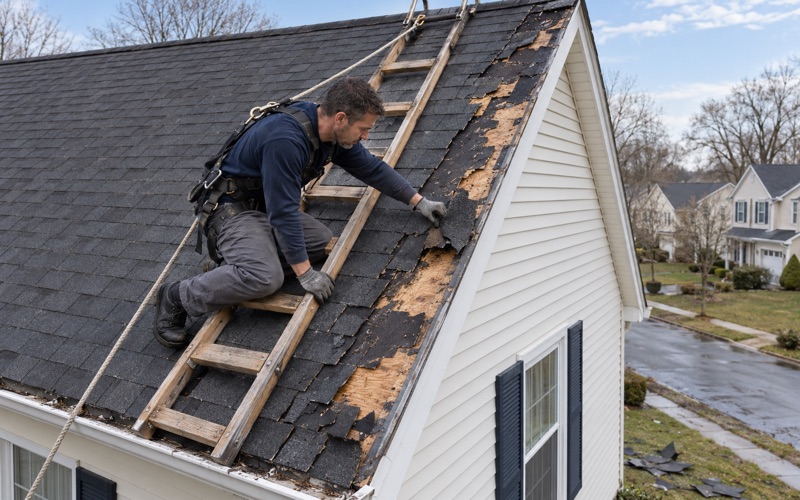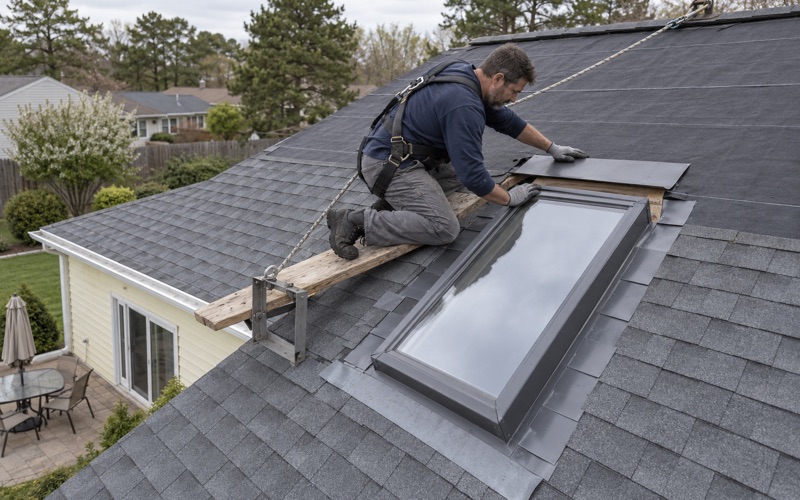
Brick Roofing has spent more than 20 years on roofing in Shark River Hills and across the Jersey Shore, and the work on this peninsula starts with a question most towns never raise: did the house go up after the storm, or did it stay where it was? That one fact changes how we reach the roof, how we stage the job and what the estimate has to include. We settle it on the first visit, before any number is written down.
Every leak call we take includes a trip into the attic as well as a walk on the roof, because water rarely gets in where the ceiling stain shows up. We trace it to the real entry point and then tell you plainly whether a repair will hold. Replacement only enters the conversation after that answer, and only when the roof genuinely calls for it.
When a full roof does make sense, the written scope breaks out tear-off, decking, underlayment, flashing, ventilation and gutters as separate lines. That lets you lay our estimate beside anyone else’s and compare them item by item. Our contracts follow New Jersey’s home improvement rules, including the three-day cancellation notice, so you have time to read everything before work is locked in.
What Sandy Left on the Shark River Hills Peninsula
Water first, roof trouble later
Hurricane Sandy struck on October 29, 2012, and the Shark River estuary that wraps this peninsula on the east and south pushed into the streets. The Coaster’s reporting never settled on a single damage count. It described about 400 damaged homes in the Shark River Hills area in April 2013, and that October it quoted Neptune’s CFO, Michael Bascom, putting the figure at more than 300.
One Melrose Avenue house took five feet of water. A year after the storm, Bascom said about 50 homes were still damaged and unoccupied. An empty house is a house where nobody is looking up at the ceiling, and a small roof leak over a vacant room can keep working on the decking and framing for a long time before anyone sees it.
The Valley Road garage
Not all of the roof damage was obvious in the first weeks. The Coaster told the story of a Valley Road owner who found roof damage over her garage after the storm, and the garage ceiling collapsed the following spring. Because the house had no interior water damage, she could not collect FEMA money for it and applied for an SBA loan instead.
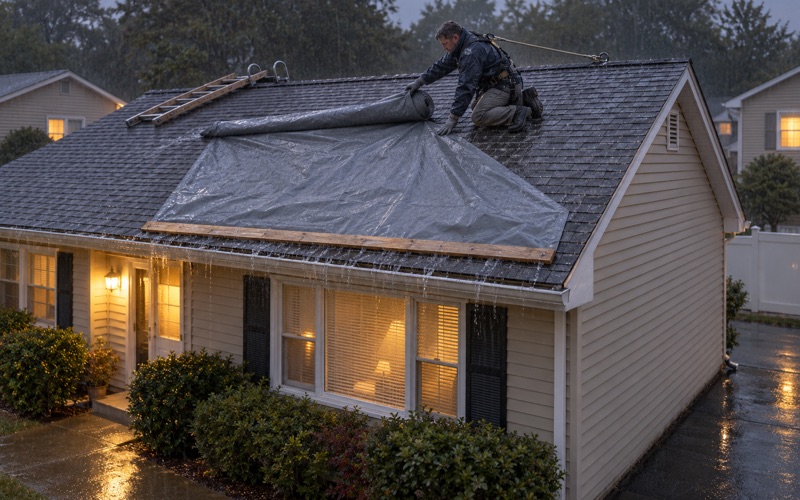
That story is the reason we look in the attic and over attached garages on every call here, not only at the shingles. A slow leak above an unfinished space can run for months before a ceiling gives way. Any storm damage we find is photographed and written up for your own claim, and we will meet the insurance adjuster on site whenever you ask.
Looking for roofing closer to Silver Ridge? See Silver Ridge Roofing.
Neptune’s 12-Foot Level and the 51 Percent Line
What was decided in 2013
Shark River Hills is not its own municipality. It is a census-designated place in the southeastern part of Neptune Township, so the rebuilding rules after Sandy came from Neptune. In April 2013 Bascom told The Coaster, “Right now we are adopting the 12-foot level,” and a house more than 51 percent destroyed had to be rebuilt to that elevation. Houses with lesser damage were left to the owner.
The same article gave 10 feet for a 100-year storm and 12 feet for a 500-year storm, and said future flood insurance was the main reason behind the decision. That is 2013 reporting. We have not confirmed whether the same rule applies today, and any owner thinking about lifting a house should get the current requirement from Neptune Township directly.
Which side of the line a house landed on
The 51 percent threshold effectively split the neighborhood into two kinds of roofs. A house past the line came back rebuilt and raised, with a roof installed new over a new or lifted frame. A house under the line was usually repaired in place, and its roof stayed on the original structure, sometimes patched after the storm rather than replaced.
When we walk a roof here, knowing which path the house took tells us a good deal about what is under the shingles. A roof put on during a rebuild and an original roof that was patched in 2013 age very differently. We price each one on what we actually find on that house, not on the general history of the street it sits on.
Roofing a House That Was Lifted
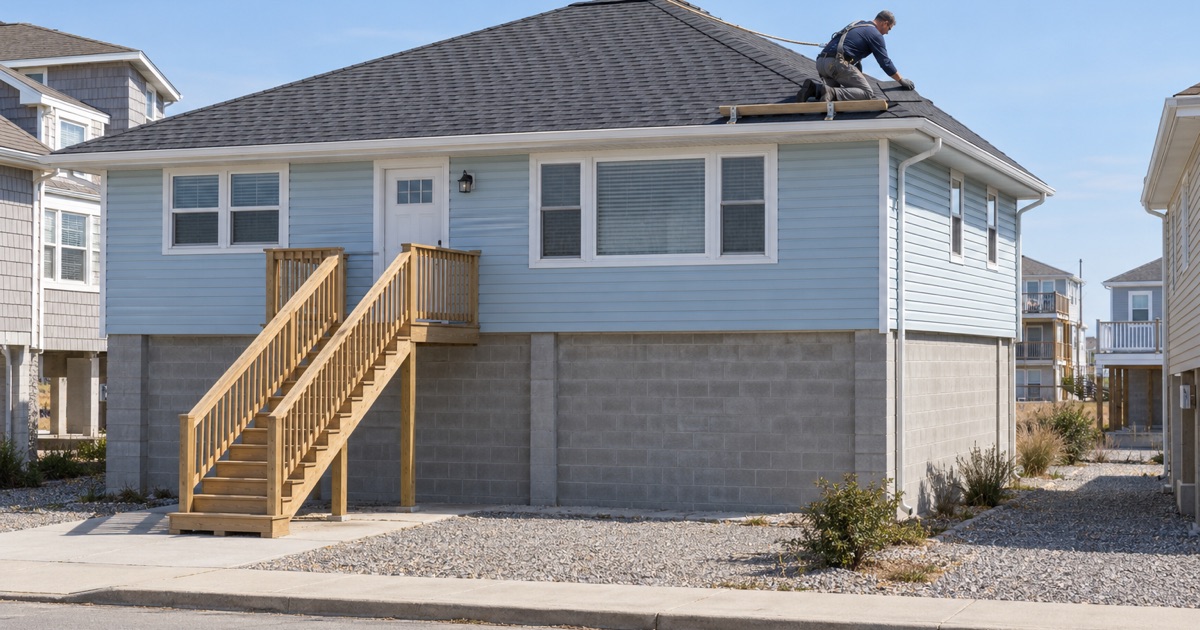
About 40 houses up by 2016
By April 2016 The Coaster reported that about 40 homes in Shark River Hills had been elevated, with many more in process, to mitigate future flood losses and comply with proposed FEMA flood maps. The Recovery Along the River Foundation had raised $85,000 by then and distributed $80,000 to more than 80 families and businesses. The lifting continued well after the first rebuilds were finished.
A lifted house puts its eaves far above where they used to be, and that changes how a crew works even when nothing about the roof itself changes. The Coaster noted that some owners might need to raise their houses by as much as nine feet. That is a long way to carry bundles of shingles, and a much longer way for a dropped tool or loose piece of flashing to fall.
Access and staging written into the scope
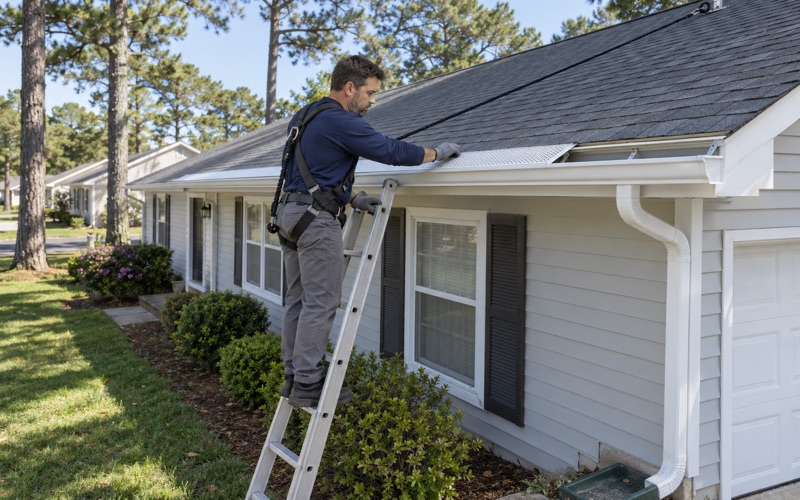
We plan raised houses for their height from the start. Ladder and lift access, where material is staged and how debris comes down are all written into the scope before the crew arrives, so a ground-level estimate is never quietly stretched to cover a much taller job. OSHA’s fall protection rule for residential roofing starts at 6 feet, and a lifted house clears that at the eave.
Raising a house does not by itself mean the roof has to be replaced, and we will not tell you otherwise. If the roof that went up with the house is still sound, we say so. If it was worked hard during the lift or the years since, we show you where, with photographs, before talking about anything larger.
Cleanup under and around the house
Cleanup does not wait for the last day. The yard, driveway and gutters are cleaned at the end of each working day, including a magnet sweep for roofing nails. On a lot where the space under a raised house is now parking or storage, keeping that area clear of fasteners matters just as much as the lawn and the walkway do.
Wind, Salt and the Ranches That Stayed Down
Weather on the estuary’s edge
The peninsula sits in the National Weather Service’s Eastern Monmouth forecast zone, NJZ014, covered by the Mount Holly office. With open water on two sides, wind reaches these roofs with little to slow it down. We match shingle wind ratings to the design wind speed for your exact address rather than a town-wide guess, choosing between ASTM D3161 Class F and ASTM D7158 Class H products to suit.
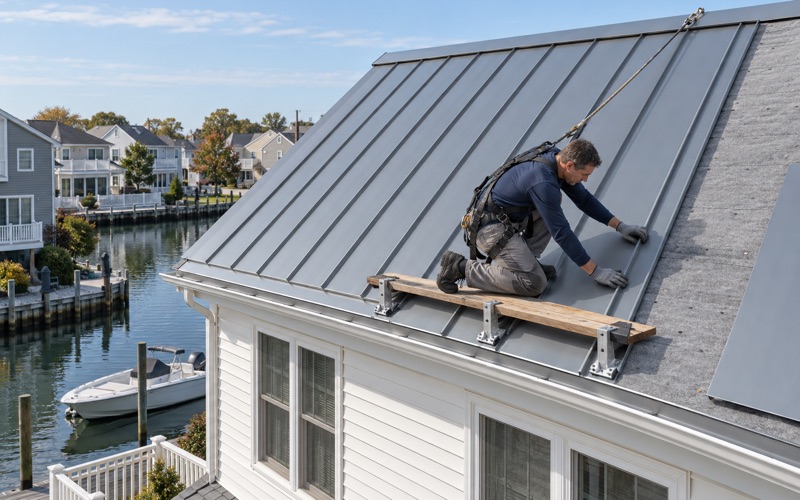
Salt air works on metal as steadily as wind works on shingles. Close to the estuary we choose fasteners, drip edge and flashing for salt exposure, using stainless steel or hot-dipped galvanized hardware. The metal is named in the estimate, so you know exactly what is going onto your roof and can hold us to it.
Older ranch homes that were never lifted
Every home here is detached and owner-occupied, according to the Census Bureau’s 2024 five-year estimates: 1,275 detached units, and all 1,244 occupied homes owned by the people living in them. Of those 1,275 units, 614 were built between 1950 and 1969, so houses from those two decades set the character of the neighborhood. Plenty of them still sit on their original foundations.
An unlifted ranch is easier to reach, but its roof often carries more history. Original decking, a storm-era patch and sometimes a second layer of shingles can all turn up once the old roof comes off. Any damaged decking we find is photographed and shown to you before it is replaced, at a per-sheet price already set in the contract.
Layers, low slopes and ventilation
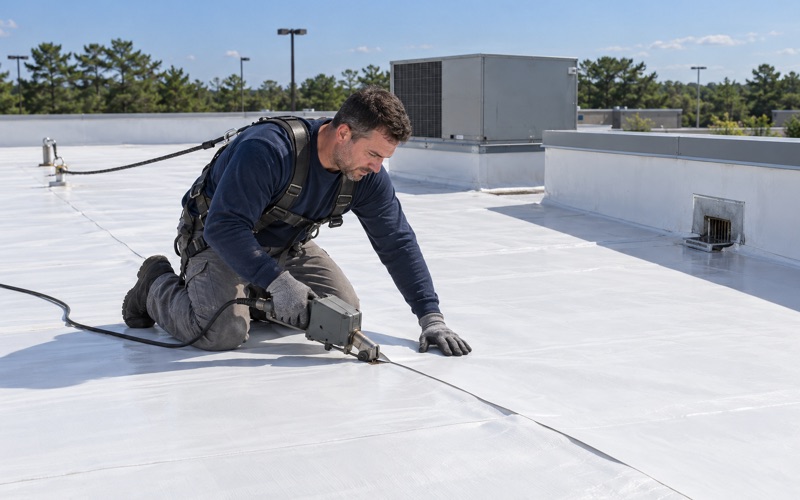
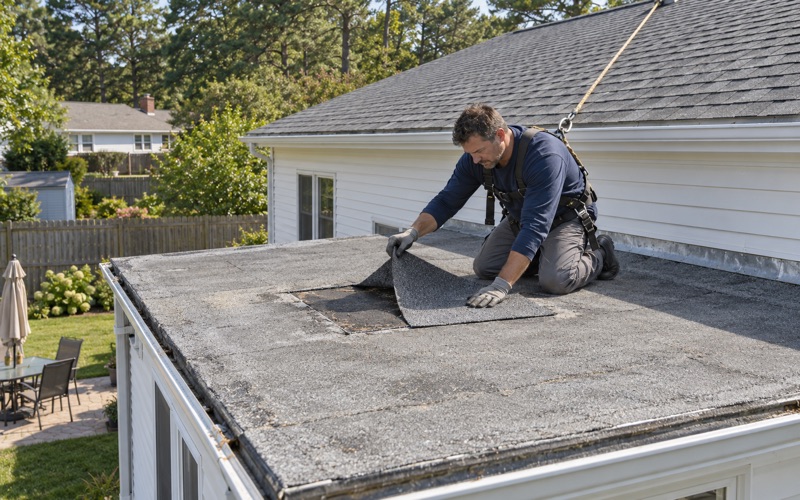
If a roof already carries two or more layers, New Jersey’s rehabilitation subcode calls for a full tear-off rather than another layer on top, so we count layers at the inspection. Low-slope porch roofs and rear additions may need a membrane such as modified bitumen or EPDM instead of shingles, and the seam where they meet the main roof is a common place for leaks to start.
We also check that soffit intake and ridge venting are in balance. A hot, damp attic shortens shingle life on any house, and on an older ranch it can also leave moisture sitting against decking that has already been through a lot. Getting the airflow right is one of the cheapest ways to make a new roof last as long as it should.
- 20+ Years in Roofing
- Attic and Roof Leak Checks
- Line-Item Written Scopes