Brick Roofing has handled roofing in Point Pleasant Beach for more than 20 years, and the first thing we ask an owner here is not about shingles. It is about the calendar: who is staying in the house, for how long, and when the next guests arrive. On a rental property, roof work has to be scheduled the way the house is booked, so we plan the timing before we price the job.
Every visit starts with a look at the roof and a look in the attic. A stain on a bedroom ceiling rarely sits directly under the spot where water gets in, so we trace the path first. Then we tell you plainly whether the roof can be repaired, and replacement only comes up when a repair would not hold.
Our written scopes break the work into separate lines for tear-off, decking, underlayment, flashing, ventilation and gutters. If you are collecting two or three estimates for a beach house, that format lets you compare them item by item instead of comparing one total against another and guessing at what each one left out.
How Point Pleasant Beach Rents Its Houses
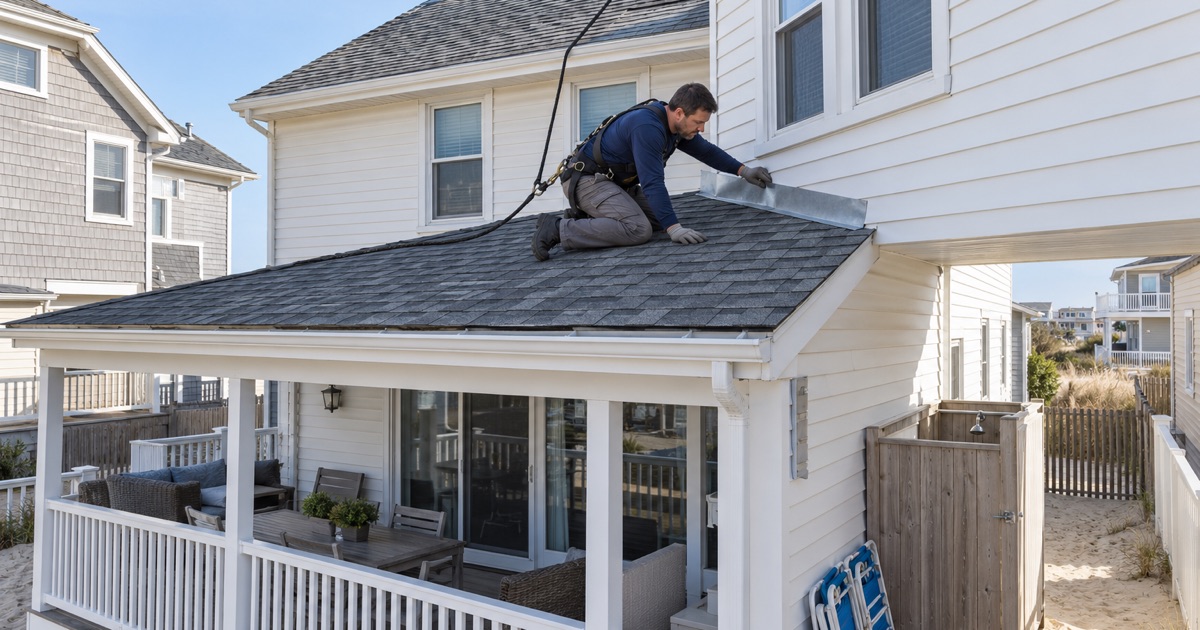
Point Pleasant Beach sits at the northern end of the Barnegat Peninsula, the barrier island that separates Barnegat Bay from the open Atlantic, and it is the northernmost Ocean County community facing the ocean directly. A large share of its housing serves visitors. The Census Bureau’s 2024 five-year survey counts 792 of the borough’s 2,822 homes, or 28.1 percent, as held for seasonal, recreational or occasional use.
Ordinance 2021-33 and Its Two Minimums
In December 2021 the Borough Council unanimously approved an ordinance, numbered 2021-33 in its public hearing file, that sets how long a rental has to run. From May 15 to September 30, a property cannot be rented for fewer than seven days. For the rest of the year the minimum is one month, so offseason tenants arrive on leases rather than for long weekends.
The same ordinance ties an owner’s certificate of occupancy to their record, so prior license suspensions or revocations and borough ordinance violations can stand in the way. It also asks for the name and permanent address of each tenant. We do not speak for the borough’s rental process, but we know owners here take it seriously, and we run our jobs so they cause no trouble with neighbors or guests.
A Town of Detached Houses
Of the 2,822 housing units in the borough, 2,085 are single-family detached houses and another 297 are attached. Most homes here, rentals included, are whole houses with a roof of their own. That means the owner usually decides when the roof gets fixed, and the booking calendar the owner already keeps is the schedule the roof work has to fit into.
We ask for that calendar at the first visit. Knowing which weeks are booked, which are open and when a winter lease begins tells us whether a repair can happen now, whether a replacement belongs in the fall, and how many working days we actually have before the next set of guests pulls into the driveway.
Looking for roofing closer to Leisure Village? See Roofing Services in Leisure Village.
Seven-Night Summer Weeks, May 15 to September 30
With rentals of at least seven nights in the summer season, a busy beach house tends to turn over on a fixed day each week. That rhythm is useful for roof work. It gives a predictable gap between one party leaving and the next arriving, and small repairs can often be planned into that gap rather than into someone’s vacation.
Using the Changeover Day
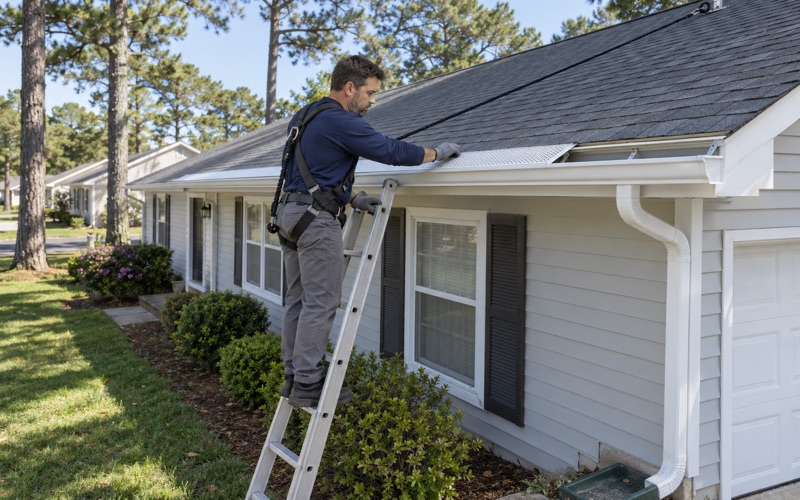
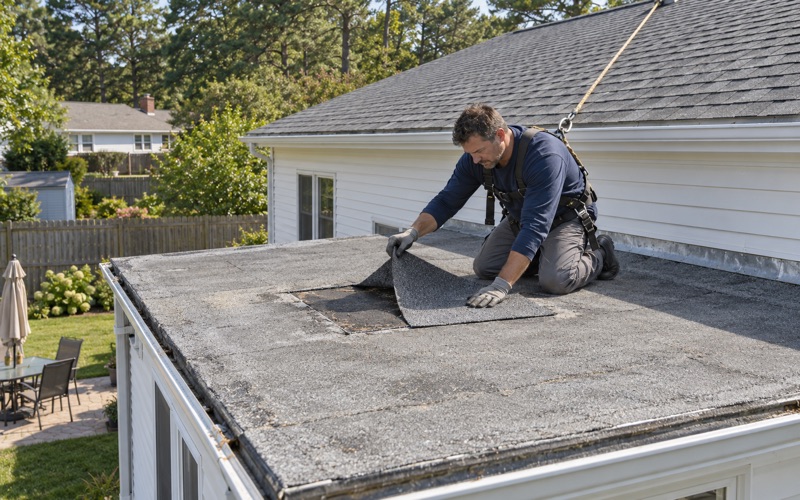
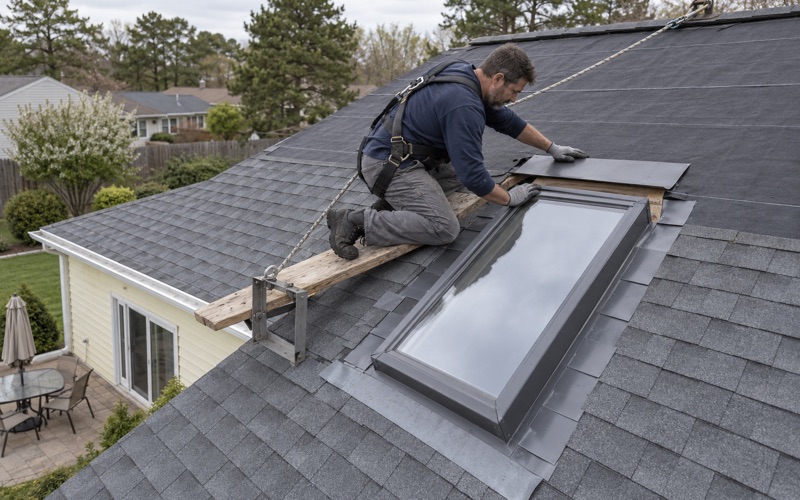
A lifted shingle tab, a cracked pipe boot, a loose run of drip edge or a failed seal around a skylight is often a few hours of work. On a changeover day we can arrive after checkout, make the repair, clean up and be gone before the cleaning crew finishes the bedrooms. Guests on either side of the turnover never see a ladder.
We bring the materials for the likely fix on that first trip, because a second visit in July means waiting for another changeover. If the attic check shows the water is coming from somewhere other than where the ceiling stain suggests, we tell you that day and explain what the real repair involves before we touch anything else.
Repairs That Can Wait for Fall
Not every problem needs to be solved in August. Worn granules, a tired ridge cap or gutters that have started to pull away can usually be watched until the season ends. We will say which items are urgent and which can wait, and we photograph the ones that can, so you can see the condition yourself without climbing up.
That honesty matters most in the summer. A full tear-off in the middle of a booked season means canceled weeks or unhappy guests, and a roof that can be safely repaired does not need it. Most summer calls end with a targeted repair now and a written plan for the larger work once the seven-night rentals are over.
Storm Damage in Season
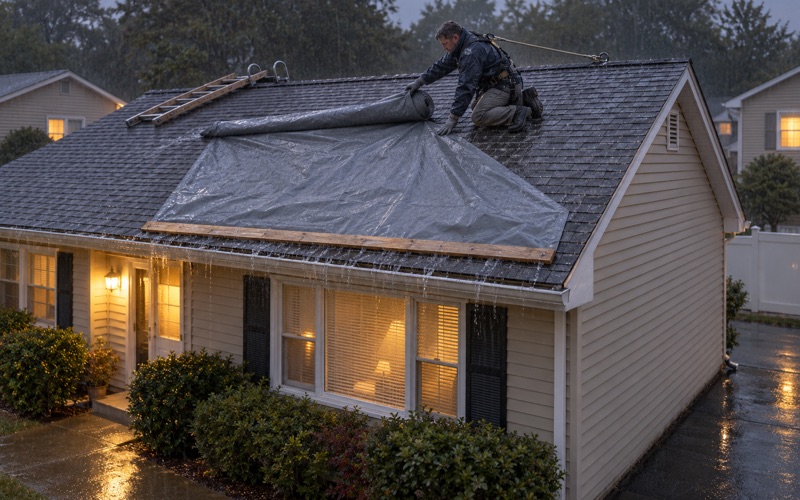
A summer storm does not wait for a changeover. When wind lifts shingles or tears flashing on a booked week, we photograph the damage and write it up for your own insurance claim. We will also meet the adjuster on site if you ask, and we make the house watertight with a temporary repair until the permanent one fits the schedule.
Month-Long Leases in the Offseason
Once September 30 passes, the minimum rental becomes one month. Fewer changeovers and longer stays change the planning completely. Some owners leave the house open through fall and early winter, and that open stretch is the best time of year to replace a roof here. Others sign a winter lease, and then the work happens with someone living downstairs.
The Wider Window for Replacement
A full replacement on a typical detached house needs several working days, plus room for weather. That kind of window is hard to find between seven-night bookings and easy to find in October or between month-long leases. We book the crew against your open dates and leave slack in the schedule, because a coastal week in the fall can lose a day or two to wind.
If the house carries solar panels, the removal and reinstall go into that same schedule from the start rather than being discovered on the morning the crew arrives. The panels come off, the roof is replaced, and the array goes back on within the window you have free before the next tenant or the next season.
Working Around a Winter Tenant
When a lease is running, we coordinate access through the owner and keep the tenant informed about which days are noisy. The yard, the driveway and the gutters are cleaned at the end of every work day, including a magnet sweep for roofing nails, so nobody living in the house steps on a fastener walking to the car.
Our contracts follow New Jersey’s home improvement rules, including the three-business-day cancellation right on contracts over $500. Owners who manage a rental from out of town appreciate having that in writing, along with a scope that lists every line of the job, before anyone sets foot on the roof.
Older Beach Houses and Ocean Exposure
Much of the housing in Point Pleasant Beach predates modern roofing products. The 2024 survey counts 662 homes built in the 1950s and 434 built in 1939 or earlier. Older houses near the boardwalk, which runs about a mile from the Manasquan Inlet to New Jersey Avenue, also take the full force of salt air and ocean wind.
What We Find Under an Older Roof
A house from the 1950s or earlier has often been reroofed more than once, and sometimes the new layer went straight over the old one. Under New Jersey’s rehabilitation subcode, a roof already carrying two or more layers is torn off before new roofing goes on. We check how many layers are present at the estimate so the tear-off is priced from the start.
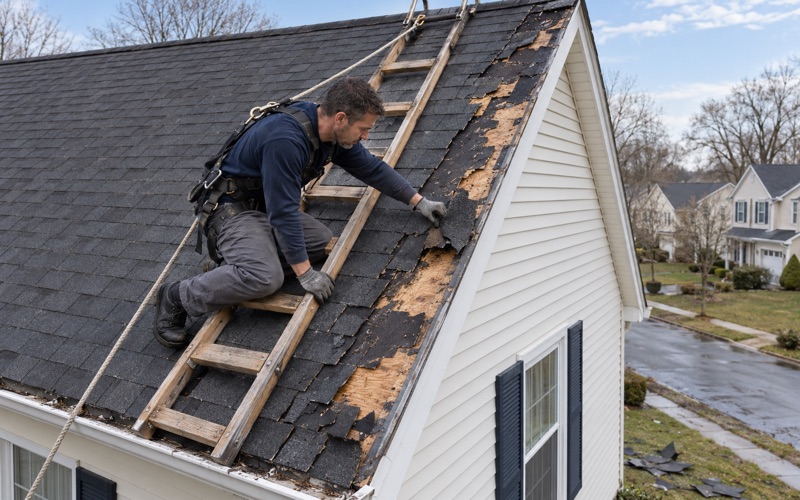
Once the old roof is off, we sometimes find decking that has softened or delaminated. Any damaged sheet is photographed and shown to you before it is replaced, and the per-sheet price is already written into the contract. You decide with the evidence in front of you, and the bill does not grow by a number nobody agreed to.
Salt Air and the Metal on Your Roof
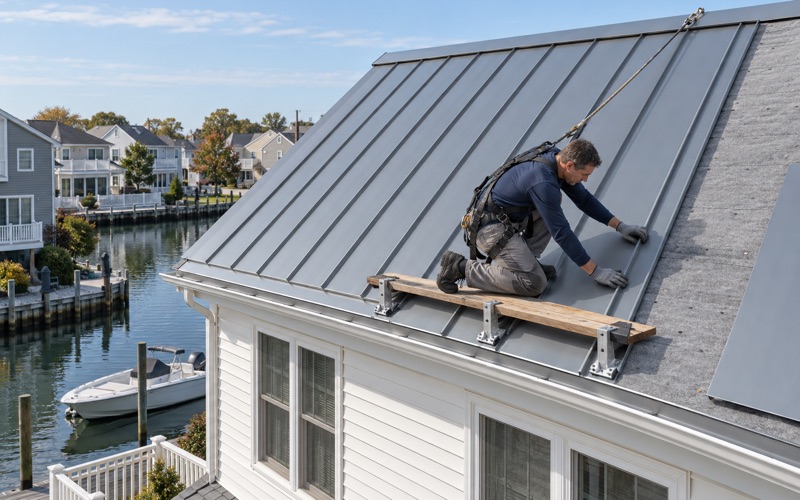
Steel that holds up fine inland can rust quickly a few blocks from the ocean. Near the beach and the inlet we use stainless steel or hot-dipped galvanized fasteners and choose drip edge and flashing for coastal exposure. The estimate names the metal for each part, so you know exactly what is going onto the house and why.
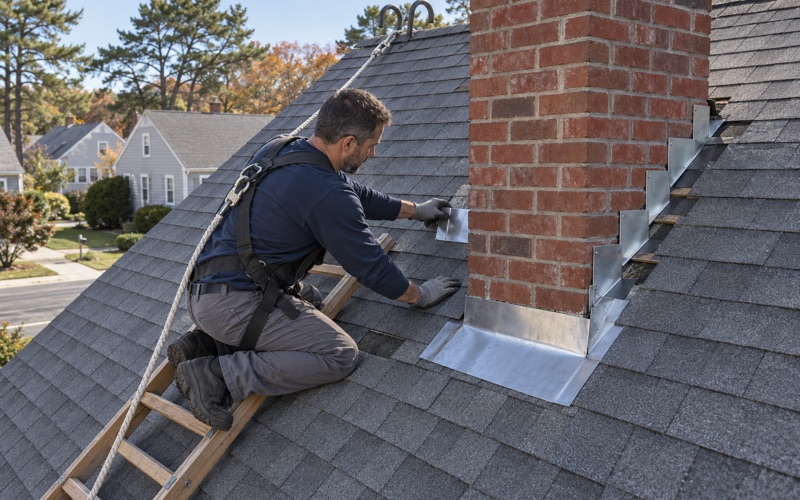
Flashing gets the same attention as the shingles. Step flashing at sidewalls, counter flashing at chimneys and kick-out flashing where a roof edge meets a wall are where older beach houses most often let water in. We replace those details with the roof rather than reusing tired metal under new shingles.
Wind Ratings Matched to the Address
Point Pleasant Beach falls in the National Weather Service’s Coastal Ocean forecast zone, NJZ026, covered by the Mount Holly office. Wind design in New Jersey is set by address, so we look up the design wind speed for your exact lot rather than using a town-wide guess, then select shingles rated to match.
For most homes here that means architectural shingles tested to ASTM D3161 Class F or ASTM D7158 Class H, installed with high-wind six-nail fastening. A roof put on that way is far better prepared to sit through a coastal storm in the middle of a booked season, which is exactly when an owner can least afford to have one fail.
- 20+ Years in Roofing
- Attic and Roof Leak Checks
- Line-Item Written Scopes