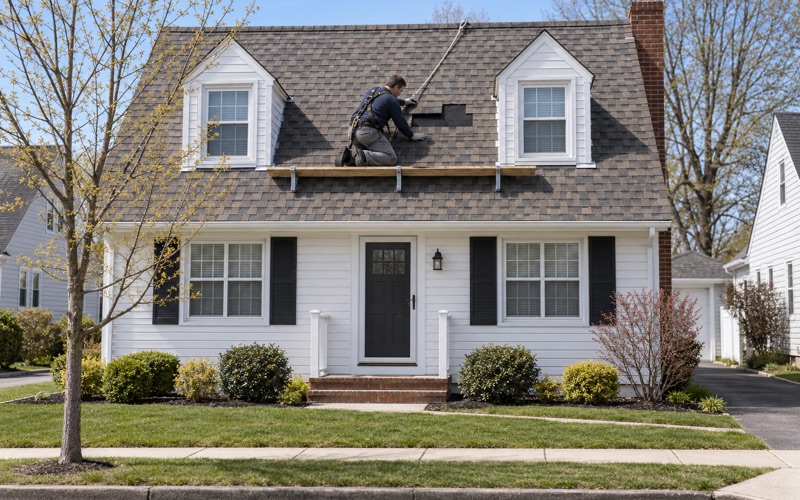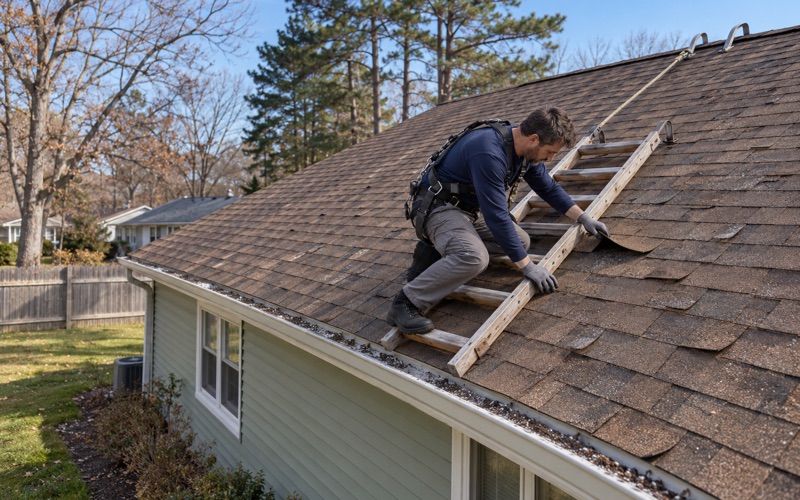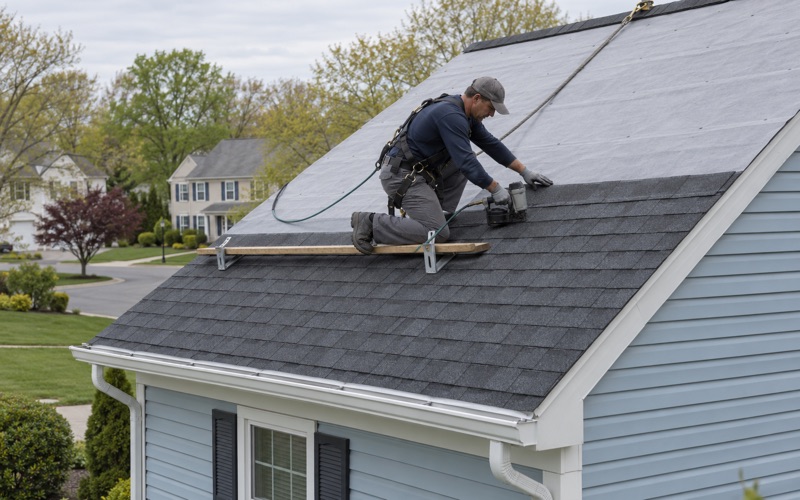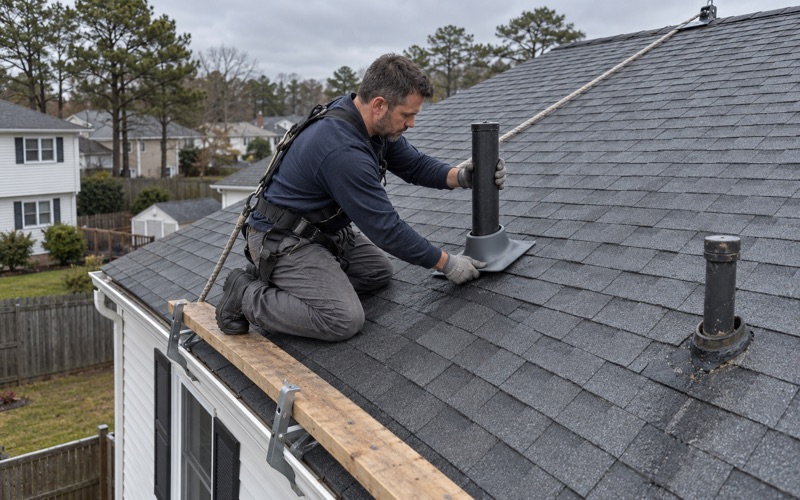
Brick Roofing brings more than 20 years in the trade to roofing in Pine Lake Park, and on this side of Manchester Township we look at every roof two ways at once: how it sheds wind and water, and how it would hold up to wind-driven embers. We repair and replace asphalt shingle, metal and low-slope roofs, and the fire rating of the covering is on the table from the first conversation.
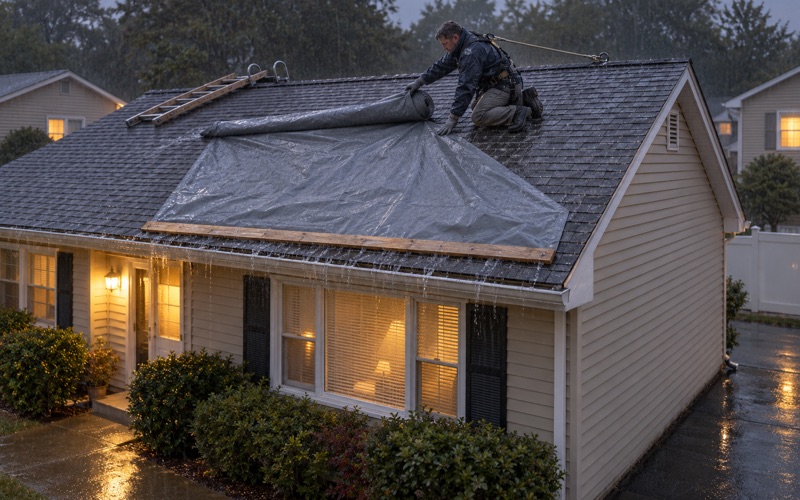
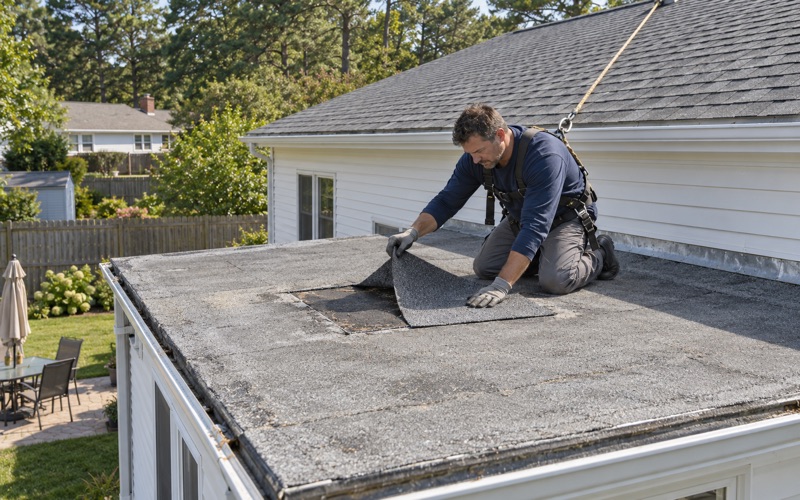
When a homeowner calls about a leak, we climb into the attic as well as onto the roof, because a ceiling stain rarely sits under the spot where water actually gets in. Once the source is traced, you hear from us plainly whether a repair will hold before anyone mentions a new roof. Plenty of leaks on houses this age come down to a cracked pipe boot or lifted flashing, not a worn-out field of shingles.
If replacement is the right call, the written estimate breaks tear-off, decking, underlayment, flashing, ventilation and gutters into separate lines, so a second bid can be laid beside ours and compared item by item. The contract follows New Jersey’s home improvement rules, three-day cancellation notice included, and each work day ends with the yard, driveway and gutters cleaned and a magnet run over the lawn for stray nails.
Pine Lake Park Houses in Manchester’s Wildfire Country
Detached houses from the 1970s and 1980s
Pine Lake Park is Manchester Township’s largest development, known for Pine Lake, the man-made lake built in the 1970s. The houses around it follow the same timeline. Census estimates count 2,908 detached houses out of 3,210 homes, or 90.6 percent, and 1,845 of them were built between 1970 and 1989, with 1,094 from the 1970s alone.
That makes the typical roof here a gable or hip over a ranch or split-level, owned by the family living under it; about 86.6 percent of occupied homes are owner-occupied. Many of these houses are on their second or third roof by now. Each replacement is a chance to choose a covering for the setting rather than simply repeating whatever went on last time.
What the April 2023 fire showed
In April 2023 a forest fire in Manchester Township burned 3,859 acres before it was fully contained on Thursday, April 13. A total of 170 homes were briefly evacuated as crews stood by, and at one point 20 structures were reported threatened. That fire burned near Lakehurst, not in Pine Lake Park, but it shows what surrounds the township’s neighborhoods.
The New Jersey Pinelands Commission keeps a longer memory. Its homeowner guidance, Protecting Your Home from Wildfire, recalls a 1963 fire of close to 183,000 acres that consumed 186 homes and 197 buildings. Whether Pine Lake Park falls inside the state Pinelands Area, and what fire-hazard class its edges carry, has not been established, so we treat that guidance as sound practice for a pine-country roof rather than a rule your re-roof must meet.
Why the roof is the part that matters
In a wildfire, many houses are put at risk not by the flame front but by embers carried ahead of it on the wind. Those embers land on roofs, lodge in gutters and valleys, and find their way through open vents. A roof that resists ignition, kept clear of fuel, with its openings screened, closes off most of those paths.
The rest of this page follows the Commission’s checklist one roof component at a time. None of it calls for an unusual product or a specialty crew. It mostly comes down to choosing the right covering at replacement time and keeping up with maintenance between replacements.
Looking for roofing closer to Belmar? See Roofing Services in Belmar.
Class A Roof Coverings and the Case Against Cedar Shake
What a Class A rating tells you
Roof coverings are fire-tested under ASTM E108, also published as UL 790, and Class A is the highest of the three ratings. A Class A covering has resisted flame spread and a burning brand placed on its surface under test conditions. Most architectural asphalt shingles on the market carry that rating when installed over the deck and underlayment the manufacturer specifies, and we name the product and its rating in the estimate.
The Pinelands Commission’s guidance puts it directly: consider Class-A asphalt shingles, slate or clay tile, metal, or terra-cotta tiles for roof construction, and fire-resistant sub-roofs can add protection. The same page ends that list with a blunt warning not to use cedar shake shingles.
Why cedar shake does not belong here
Untreated wood shakes are a fuel surface. The gaps between them catch needles and embers, and as shakes dry and split with age they ignite more readily. On a house surrounded by pitch pine, that is the wrong roof to put back, however good it looks.
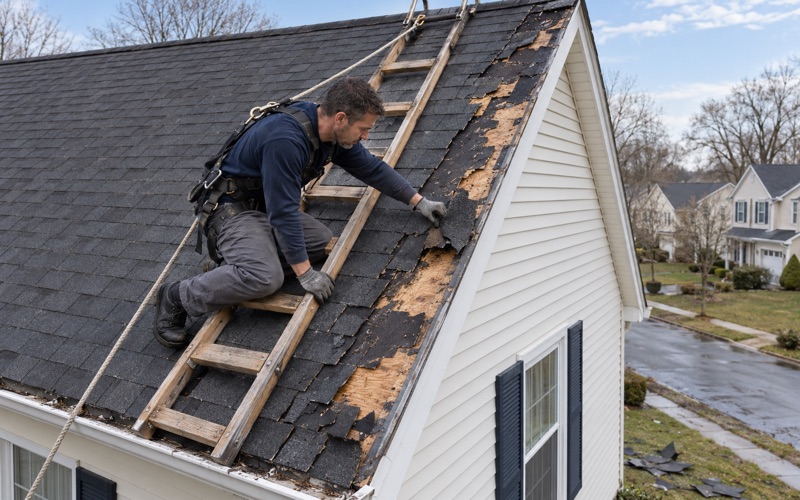
If your house has cedar shakes or an older roof of uncertain rating, we say so during the inspection and price a Class A alternative. Replacing wood shake means tearing off to the deck, and any rotted sheathing we find is photographed and shown to you before it is replaced at the per-sheet price written into the contract.
Asphalt, metal or tile for a 1970s ranch
For most Pine Lake Park houses, a Class A architectural shingle is the practical answer. It suits the roof pitches of the era, it costs the least of the fire-resistant options, and it can carry wind ratings such as ASTM D3161 Class F or ASTM D7158 Class H. We match that wind rating to the design wind speed for your exact address rather than a township-wide figure.
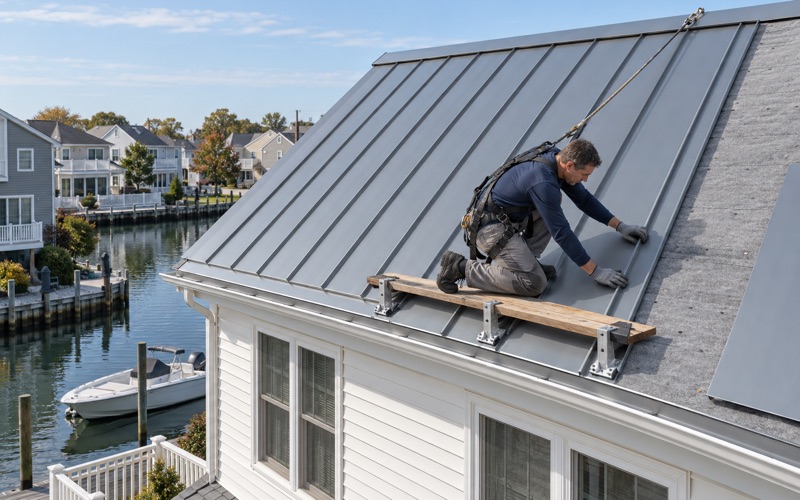
Standing seam metal roofing is the other option we price often here. It does not burn, it sheds needles more readily than a textured shingle, and its long service life suits owners who plan to stay. Clay or concrete tile is heavier than most framing of the 1970s was built to carry, so we would only discuss it after checking the structure.
Pine Needles in Gutters, Valleys and Behind Chimneys
Where the needles end up
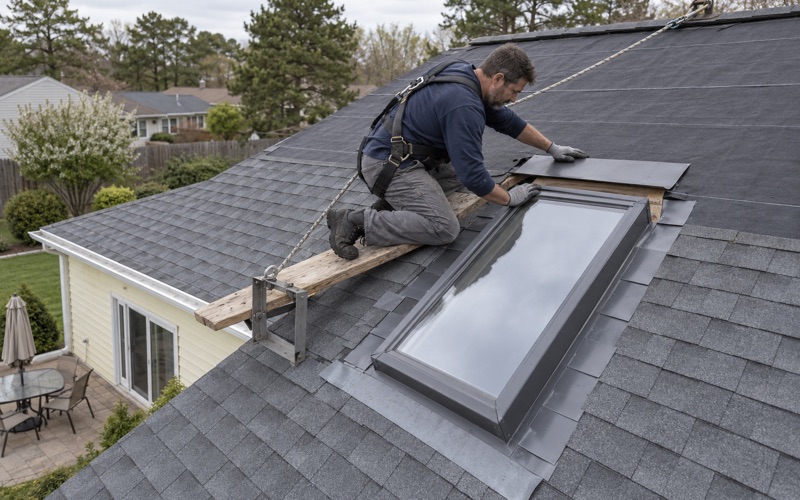
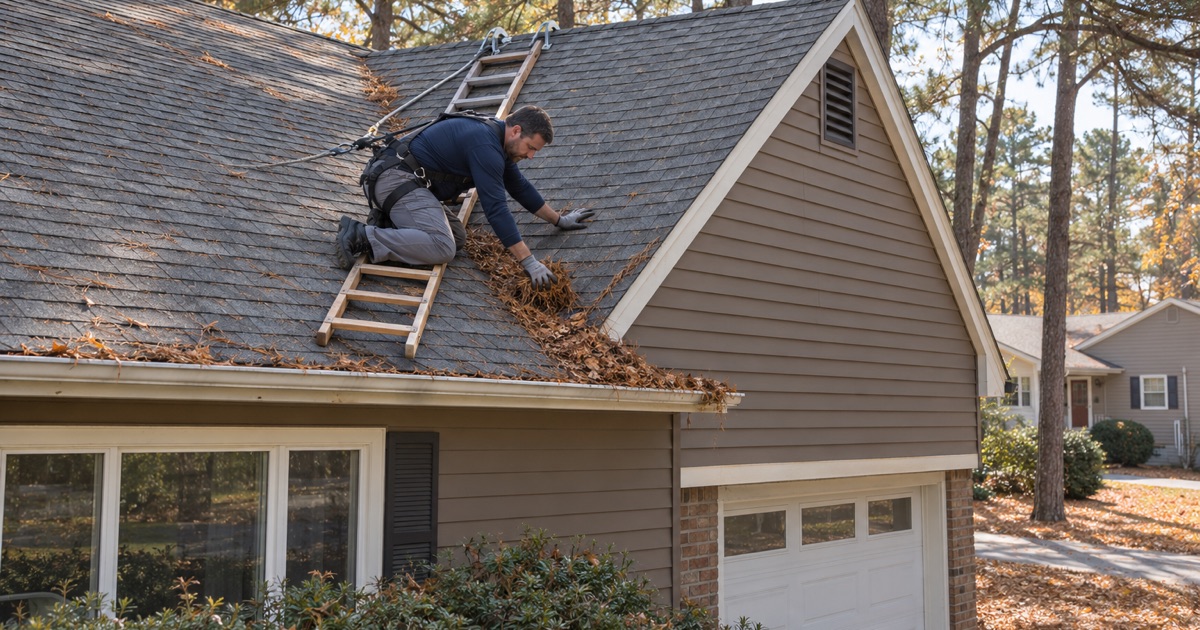
Pine needles are the fuel the Commission names first. Its guidance says to clean roof and gutters regularly to prevent accumulation of pine needles, twigs, leaves and other flammable materials. On a typical Pine Lake Park roof, needles gather in the same few places: the gutters, the valleys where two roof planes meet, the uphill side of a chimney and around skylight curbs.
A packed valley or gutter is dry tinder sitting right at the roof edge, exactly where a wind-borne ember is likely to settle. The same mat also holds moisture against the shingles and the drip edge. Needle buildup ages a roof even in a year without a single fire.
Gutters, guards and the maintenance visit
Seamless aluminum gutters with a fine-mesh guard keep most needles out of the trough, though no guard is maintenance-free under heavy pine. Coarse screens and foam inserts tend to trap needles rather than shed them. We steer owners toward a guard that lets needles slide off the front edge.
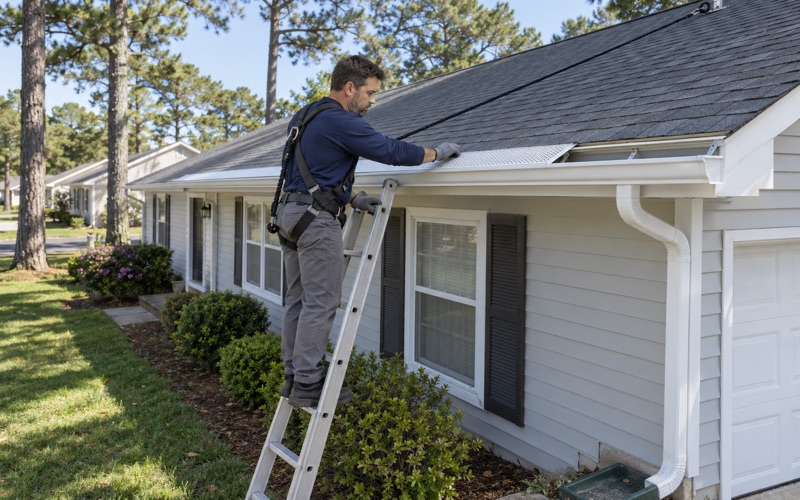
When we are on the roof for a repair or an inspection, we clear the valleys and gutters before we leave and point out any spot where needles are wedged under shingle edges. Where old gutters are pitched wrong or pulling away from the fascia, their replacement is its own line in the estimate rather than buried inside the roof price.
Dead limbs over the roof
The guidance also says to remove dead limbs adjacent to or over your house. A dead branch overhanging the roof drops needles and bark onto it all year and gives a ground fire a ladder toward the eaves. It also tends to come down in the first strong wind and puncture whatever it lands on.
We are roofers, not a tree crew, so we will not take down a limb ourselves. What we will do is mark the branches feeding debris onto your roof or rubbing the shingles, so the tree work can be scheduled before the new roof goes on rather than after it.
Attic Openings, Vents and the Chimney
Screening vents against embers
The Commission’s checklist asks homeowners to screen openings in the roof, attic and floors to prevent accumulations of needles, leaves or other debris. On a roof, those openings are the soffit vents, gable vents, ridge vent and any box vents. Without a screen, each one can admit embers straight into a dry attic full of exposed framing.
When we replace a roof, we check every intake and exhaust opening and fit fine metal mesh where it is missing or torn. Old louvered gable vents on 1970s houses are a common gap, and so are box vents whose screens rusted out long ago.
Ventilation that still breathes
Screening an opening must not choke it. An attic needs balanced airflow, intake at the soffits and exhaust at the ridge, sized by net free area, or heat and moisture build up and shorten the life of the shingles and the deck. We keep the soffit intake open behind its mesh and specify a ridge vent with an external baffle and a fine internal screen.
Because we are already in the attic on every leak call, we also see whether insulation has been pushed against the soffits or bath fans are venting into the attic. Those fixes go under the ventilation line in the estimate instead of being left to cause trouble beneath the new roof.
Chimney spark arrester and roof access
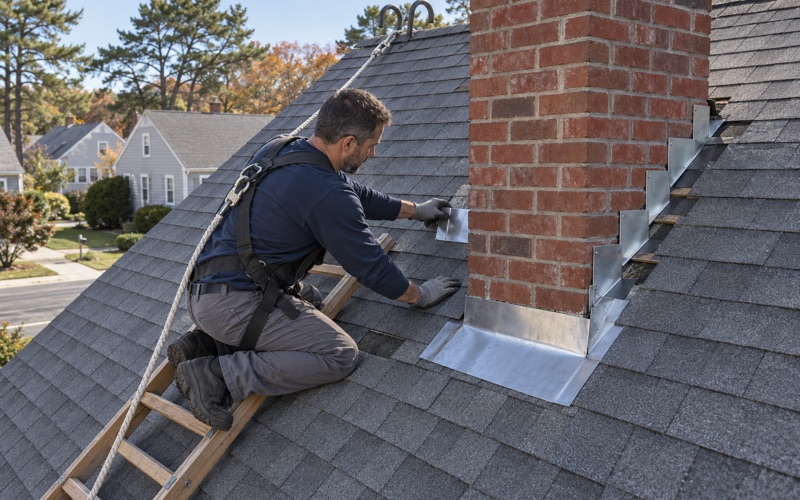
Wood-burning fireplaces are common in houses of this era, and the guidance calls for a spark arrester on the chimney. We check the chimney cap and its screen whenever we reflash a chimney. On a wide chimney we build a cricket on the uphill side so needles and water slide around it instead of piling up.
The same guidance suggests keeping a ladder tall enough to reach the roof and 100 feet of hose. That is the homeowner’s side of the plan. Ours is to leave you with a roof that gives embers as little to work with as possible: a Class A covering, clear valleys, screened openings and nothing dead hanging over the eaves.
- 20+ Years in Roofing
- Attic and Roof Leak Checks
- Line-Item Written Scopes