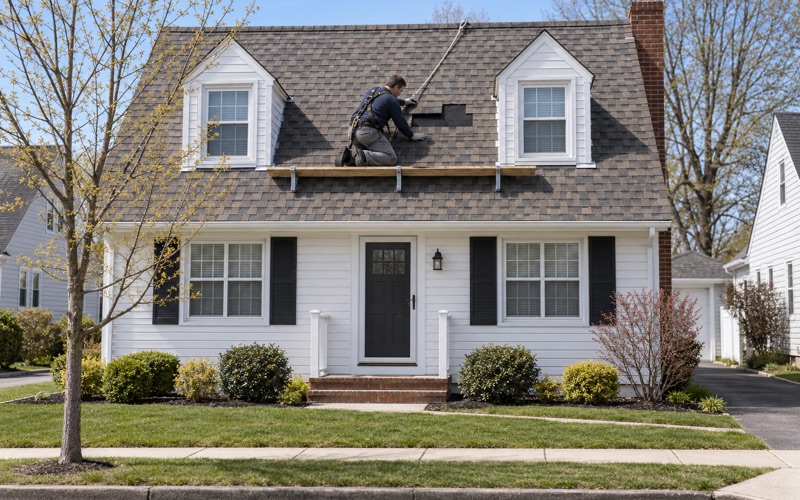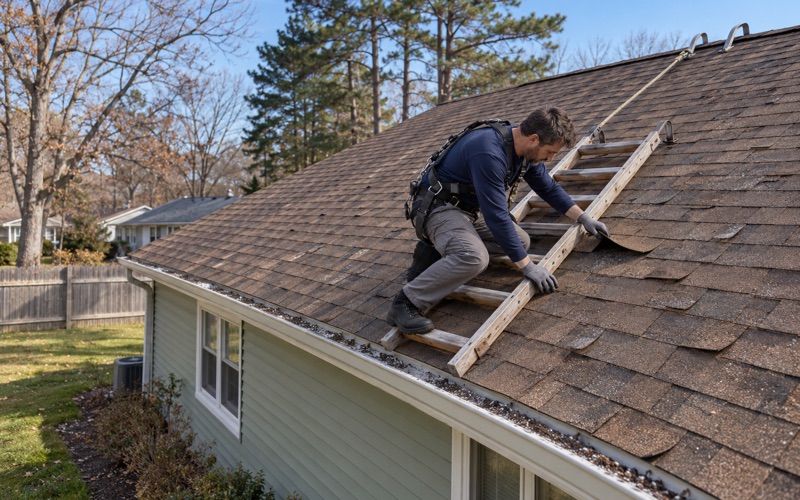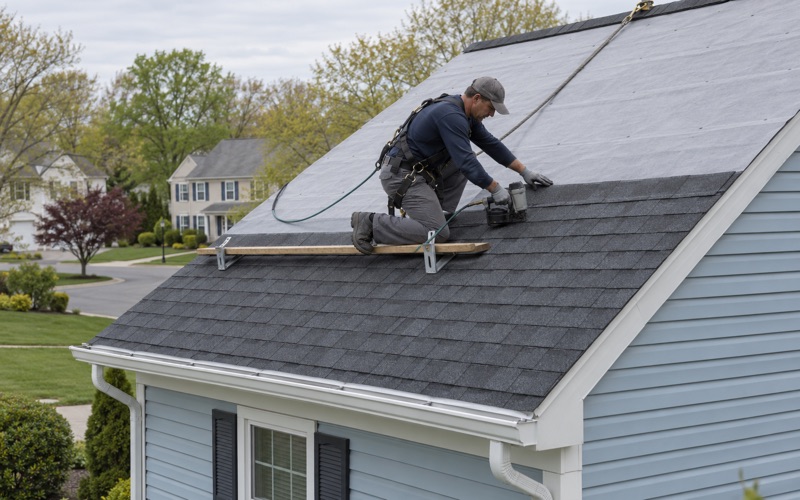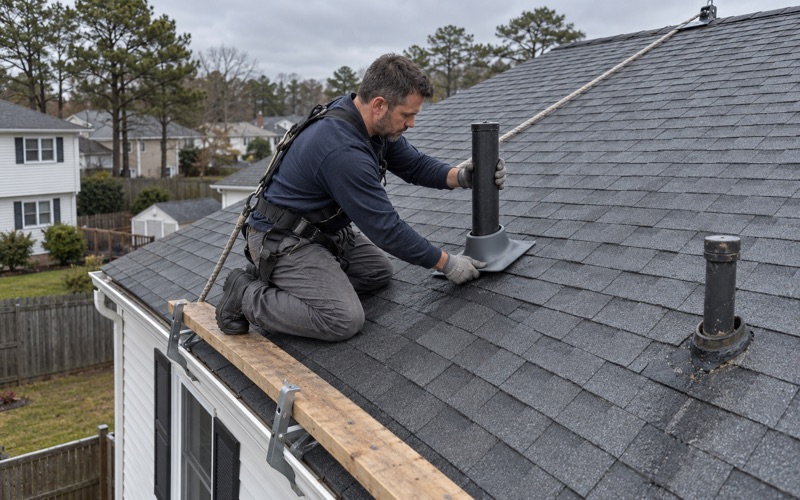
Brick Roofing brings more than 20 years of work to roofing in Leisure Village West, and most of what we do here starts with a question rather than a ladder. Who is responsible for this roof, and when is it due? In an association-maintained community those two answers shape the whole job, from the first inspection to the final cleanup.
We write this page for two readers. One is the owner who wants to know what happens to the roof over their own unit. The other is the board member or committee volunteer trying to plan replacement across a large number of buildings while a new state funding law sets the terms.
Both need the same thing from a roofer: a plain account of the roof’s condition, an honest answer about whether repair is still reasonable, and a written scope that can be checked line by line against any other bid. That is how we approach every call in this community.
Leisure Village West’s 2,692 Attached Homes
Built by Leisure Technology from 1972 to 1993
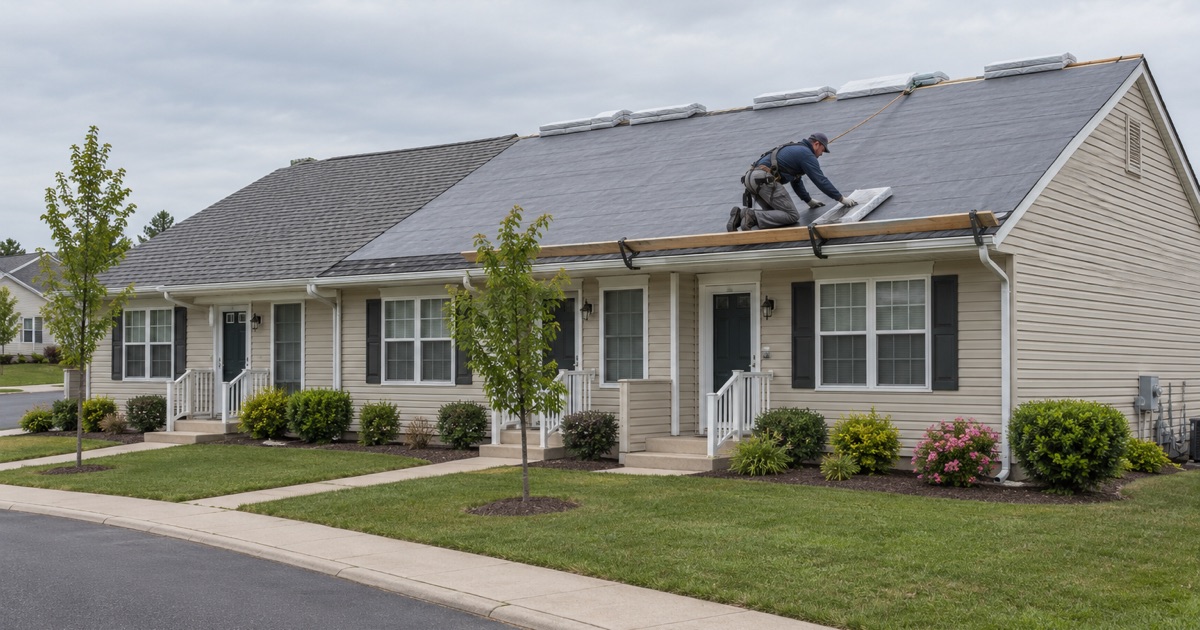
Leisure Village West is a gated active adult community inside Manchester Township in Ocean County, with its main entrance on Route 70. Community listings describe 2,692 attached homes on 825 fenced acres, built by Leisure Technology between 1972 and 1993, in more than 20 floor plans. Three clubhouses and two nine-hole golf courses sit inside the gates.
That building window matters for a roof plan. Homes finished in the early 1970s and homes finished in the early 1990s carry roofs of different ages, different layer counts and different repair histories. An association looking at the whole property is looking at many generations of roofing at once, not one roof repeated across every street.
Roofs, siding and gutters on the association’s list
Listings for homes here say the association maintains the roof, siding and gutters, along with landscaping and snow removal. That puts the roof on the association’s side of the ledger in practice. It also explains why an owner who calls us about a stain on the ceiling usually needs a conversation with the association office as much as a visit from a roofer.
Those listings are where the responsibility comes from in what we have read; we have not reviewed this community’s governing documents. On any job in an adult community or association, our first step is to look at the master deed or bylaws with the owner, so nobody pays for work that belongs to someone else or waits on work that is actually theirs.
Shared roof lines and attached buildings
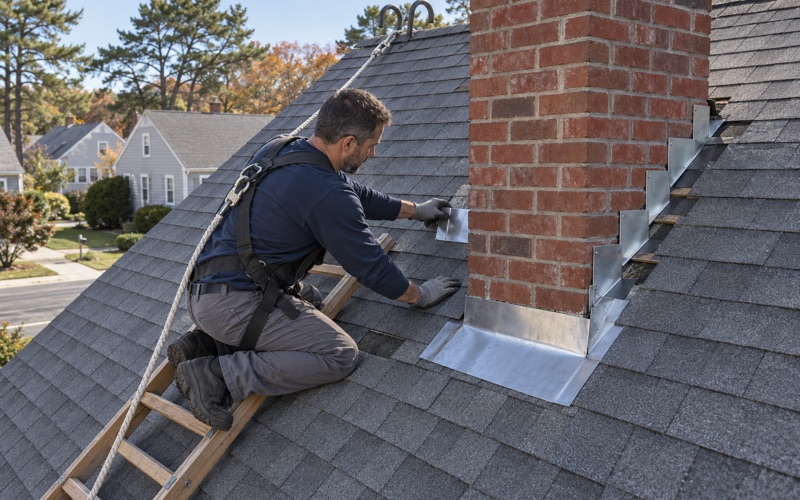
Attached homes rarely give a roofer a clean edge to stop at. One unit’s ridge runs into the next, valleys and flashing are shared, and a leak above one living room can start several feet away above a neighbor. That is why every leak call we take includes time in the attic as well as on the roof.
We trace the water to where it actually gets in before anything is priced. On a shared building that often changes who should be paying, and it keeps a repair from being sold as a full replacement when the problem is one failed pipe boot or a short run of step flashing.
Looking for roofing closer to Beachwood? See Roofing Services in Beachwood.
Re-Roofing on the Association’s Schedule
A roof that comes due by the calendar
In a community this size, a new roof rarely arrives because one owner decided it was time. It arrives because the association’s plan reached that building. One listing for a 1981 home on Buckingham Drive told buyers that a new roof was scheduled to be replaced by the end of the year, which is exactly how that timing tends to surface.
For an owner, that means the right question is often when, not whether. For a board, it means the schedule has to hold up against real roof conditions, because a building that fails early pulls money and crew time away from the next one in line.
Scopes a board can compare
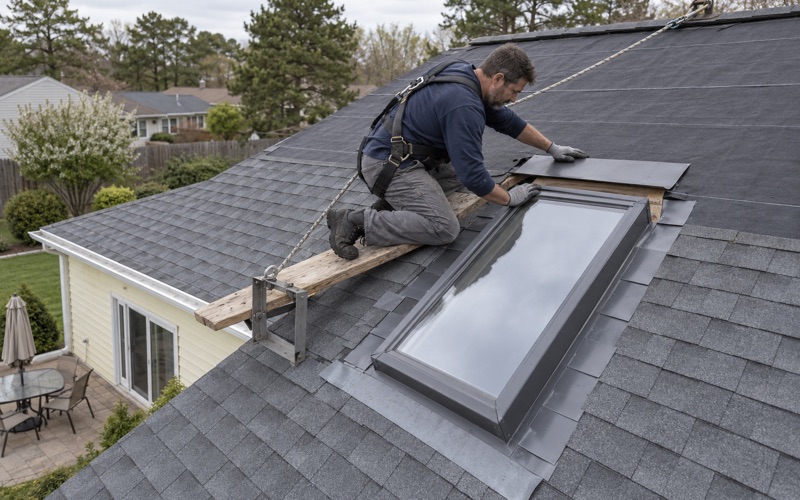
When an association collects bids, vague estimates make the comparison almost impossible. Our written scopes list tear-off, decking, underlayment, flashing, ventilation and gutters as separate lines. A committee can set two proposals side by side and see exactly where the prices differ and why.
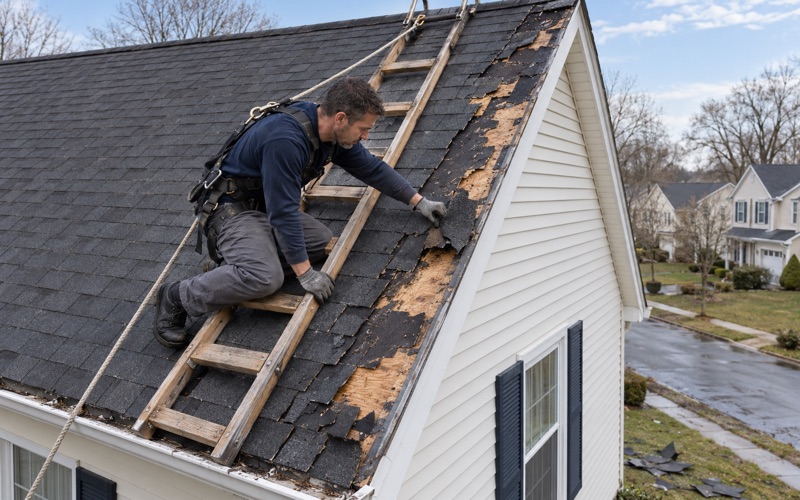
Decking is the line that surprises people most. When rotten sheathing turns up after the old roof comes off, we photograph it and show it to the owner or the association’s representative before it is replaced, at a per-sheet price already set in the contract. Nobody learns about it for the first time on the final invoice.
Working inside a gated adult community
Roofing in an occupied 55+ community means planning around residents who are home during the day, shared driveways and narrow walks. Debris control and access are part of our scope before the crew arrives, not something worked out on the morning of the job.
At the end of every work day the yard, driveway and gutters are cleaned, and the ground is swept with a magnet for roofing nails. On attached buildings that sweep covers the neighbors’ frontage too, since the debris does not stop at the unit line. Shingle wind ratings are matched to the design wind speed for the exact address rather than a general guess.
New Jersey’s Capital Reserve Study Law
What P.L.2023, c.214 requires
Since January 8, 2024, New Jersey law has required every planned real estate development association to undertake and fund a capital reserve study. Under N.J.S.A. 45:22A-44.2, the study covers the capital assets the association is obligated to maintain. The state’s own guidance on the law lists roofs among those common-area assets, alongside exterior walls and parking lots.
The law gives associations without a recent study a deadline. One with no study in the five years before the effective date had one year to complete one. Associations with less than $25,000 in total common area capital assets are exempt from the requirement.
The 30-year funding plan
The study is not just a list of components. N.J.S.A. 45:22A-44.3 requires a 30-year funding plan built on it, so the association has to show how it will pay for each asset as it wears out. For a community whose roofs are maintained by the association, that plan is where roof replacement timing turns into dollars.
We have not seen whether Leisure Village West has completed its study, and we do not know its reserve balance or its replacement cycle. What we can say is that a 30-year plan is only as good as the roof condition data behind it. A roof assumed to have ten years left that actually has four will strain the plan long before anyone expects it.
Who prepares the study
The law says the reserve study must be performed or overseen by a reserve specialist credentialed by the Community Associations Institute, or by a New Jersey-licensed engineer or architect. That is not our role. We do not prepare reserve studies and we do not certify them.
Where we can help is on the roof itself. An association or its reserve specialist may want current condition notes, photographs and a written scope for buildings flagged as due. We document what we find so the people preparing the funding plan are working from what is actually on the roof.
What Owners Can Ask About the Roof Plan
Questions for the association
An owner in Leisure Village West does not need to read a reserve study cover to cover to ask useful questions. Has the association completed its capital reserve study? Where does my building fall on the roof schedule? Who do I call first if water comes through the ceiling before then?
Those answers come from the association, not from us. Once an owner has them, a roof inspection makes much more sense, because we can tell them whether what we see lines up with the timing they were given or suggests the building should move up the list.
When we inspect a unit’s roof
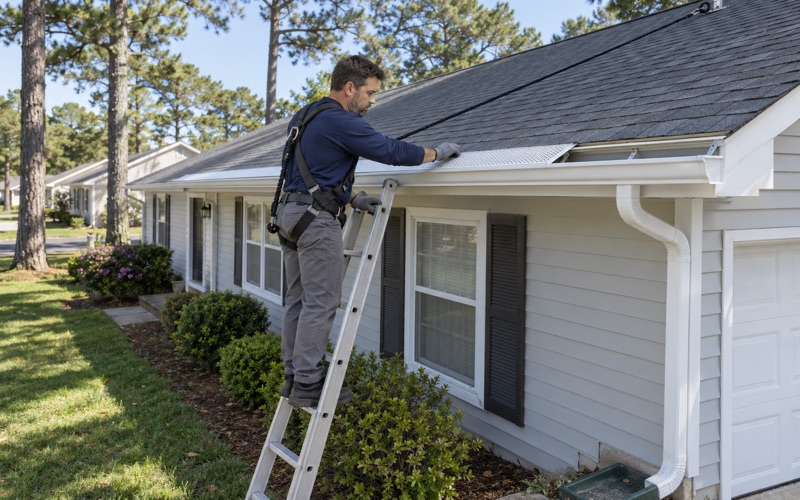
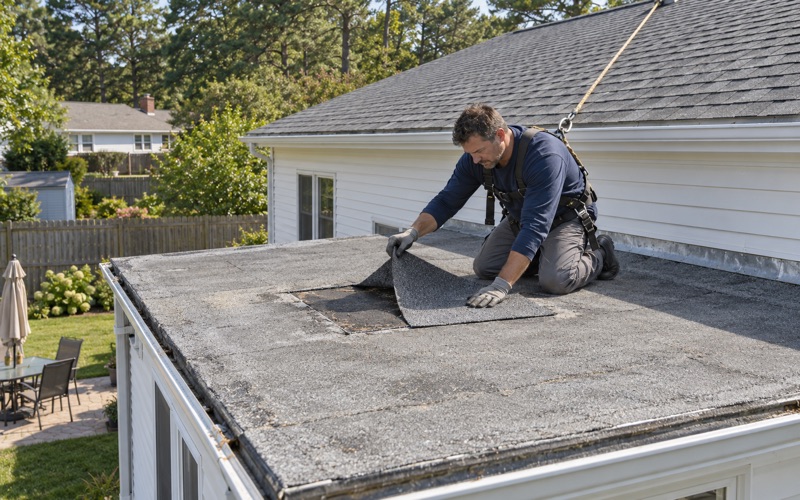
Our inspection covers the roof surface and the attic beneath it. We look at the condition of the shingles, the flashing at walls and vents, pipe boots, drip edge, ventilation and the gutters, and we photograph each problem. The report says plainly whether the roof can be repaired before replacement is ever mentioned.
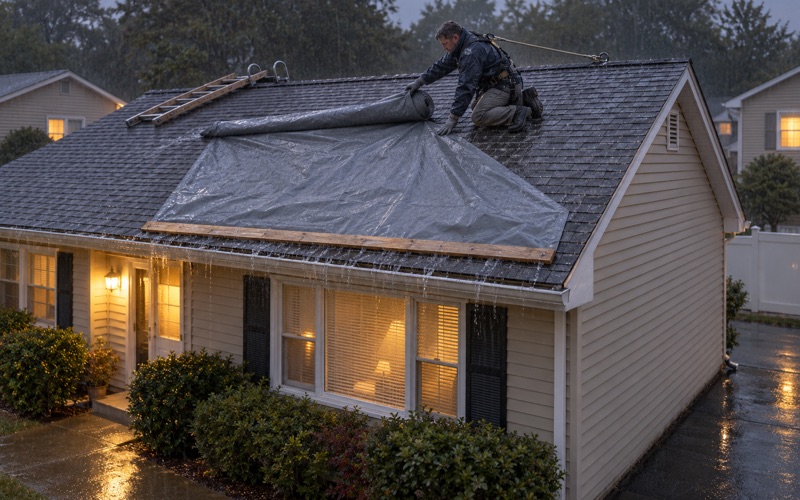
If storm damage is the issue, we photograph it and write it up for the claim, and the crew will meet an insurance adjuster on site when asked. In an association setting that write-up usually goes to the board or the management office as well as the owner, so everyone is working from the same record.
Buying or selling a home here
A listing that mentions a scheduled roof is useful, but it is only a starting point. Buyers can ask the association to confirm the date, whether the work is funded in the reserve plan, and whether any cost passes to the owner. Sellers benefit from having the same answers ready before questions come up at contract.
If a buyer or seller wants an independent look at the roof over a particular unit, we can provide one. Every contract we write follows New Jersey’s home improvement rules, including the three-day cancellation notice, so an owner always has time to compare our proposal with the association’s own plan.
- 20+ Years in Roofing
- Attic and Roof Leak Checks
- Line-Item Written Scopes