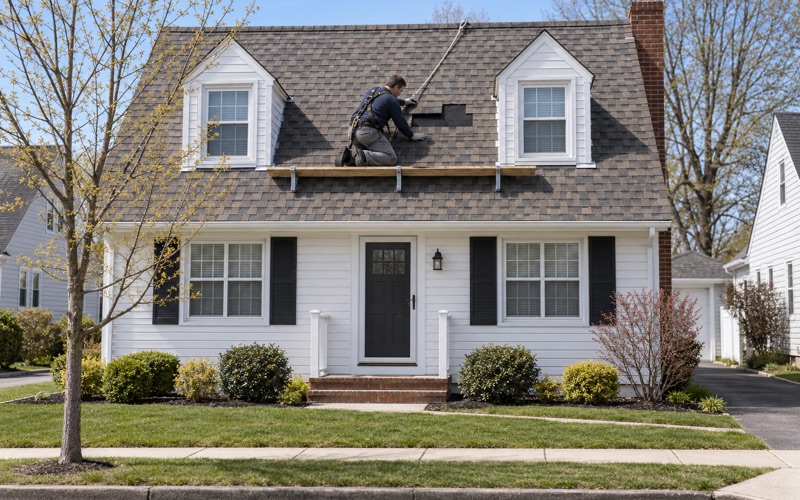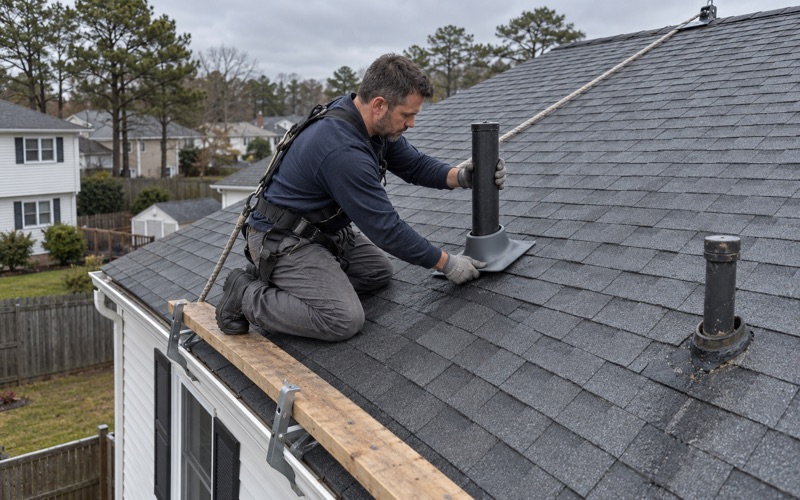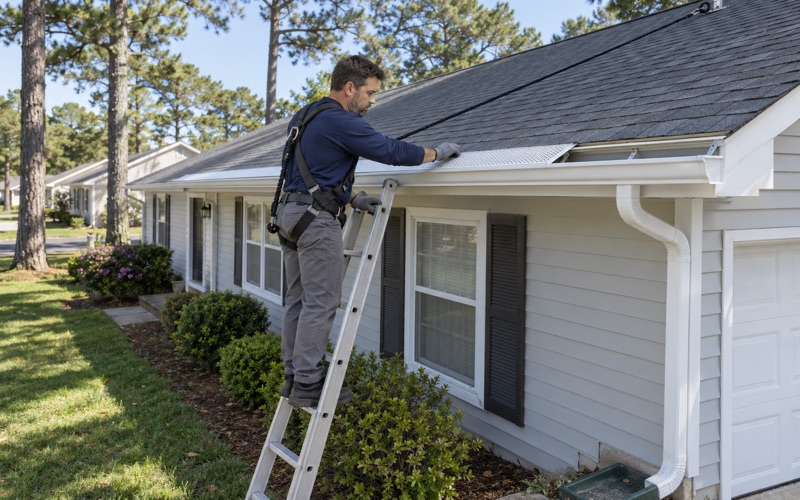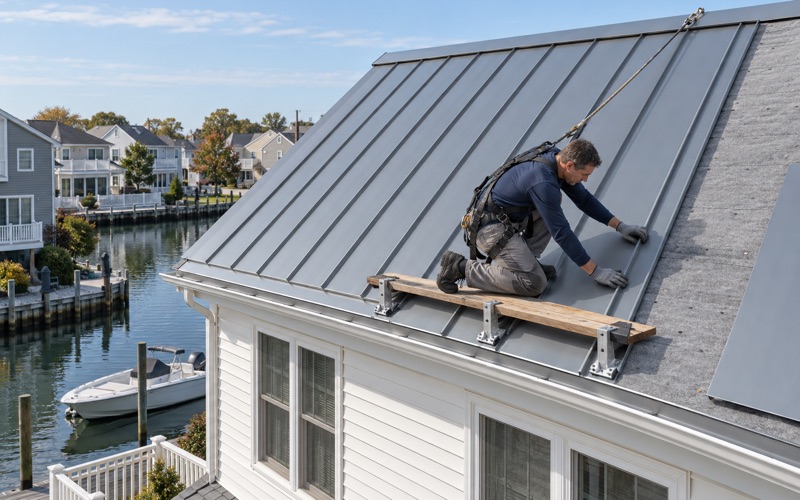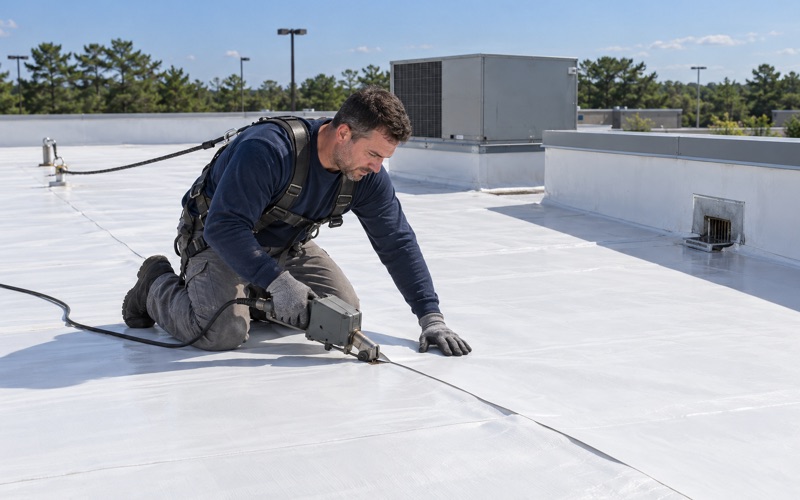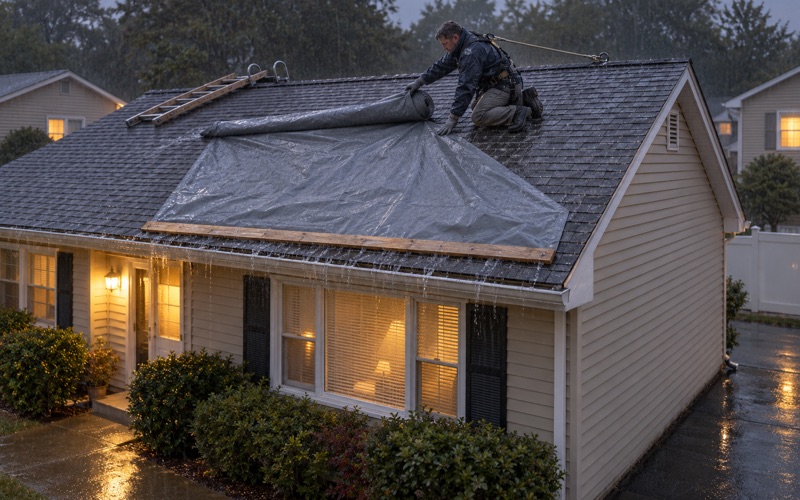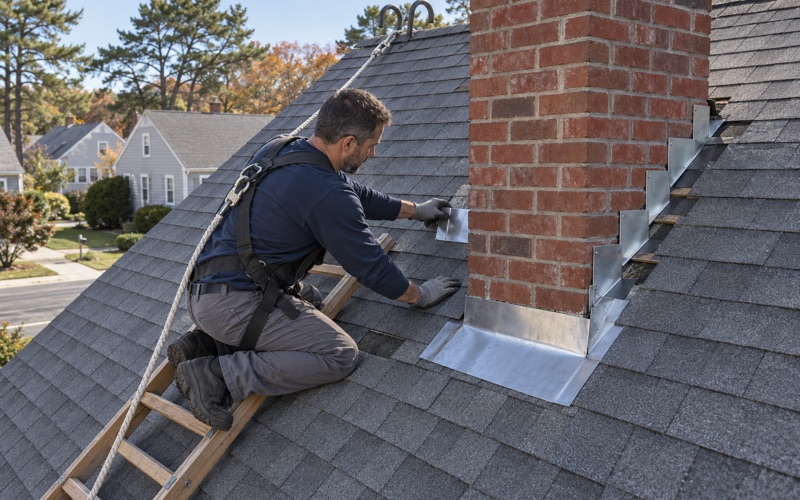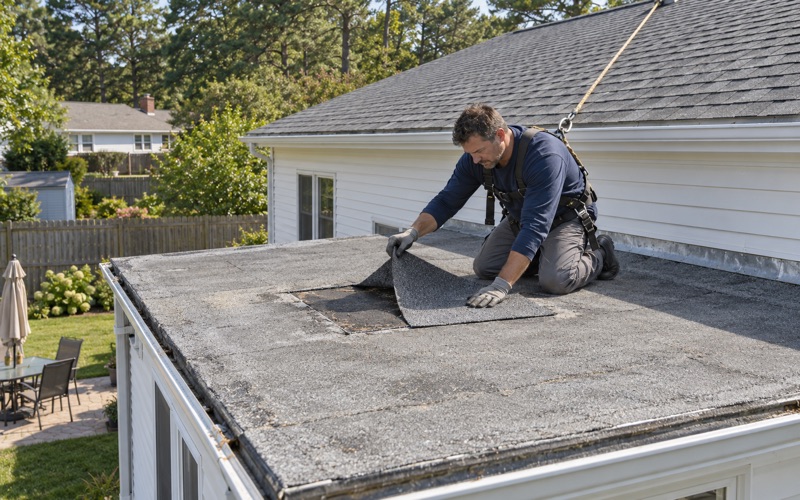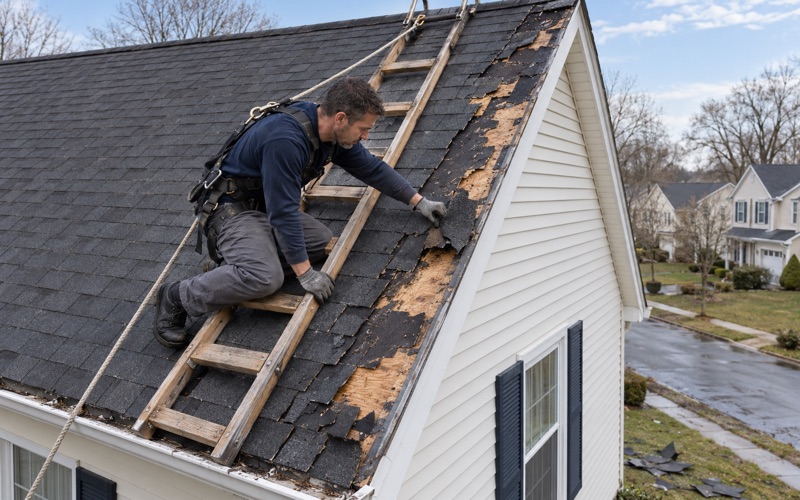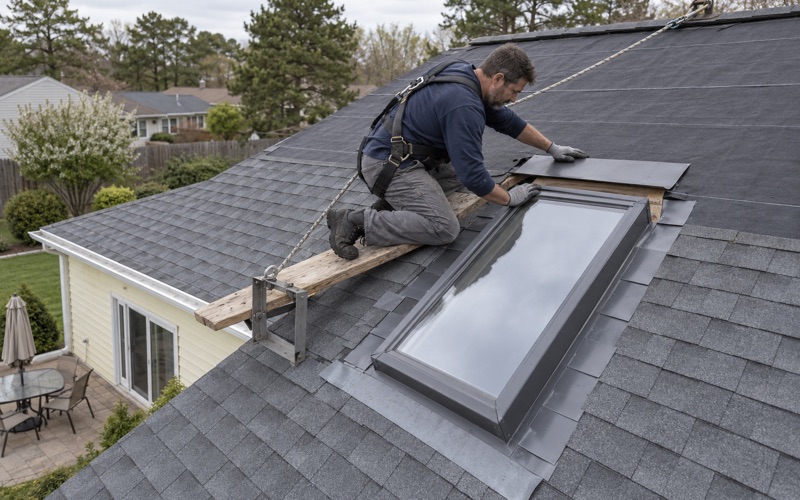
Brick Roofing has handled roofing in Howell for homeowners who want a clear account of their roof, drawing on more than 20 years in the trade. We repair leaks, replace worn shingle roofs, rebuild flashing at chimneys and walls, and install new roof systems from the decking up. Every call starts with finding what failed rather than guessing at it.
When a ceiling stain shows up, we go into the attic as well as onto the roof, because water often enters several feet from where it drips. Once we know the entry point, you get a plain answer on whether a repair will hold. Replacement only comes up if the roof genuinely needs it, and we explain why in terms you can check yourself.
Our written estimates break the job into separate lines for tear-off, decking, underlayment, flashing, ventilation and gutters, so you can hold two bids side by side. On this page we focus on wind: what the township’s storm record shows, how a roof comes off a house, and what we look at to keep yours attached.
Howell’s Tornado Record, 2017 and 2023
Two EF-0 Tornadoes in June 2017
On June 24, 2017, the National Weather Service confirmed two EF-0 tornadoes in Howell, touching down within minutes of each other. EF-0 is the weakest rating on the scale, yet near the Home Depot on Route 9 the wind tore metal roofing from a nearby Chase Bank. That roofing was found about half a mile away, according to news reports from that week.
The roof of the Ice Cream on 9 shop was damaged as well, and no injuries were reported. The lesson from that afternoon is that a low-rated tornado still finds the weakest edge on a roof. Loose panel seams, lifted shingle tabs and poorly fastened edge metal are exactly where a brief gust gets its grip and peels a roof back.
The April 2023 EF-2 From Jackson
The stronger event came on April 1, 2023. According to the Public Information Statement issued by NWS Mount Holly on April 5, a tornado formed in Jackson Township in Ocean County at 7:33 p.m. and ended in Howell Township at 7:34 p.m. Surveyors rated it EF-2, with an estimated peak wind of 120 mph along a path 1.4 miles long.
The Mount Holly office also issues forecasts for Howell’s zone, NJZ013 Western Monmouth. That makes its survey the record to read when you want to know what this storm actually did to houses.
What the Survey Found on the Ground
The worst damage the survey described was a house whose whole roof was lifted and tossed into its own backyard and the immediate neighbors’ yards. In the statement’s words, a larger roof rafter was lofted about 125 yards and impaled the roof and second floor of another house. The survey rated that damage at 110 to 120 mph.
Surveyors also noted moderate roof and shingle damage to other houses along the path. The statement does not separate which damaged streets sit in Jackson and which in Howell, so we read it as one storm across the township line. What matters for a homeowner is the pattern: shingles tore at the margins, while the worst-hit house lost its entire roof as one piece.
Looking for roofing closer to Shark River Hills? See Roofing Services in Shark River Hills.
How Wind Lifts a Whole Roof
Pressure Below, Suction Above
Wind passing over a roof speeds up and lowers the air pressure above it, which pulls upward on the whole surface. If a door, window or garage door fails, air rushes into the house and pushes up on the ceiling and roof deck from inside. Those two forces add together, so the roof is pulled from above and pushed from below at the same moment.
Edges, corners and ridges take the highest loads, which is why damage usually starts at the eaves and rakes. Drip edge, starter strip and the first courses of shingles are the parts that hold that perimeter down. When they let go, wind gets under the next course, and a small opening grows across the slope in seconds.
Where the Load Path Breaks
A roof stays on a house through a chain: shingles nailed to decking, decking nailed to rafters or trusses, and those members fastened to the top of the walls. Wind finds the weakest link in that chain. On many houses the weakest link is not the shingles at all but the few nails that hold each rafter to the wall plate.
When a whole roof is lifted, as the 2023 survey described, the shingles and decking usually held together and the connection underneath gave way. The survey did not examine framing details, so this is our inference from the type of failure rather than a finding. It is still the reason a Howell roof deserves attention below the shingles, not only on top of them.
Debris That Travels
Once framing breaks loose it becomes a projectile. The rafter in the 2023 survey traveled about 125 yards before it went through another roof and into a second floor. In 2017, metal roofing torn from the bank covered roughly half a mile before it landed. Neither building chose to be downwind of that debris.
That means storm damage on your roof may have started on someone else’s. After a severe storm we look for punctures, cracked decking and dented metal that point to impact rather than uplift. The distinction matters, because an impact hole needs decking and underlayment repair at that spot, while uplift damage tells us the fastening across the slope needs a closer look.
Roof-to-Wall Connections and Shingle Wind Ratings
How Rafters Meet the Walls
From the attic we can usually see how the rafters or trusses sit on the top plate of the walls. Some are held only by nails driven at an angle, called toenails. Others have metal connectors, often called hurricane ties or clips, nailed to both the framing and the plate. We note which you have and whether any connection looks split, rusted or pulled.
Adding connectors to an existing house is framing work, and the practical route depends on whether walls or soffits will be opened. During a full tear-off the top of the wall is easier to reach from above, so that is the time to talk about it. We describe what we saw and what reinforcement would involve, and you decide whether it belongs in the scope.
What a Shingle Wind Rating Means
Shingle packages carry wind ratings from standard lab tests. ASTM D3161 Class F is tested at 110 mph, and ASTM D7158 Class H is rated for 150 mph. Architectural shingles such as GAF Timberline HDZ, Owens Corning Duration and CertainTeed Landmark carry these ratings when installed to the manufacturer’s instructions, and high-wind installation typically calls for six nails per shingle.
A rating is a ceiling, not a promise. Shingle wind warranties cover damage only up to the listed wind speed, and GAF’s warranty, for example, excludes winds above that figure. The 2023 survey’s estimate of 120 mph sits above the Class F test speed, which is one more reason the connection under the roof matters as much as the shingle on top.
Matching the Rating to the Address
DCA Bulletin 19-1 ties design wind speed to a specific address rather than one number for a whole town. Howell covers 61.21 square miles, the largest municipality in Monmouth County by total area, so we look up the figure for your property instead of guessing from a neighbor’s roof or a township-wide average.
We then choose shingles, underlayment and edge metal that meet or exceed that number and name each product in the estimate. Underlayment may be ASTM D8257 synthetic, with ASTM D1970 self-adhering ice and water barrier at eaves and valleys. Drip edge goes on at both eaves and rakes, because those perimeter lines are where wind uplift starts.
Checking Your Roof After a Severe Storm in Howell
Start From the Ground
After a tornado warning or severe thunderstorm, walk around the house before anyone climbs. Look for shingles or ridge caps in the yard, bent gutters, missing drip edge and any sag along the ridge line. Inside, check ceilings and the tops of walls for fresh stains or cracks, which can signal that the roof has shifted on the walls.
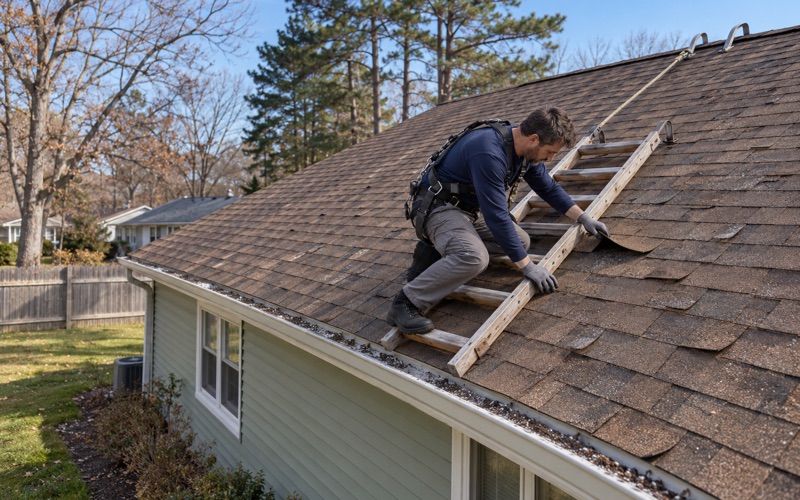
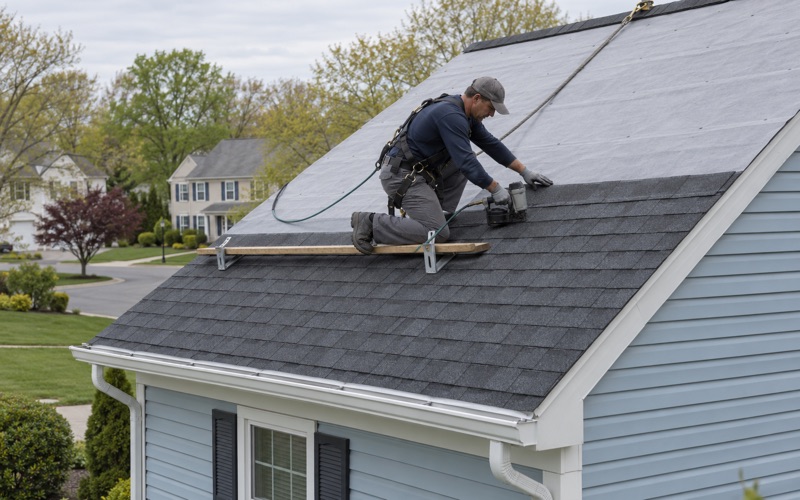
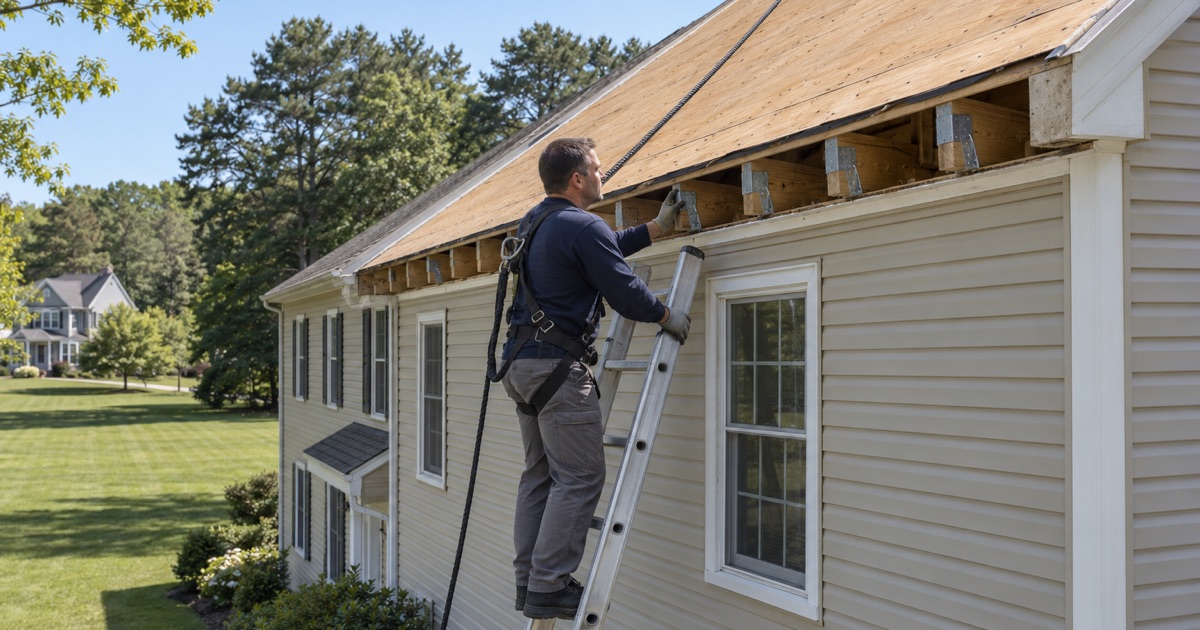
Stay off a damaged roof, since decking can be cracked under shingles that look intact. When we arrive we go through the attic first, looking at the rafter ends, the sheathing nails and any daylight along the wall plate. Then we work the roof surface with fall protection in place, following the OSHA six-foot rule for residential roofing.
Photos for Your Own Claim
We photograph storm damage and write it up so you can file your own insurance claim with clear evidence. If you ask, our crew will meet the insurance adjuster at the house and point out what we found. The claim stays yours: New Jersey’s Public Adjusters’ Licensing Act reserves negotiating on an owner’s behalf for public adjusters, and we do not take that role.
Keep your own photos with dates and save any pieces of roofing that came off, since they show how a fastener failed. If you are away when a storm passes, we can inspect, photograph and send the report the same day. That record also shows the condition of the roof before any repair begins, so you can compare it against the finished work.
Decking, Contracts and Manufactured Homes
Once old shingles come off, damaged decking sometimes appears that no inspection could see from outside. We photograph each bad sheet and show it to you before we replace it, at a per-sheet price already written into the contract. Our contracts follow New Jersey’s home improvement rules, including the three-business-day cancellation notice on contracts over $500.
Howell also holds 539 mobile homes, according to Census five-year estimates, and their roofs take wind differently from a framed house with rafters on a wall plate. We look at how that roof covering and its edges are secured before recommending a repair. At the end of each work day we clean the yard, driveway and gutters and run a magnet sweep for roofing nails.
- 20+ Years in Roofing
- Attic and Roof Leak Checks
- Line-Item Written Scopes