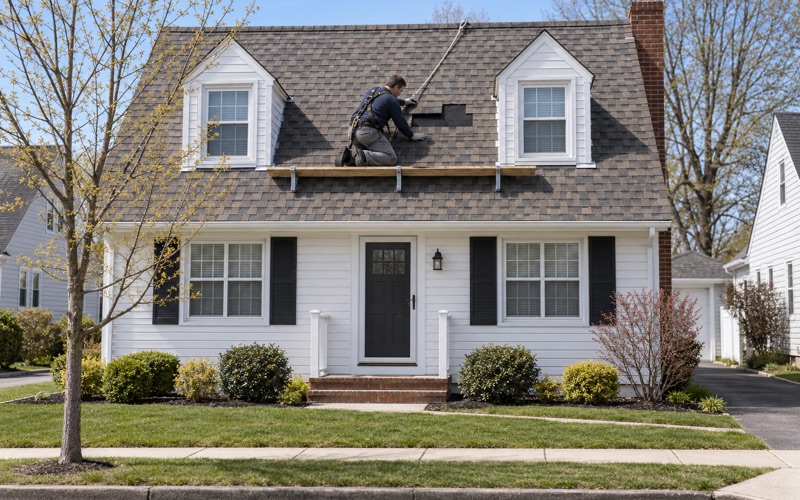
Brick Roofing brings more than 20 years of experience to roofing in Holmdel, and much of that work starts with a single question from the owner: did the last storm do anything to my roof? We answer it with a documented inspection rather than a guess from the driveway, so the decision about repairs, replacement or nothing at all rests on what is actually up there.
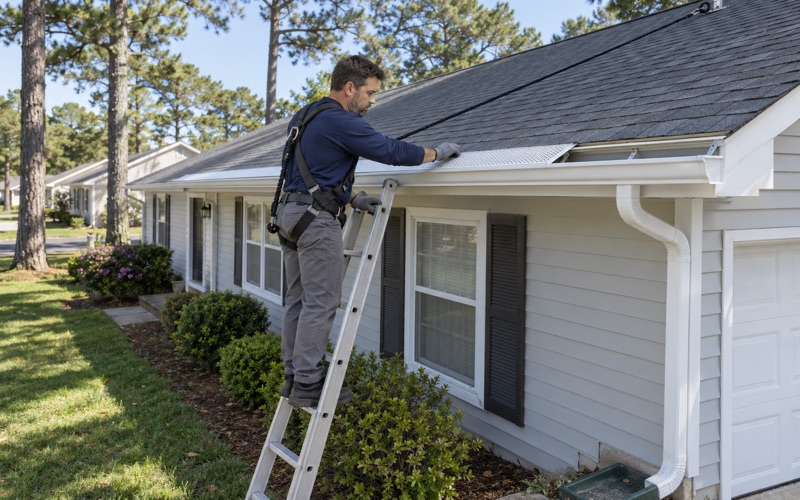
That order matters on a large house. A roof with several planes, valleys and a chimney or two can hide a problem on a slope nobody sees from the yard, and it can also look worse from the ground than it really is. We walk the surfaces, check the attic, photograph what we find and put it in writing before anyone talks about price.
When repair is the honest answer, we say so first and only discuss replacement if the roof genuinely calls for it. When there is nothing to fix, you still get the photographs and a short report, which is a useful record to keep with your house papers. Either way, the next step is yours to take, on facts you can see for yourself.
The July 2022 Hail Report Near Holmdel
Hail is not a theoretical concern here. The NOAA Storm Prediction Center keeps a public log of local storm reports by place name, and Holmdel appears in it. The entry that matters for homeowners is from July 16, 2022, and it is worth reading closely, because what it says and what it leaves out both shape how we approach a roof afterward.
What the Report Records
The Storm Prediction Center logged 1.00-inch hail, the size of a quarter, 2 miles northwest of Holmdel on that date. The size was estimated by the person who sent in a social-media video of hail and strong winds, and the time was estimated from radar. It is a preliminary local storm report, the kind meteorologists use to track a storm as it moves.
That makes it a real, dated record that hail of a meaningful size fell near the township in July 2022. It is also a single observation from one point, filed from a video. It tells us the storm carried hail; it does not map where the hail fell street by street or how long it lasted at any given address.
Trees on Wires Near McCampbell Road
The same storm produced a wind report as well: trees on wires near McCampbell Road, logged 1 mile north-northeast of Holmdel, with the wind speed listed as unknown. Strong gusts and hail arriving together is a common pattern in summer thunderstorms, and wind can lift shingle tabs or drop limbs on a roof even where the hail stays small.
For an owner, that pairing is a reason to look at more than the shingle surface. We check the edges and ridges where wind gets under a roof, the gutters and downspouts, and any slope where branches overhang. Holmdel Police have also reported a large tree crashing through the roof of a residence in high winds, a reminder that limbs matter as much as ice.
What the Report Does Not Say
No roof damage was listed in the Storm Prediction Center entry, and it was not a National Weather Service damage survey. Nothing in the record says what happened to any particular house that day, and we will not tell you your roof was hurt without seeing it. Holmdel sits in the Western Monmouth forecast zone of the NWS Mount Holly office, which issues the warnings you hear before storms like this one.
Looking for roofing closer to Aberdeen? See Roofing in Aberdeen.
What Quarter-Size Hail Can and Cannot Tell You
Hail size is the first number people hear, and it is easy to read too much into it. Whether a quarter-size stone marks a roof depends on the material, its age, how hard the wind was driving the hail and what the stone hit first. That is why a size on a storm report starts an inspection rather than settling one.
Asphalt Shingles
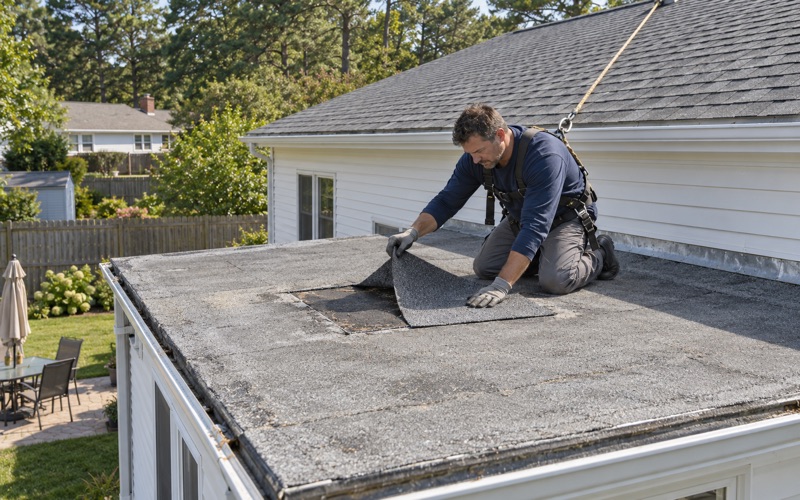
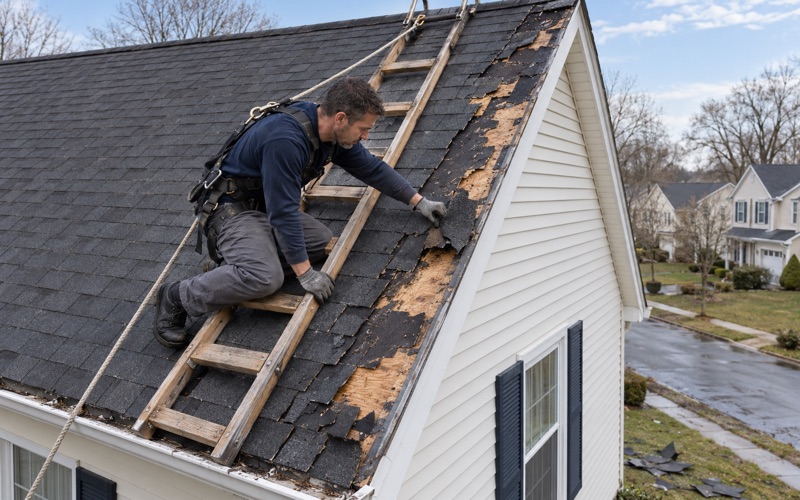
On architectural shingles, hail bruising shows up as soft spots where the mat has been fractured under the granules, often with granule loss in a roughly round pattern. Ordinary aging looks different: granules wear evenly, edges curl and the surface dulls across a whole slope. We test suspect spots by hand and photograph them with a scale marker so the size is clear.
Older shingles that are already brittle can crack where newer ones would only dent, so the same storm can leave two neighbors with very different roofs. We note the shingle type, its approximate age and its condition on every slope, because those details explain whatever we find and tell you whether a repair will hold.
Soft Metals, Gutters and Skylights
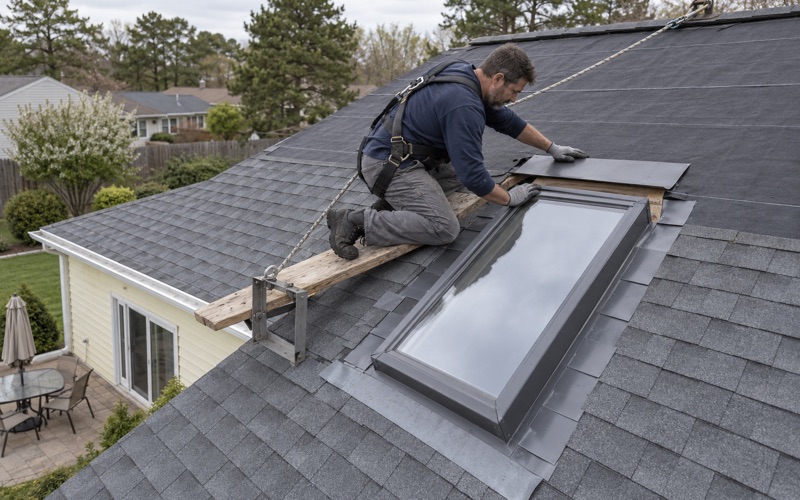
Aluminum gutters, downspouts, drip edge, roof vents and flashing dent more readily than shingles and keep the mark, so they are often the clearest witness that hail fell at a given house. We look at all of them, along with pipe boots, ridge vent and any skylight glazing or curb, and record each dent with a measurement beside the photograph.
Dented metal by itself is not proof that the roof covering failed, and we say that plainly in the report. What it gives you is a dated picture of the storm’s reach at your address, which is the evidence an adjuster or a second contractor will want to see alongside the shingle findings.
Impact Ratings Are Not Coverage
Owners replacing a roof often ask about shingles with a UL 2218 Class 4 impact rating. That rating describes how a product performed in a standardized steel-ball test. It is a material property, not an insurance term, and it does not decide what a policy pays. Your policy language and your carrier answer that question, not the label on the bundle.
We can lay out impact-rated options alongside standard architectural shingles in the written estimate, together with wind ratings such as ASTM D3161 Class F or ASTM D7158 Class H matched to the design wind speed for your exact address. You can then weigh the cost difference against how long you expect to own the house.
Documenting a Roof After a Holmdel Storm
A good post-storm record is boring on purpose: dated photographs, measurements, locations marked on a roof sketch and plain notes. It should let someone who never climbed the ladder understand what is on the roof. That is the standard we hold our own inspection reports to, whether the finding is damage, wear or nothing worth acting on.
Roof Surfaces, Edges and Penetrations
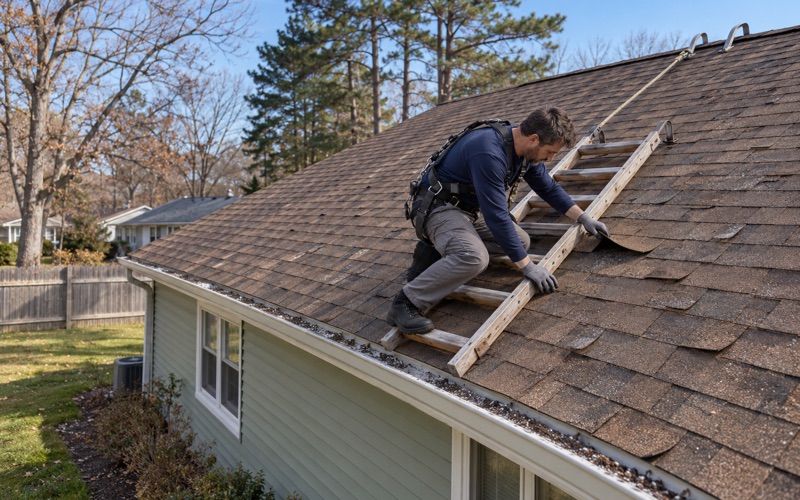
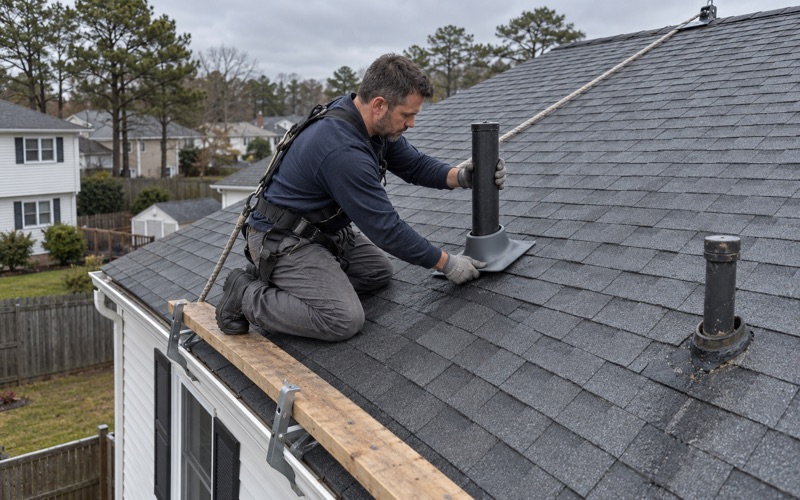
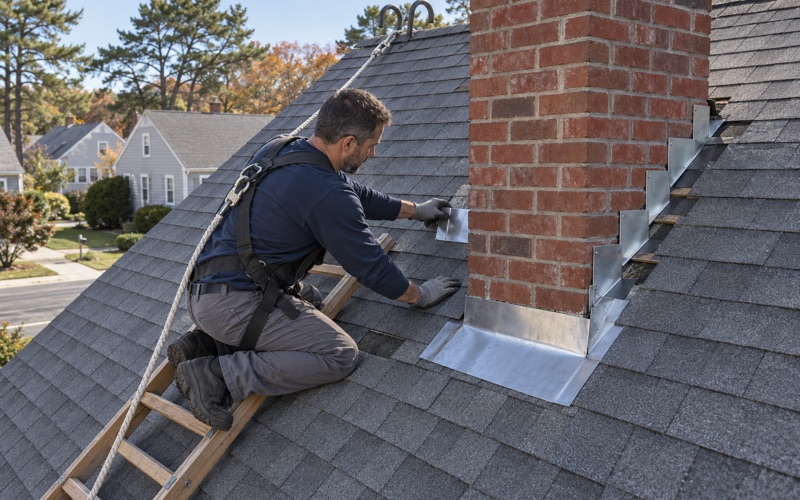
We start at the eaves and work up each slope, checking shingles, ridge caps, valleys, step flashing at walls and the flashing around chimneys and vents. Every finding gets a wide photograph, a close-up and a note on where it sits. On a house with many roof planes, the sketch is what keeps the record usable later.
Storm-related findings are kept separate from ordinary wear in the report, so an old cracked pipe boot is not mixed in with fresh dents on a vent cap. That separation is what makes the document credible to anyone reading it, including you, a carrier or a buyer’s inspector years from now.
The Attic, Not Just the Shingles
Every leak call also includes a look in the attic. Water seldom drips where it enters, so we trace staining, damp decking and wet insulation back toward the roof to find the actual entry point before pricing anything. After a storm, a dry attic is useful evidence too, and we photograph it as carefully as we would a stain.
When You Are Not at Home
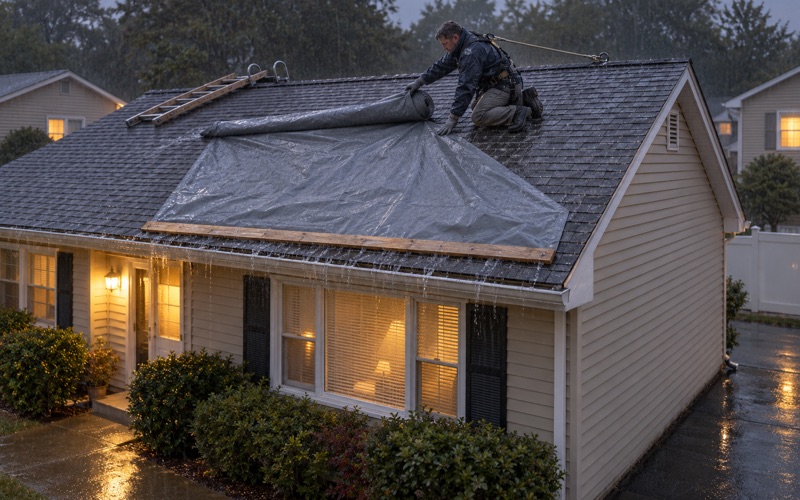
If you are away when a storm passes, we can inspect and photograph the roof without you on site and send the report the same day. That suits owners who travel, and it means the documentation is dated close to the storm rather than weeks later, when ordinary wear and new weather can blur what happened.
The report arrives as photographs plus written findings, organized by slope and component. You keep it whether or not you file anything, and it gives a clear starting point if a later storm brings the same question back. It also helps when you sell, since a buyer’s inspector will ask about the roof’s history.
Talking to Your Carrier on Your Own Terms
Once you have the inspection report, the decision about a claim is yours. We photograph and write up storm damage for your own use, and we will meet the insurance adjuster on site if you ask us to. What we will not do is negotiate your claim, because in New Jersey that work belongs to you or a licensed public adjuster.
Who Can Speak for You
The New Jersey Public Adjusters’ Licensing Act, N.J.S.A. 17:22B, reserves negotiating a claim on an owner’s behalf to licensed public adjusters. At an adjuster meeting our role is to show what we found and explain it in roofing terms. You keep the conversation with your carrier, and you decide whether to bring in a public adjuster at all.
Separate Lines in the Estimate
If work is warranted, our written scope lists tear-off, decking, underlayment, flashing, ventilation and gutters as separate lines. That lets you compare our number with an adjuster’s estimate or another contractor’s bid item by item. Damaged decking found once the old roof is off is photographed and shown to you first, then replaced at the per-sheet price set in the contract.
Contracts follow New Jersey’s home improvement rules, including the three-business-day cancellation right on contracts over $500 under N.J.S.A. 56:8-151. Replacing the roof covering on a detached one- or two-family house is ordinary maintenance under N.J.A.C. 5:23-2.7 and needs no permit, though the rehabilitation subcode calls for a tear-off when two or more layers are already in place.
Large Detached Houses Near Bell Works
Most housing here is owner-occupied and detached: the Census Bureau’s 2024 five-year estimates count 77.1 percent of units as one-unit detached, 91.6 percent of occupied homes as owner-occupied and a median value of $843,000. Many date from the 1990s or from the 1960s growth around the Bell Labs Holmdel Complex, the Eero Saarinen building now known as Bell Works.
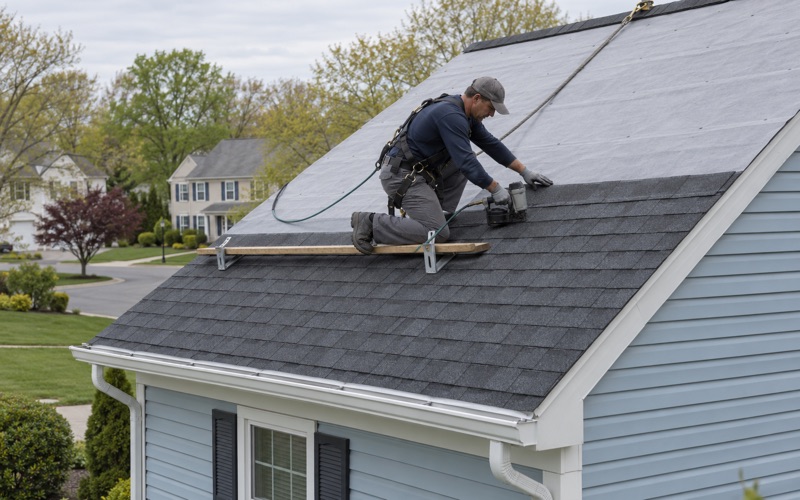
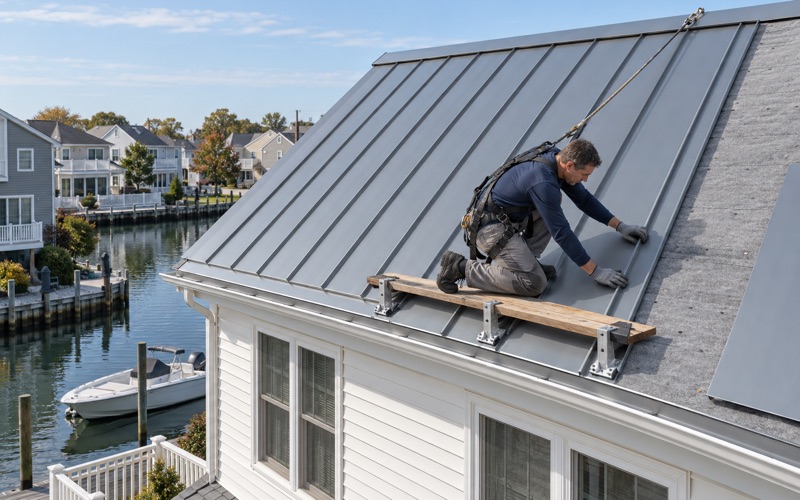
Big roofs on valuable houses reward care over speed. We plan staging and access before the crew arrives, schedule any solar panel removal and reinstall into the job, and clean the yard, driveway and gutters at the end of each day, including a magnet sweep for nails. On a property you plan to keep for years, those habits protect the lawn as well as the roof.
If the July 2022 storm or a later one has left you wondering about your roof, the useful first step does not change. Ask us for an inspection, read the report and the photographs, and decide from there. Whatever you choose, you will be choosing it from a record of what is actually on your house.
- 20+ Years in Roofing
- Attic and Roof Leak Checks
- Line-Item Written Scopes