
Brick Roofing provides emergency roof repair in Brick, NJ, serving surrounding cities including Point Pleasant, Leisure Village East, Brielle, Point Pleasant Beach and Leisure Village. In 20+ years of storm seasons at the shore, we have learned that the hours right after the roof opens decide how much damage the inside of the house takes, so emergency calls get priority.
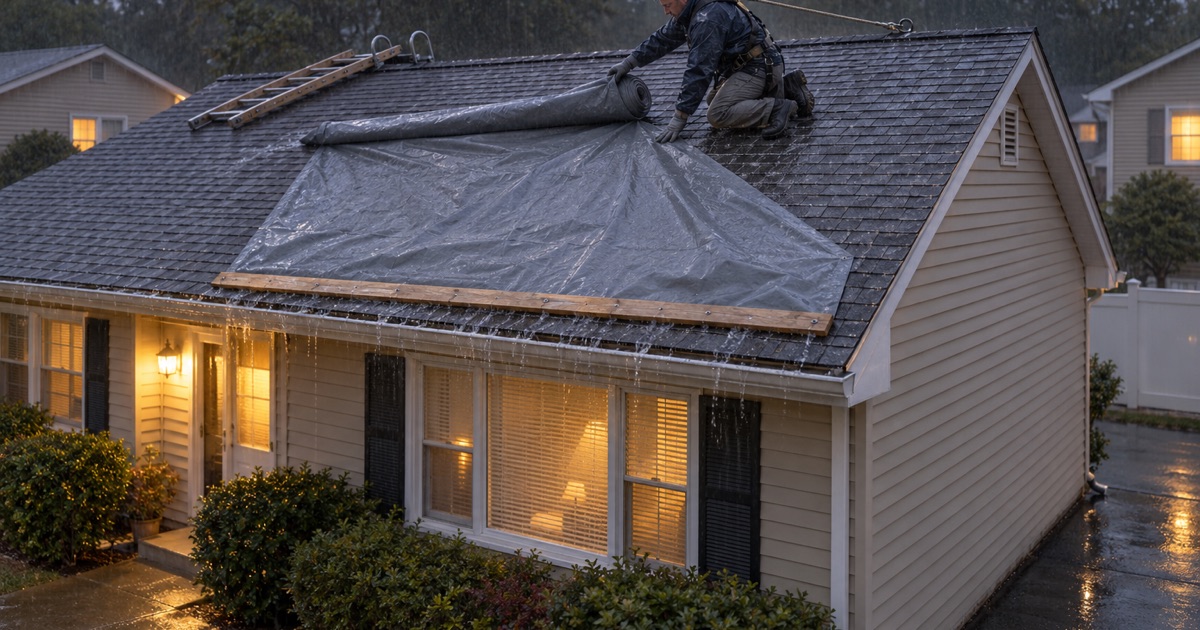
An emergency visit has two goals. The first is stopping water from coming in, with a secured tarp or a temporary seal that holds until the weather clears. The second is a clear record of what happened, with photographs before and after, so you have what you need for repairs and for any insurance claim.
Once the house is protected, the permanent repair follows. We tell you honestly whether the damaged area can be repaired or whether the storm has finished off a roof that was already near the end of its life, and you get a written scope before any permanent work begins.
When the Roof Opens Up
Fallen Trees and Limbs
A limb through the roof can break rafters, puncture the sheathing and leave an open hole above a bedroom or living room. We clear the debris from the roof surface where it is safe to do so, assess whether the framing is damaged, and cover the opening with a tarp secured to solid structure rather than weighted down with loose objects that blow off.
Where a tree is still resting on the house, removing it safely is a job for a tree crew, and we coordinate around that. Once it is off, we inspect the full impact area, including the attic, because a strike often cracks framing or loosens decking several feet beyond the visible hole.
Wind-Torn Shingles and Sheathing
Strong wind can peel shingles back in sheets and, on exposed homes, tear off the underlayment and expose the deck. Rain then runs straight into the attic. We cover the exposed area, secure any loose shingles that are about to go, and check the edges and ridge where wind damage usually starts.
Flashing Ripped Loose
Wind can pull chimney flashing, drip edge and wall flashing loose, leaving an open joint that pours water into the wall or ceiling during every rain. A temporary seal or a section of tarp folded into the joint protects it until the flashing can be properly refitted or replaced.
Raised Houses After a Storm
On a house lifted a full story after Sandy, even a temporary repair happens high above the ground, often in wind and wet conditions. We bring taller ladders or a lift and use fall protection on every emergency visit, because rushing onto a raised roof without it is how storm work turns into an injury.
Our Emergency Response
Tarping That Stays Put
A tarp that lifts in the next gust lets in as much water as no tarp at all. We extend tarps well past the damaged area, run them over the ridge where possible so water cannot get behind them, and fasten them through battens into the structure, so they hold through wind until the permanent repair.
We also look at where water will run off the tarp. A cover that dumps rain into a valley or onto a lower roof can create a second leak, so we route the runoff toward the gutter or off the roof edge as part of the setup.
Temporary Seals for Smaller Openings
Not every emergency needs a full tarp. A cracked pipe boot, a few missing shingles or a small puncture can often be sealed temporarily with compatible materials until the permanent repair. We choose the quickest method that will actually hold in the conditions.
Photographs Before and After
We photograph the damage before we touch it, during the temporary work and after the house is secured. Those dated photographs show the cause of the damage and the steps taken to limit it, which is what an insurer will want to see.
The photographs also help when the permanent repair is planned. They show how the damage looked before any tarps or temporary seals went on, so the repair scope reflects the full extent of the storm damage rather than only what is visible once the cover comes off.
Protecting the Inside of the House
What to Do Before We Arrive
Move furniture, electronics and valuables away from the leak, put containers under drips and lay towels to protect floors. If a ceiling is bulging with water, a small hole at the lowest point lets it drain into a bucket in a controlled way. Photograph everything before you start cleaning up.
Checking the Attic
Water entering through the roof can soak insulation and spread across the ceiling far from the opening. During the emergency visit we check the attic to see how far the water has traveled, so wet insulation and framing are not left to grow mold behind a ceiling that looks dry.
Storms, Insurance and Seasonal Homes
Meeting the Adjuster
If you file a claim, we provide a written description of the damage, the photographs and the cost of the emergency work. When you ask, we meet the adjuster at the house so they see the damage directly, which tends to settle questions faster than descriptions passed back and forth.
Hurricane Deductibles
New Jersey allows a separate hurricane deductible only when the National Weather Service has declared a named hurricane with 74 mph sustained winds measured in the state. Most nor’easters and strong wind events do not meet that test, so your ordinary deductible usually applies. Check your policy, and keep the dates and records of the storm.
Second Homes Hit While Empty
When a storm passes over a shore house nobody is living in, damage can go unnoticed for weeks. For owners who are away, we inspect and photograph the roof, secure any openings and send the report the same day, so you can make decisions from a distance and avoid opening the house to find water damage in every room.
- 20+ Years in Roofing
- Attic and Roof Leak Checks
- Line-Item Written Scopes