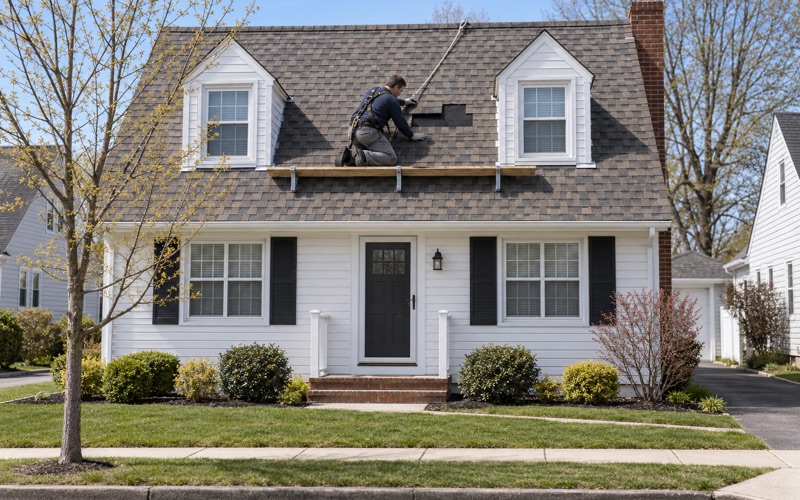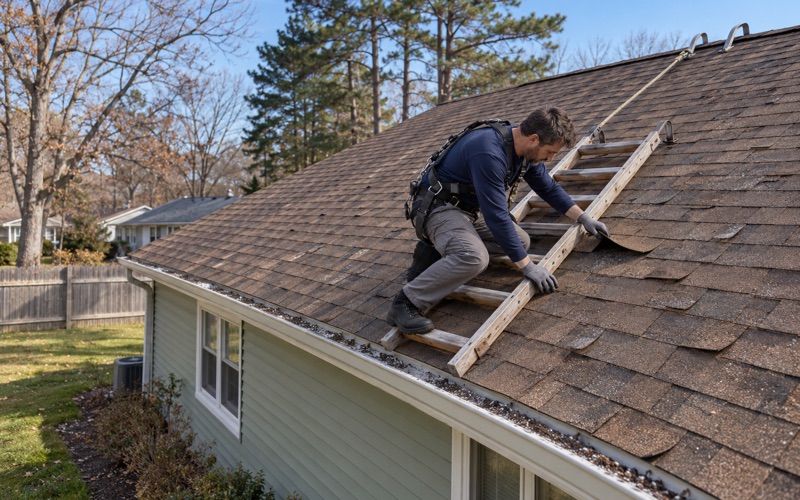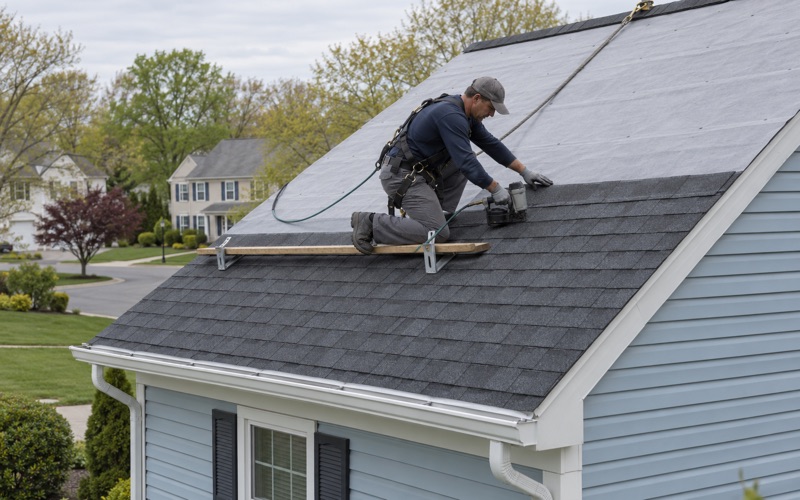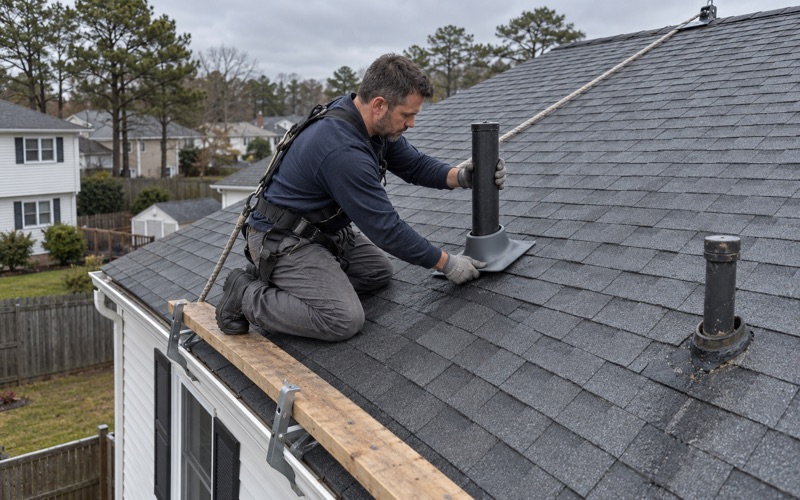
Brick Roofing has spent more than 20 years on roofing in Dover Beaches North and the rest of this stretch of the Jersey Shore, and the work here follows a calendar most towns never see. Owners close their houses in the fall, head home for the winter, and return when the weather turns. Our job is to make sure the roof they come back to is the same one they left.
That means most of what we do on these streets happens while nobody is home. We inspect before a house is closed for the season, look again after the big winter storms, and line up repairs so they are finished before the owners and their guests arrive. Every visit ends with photographs and a written report sent the same day, so an owner in another state can see exactly what we saw.
When a repair is needed, we tell you plainly whether the roof can be fixed before anyone talks about replacing it. When a replacement makes sense, the estimate breaks out every part of the job on its own line. Either way, you decide from your phone or your desk, and the crew works to a schedule that fits your season.
A Shore Community Built Around Second Homes
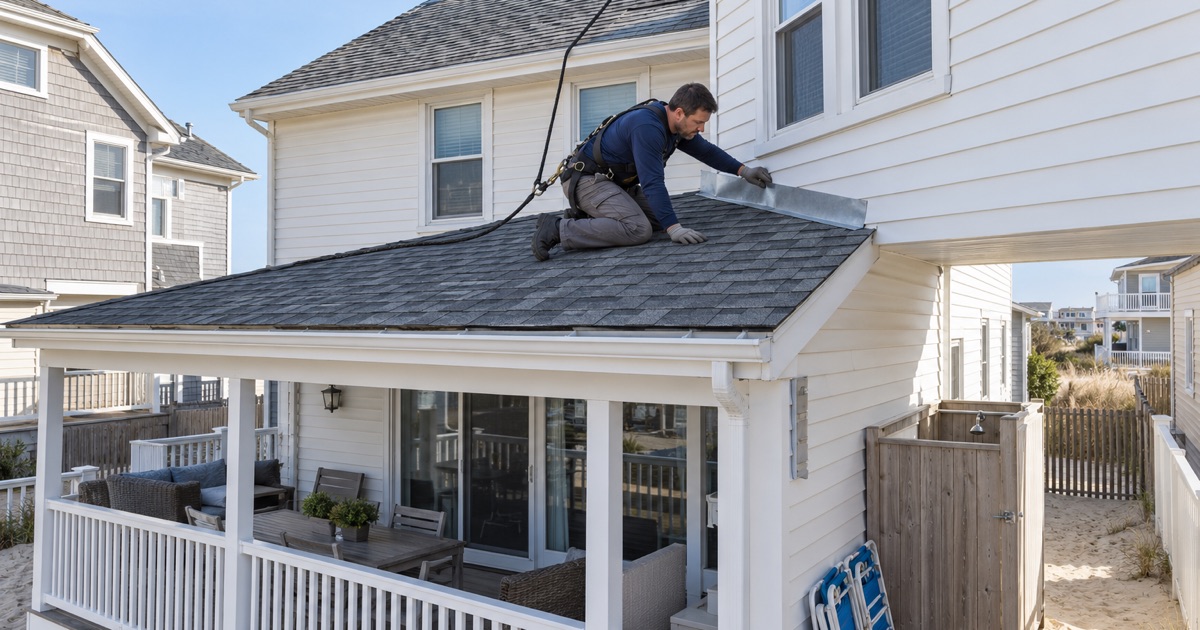
Dover Beaches North is a census-designated place inside Toms River Township, in Ocean County, on the Barnegat Peninsula, the long, narrow barrier peninsula that separates Barnegat Bay from the Atlantic Ocean. It takes in Ocean Beaches 1, 2 and 3, Chadwick Beach and Chadwick Island, Seacrest Beach, Monterey Beach, Silver Beach, Normandy Shores and half of Normandy Beach.
Most of the houses sit empty for months
The Census Bureau’s 2024 American Community Survey counts 4,256 housing units here, and 3,015 of them, or 70.8 percent, are held for seasonal, recreational or occasional use. Only 1,128 are counted as occupied. Nearly all of the housing is detached, with 4,050 single houses in the count, so most roofs here belong to one owner who may live hours away.
That changes how a roofer has to work. In a year-round neighborhood, the person who lives under the roof is the first to notice a brown ring on the ceiling. On a block of second homes in Chadwick Beach or Silver Beach, there may be no one inside the house from fall until late spring, and the roof has to be watched by someone else.
What a winter does to a roof nobody is watching
Winter on the peninsula brings nor’easters, and the climate record for this area puts their peak in February. Wind lifts the edges of tired shingles, rain is pushed sideways under loose flashing, and a pipe boot that was cracking in September can split by March. None of that is unusual for a shore roof, but the timing matters when the house is closed.
Our reasoning is simple, even if no study measures it: a leak in an empty house runs longer before anyone sees it than a leak in an occupied one. Water that would have been caught as a single drip can soak insulation, stain drywall and reach the decking over several weeks. Catching it early is the whole point of the visits described below.
Postwar cottages next to brand-new houses
The housing here splits into two very different groups. The survey counts 1,155 units built in the 1950s, which is 27.1 percent of the stock, and 1,091 built in 2010 or later, about 25.6 percent. A 1950s beach cottage and a house finished a few years ago need different conversations about ventilation, decking and flashing.
On the older cottages we pay close attention to the roof deck, the chimney flashing and how the attic breathes, because those houses were built long before modern underlayment. On newer houses the questions are usually about whether the shingles, drip edge and fasteners were chosen for the wind and the salt, and whether anything has worked loose in the first few winters.
Looking for roofing closer to Manasquan? See Roofing in Manasquan.
Closing the House: The Fall Roof Inspection
The most useful hour we spend on a seasonal house is the one before the owner leaves. A fall inspection finds the small problems while the weather is still good enough to fix them, and it gives the owner a record of how the roof looked before the winter started.
What we check before you lock the door
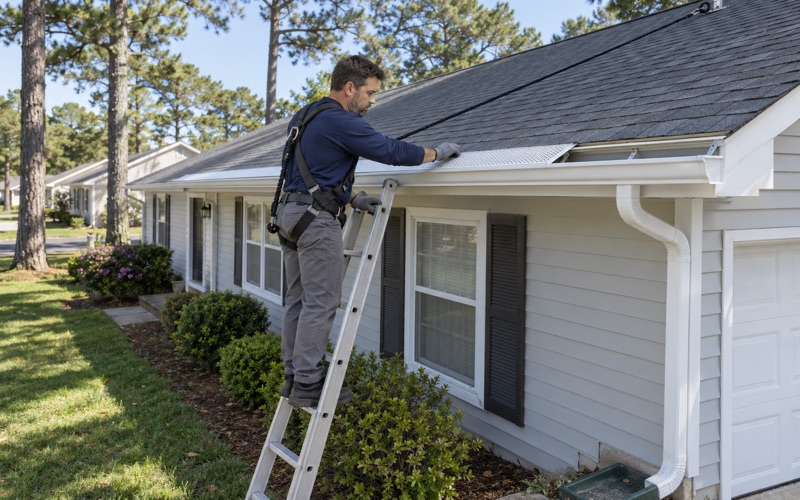
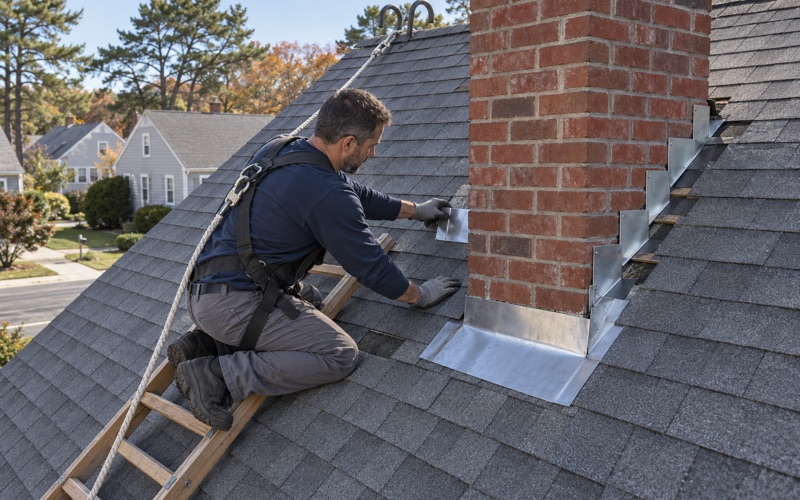
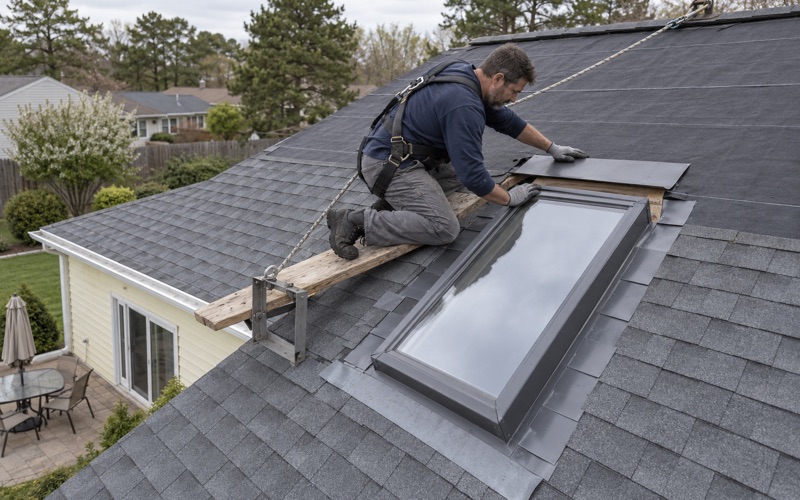
We walk the roof and look at shingle edges, ridge caps, pipe boots, step flashing along walls and the counter flashing at the chimney. We check the drip edge at the eaves and rakes, clear and inspect the gutters and leaders, and look at the skylights if the house has them. Then we go into the attic to look at the underside of the deck for old stains, damp insulation or daylight where there should not be any.
You get a report the same day with photos of each area, a plain note on what is fine and what is not, and a price for anything worth fixing before winter. If nothing needs attention, the report says so, and that is a useful document too when a storm comes through later.
Salt air and the metal on the roof
A few blocks of land between the ocean and the bay means salt in the air every day of the year. Ordinary fasteners and thin flashing corrode faster here, and a rusted nail or a pinholed piece of step flashing is often where a winter leak begins. We look for that corrosion on every fall visit.
When we replace any of it, we use stainless steel or hot-dipped galvanized fasteners and flashing chosen for coastal exposure, and the estimate names the metal we are using. That way you know what is going on your roof, and you can compare it against any other bid you receive.
Wind ratings for your exact address
New Jersey’s DCA Bulletin 19-1 points to design wind speeds set by location rather than by town. We look up the figure for your address and match it to shingles tested to ASTM D3161 Class F or ASTM D7158 Class H, with high-wind six-nail fastening when the rating calls for it. A shingle rated for the wrong wind speed is one of the more common reasons a shore roof loses tabs in its first hard winter.
After a Nor’easter, When Nobody Is Home
A fall inspection reduces the risk, but it does not stop a February storm. For owners who are away, we offer a check after each big nor’easter so the roof is looked at within days of the weather rather than months.
A visit after each major storm
We track forecasts from the National Weather Service office in Mount Holly, which covers this area in forecast zone NJZ026. After a storm with strong onshore wind, we visit the houses on our list, walk the roof where it is safe to do so, and look at the ceilings and attic from inside if the owner has given us access.
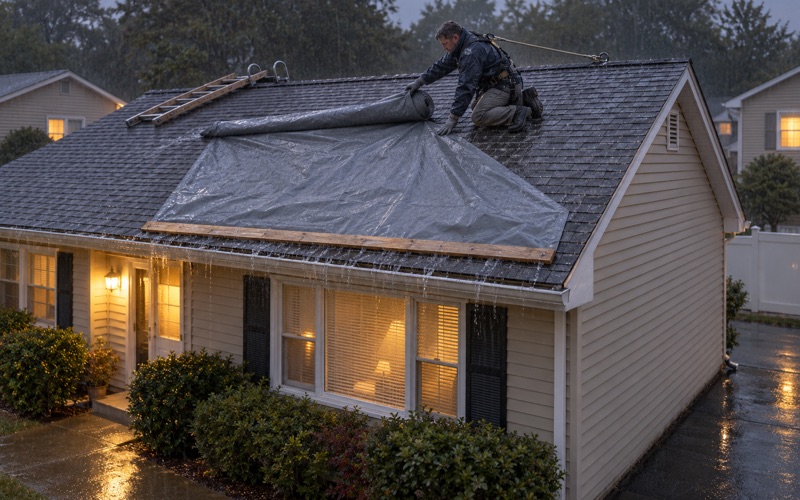
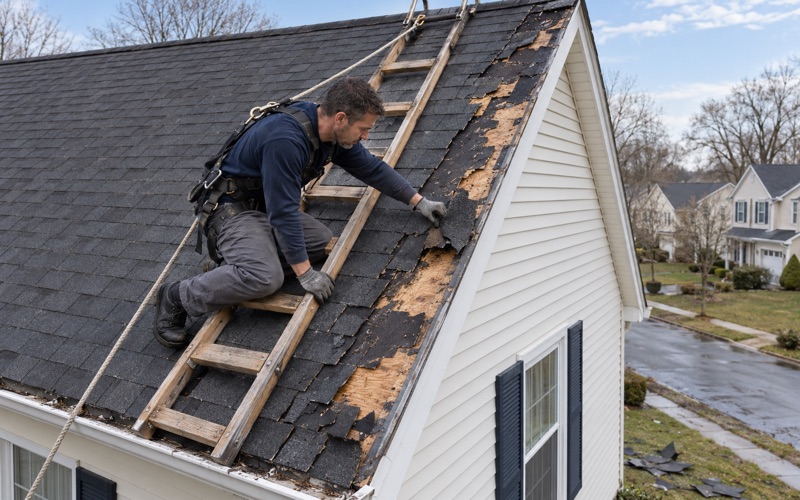
The owner gets photos the same day, along with a short note on whether anything was lost, lifted or loosened. If a few shingles are gone, we can usually secure the area right away so the next storm does not make it worse, and schedule the full repair once the weather allows.
Tracing a leak from the attic
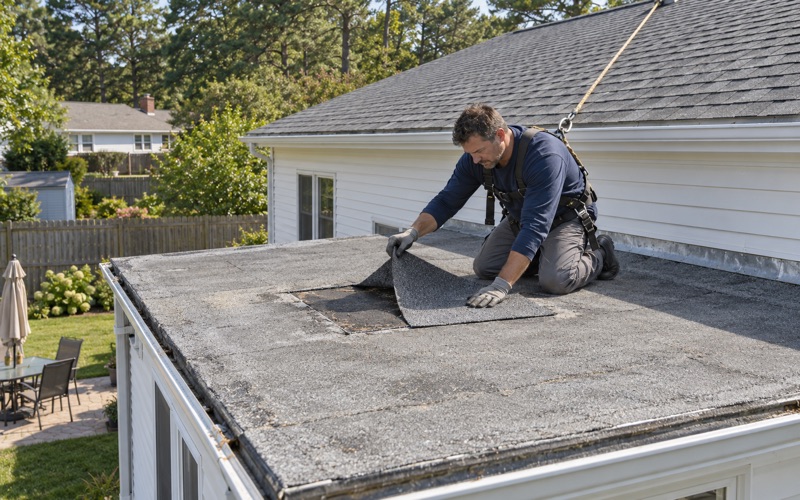
Water rarely shows up where it enters. It can run along a rafter or the top of the deck for several feet before it drips onto insulation. Every leak call we take includes time in the attic as well as on the roof, so we can follow the stain back to the spot where the water actually gets in.
Only after that do we put a price on the repair. Fixing the wrong spot is how an owner pays twice, and with a house that sits empty, a second leak can go unnoticed for weeks before anyone is back to see it.
Photos for your own insurance claim
When a storm does real damage, we photograph it and write it up so you have something solid to bring to your insurer. If the adjuster wants to see the roof, we will meet them on site at your request, which saves an absent owner from driving down to the shore for a one-hour appointment.
Scheduling Roof Work Before the Summer Season
Spring is when most owners want the work done, and it is also when everyone else on the peninsula wants their contractors. Planning repairs and replacements from the fall and winter reports lets us book the work early and finish before the first summer weekend.
A straight answer on repair or replacement
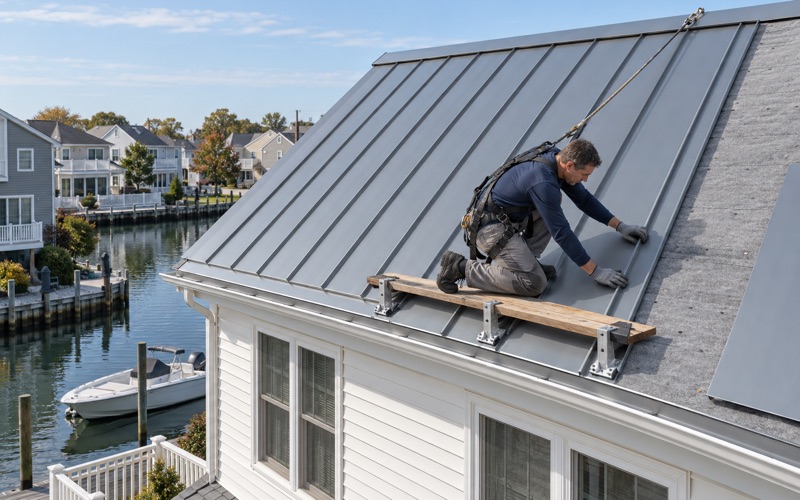
Many roofs here have years left in them and need a flashing repair, a few shingles or a new pipe boot rather than a full tear-off. We tell you which it is before replacement comes up at all. When a roof is truly at the end of its life, we explain what we saw and why a repair would not hold through another winter.
If a replacement does go ahead, decking damage is often hidden until the old roof comes off. We photograph any rotted or soft sheets and show them to you before they are replaced, at a per-sheet price already written into the contract, so there are no surprises on the final bill.
Written scopes you can compare line by line
Our estimates list tear-off, decking, underlayment, flashing, ventilation and gutters as separate items. That lets you set our scope next to another contractor’s and see where they differ, instead of comparing two single totals. It also gives an absent owner a clear picture of what will happen on site before the crew ever arrives.
Contracts follow New Jersey’s home improvement rules, including the notice of your three-business-day right to cancel. Replacing the roof covering on a detached one- or two-family house is treated as ordinary maintenance under N.J.A.C. 5:23-2.7, so no permit is needed for that work, and Toms River Township handles code enforcement for anything that does fall under it.
A clean property when you arrive
At the end of each work day the crew cleans the yard, driveway and gutters and runs a magnet sweep for roofing nails. That matters more than usual on a beach street, where guests walk barefoot and the first people to use the driveway after the job may be your summer guests or your own family. You come back to a finished roof and a clean lot, with the photos to show how it got that way.
- 20+ Years in Roofing
- Attic and Roof Leak Checks
- Line-Item Written Scopes