Brick Roofing has handled roofing in Cedar Glen West and the surrounding part of Ocean County for more than 20 years, and the first thing we ask here is not about shingles. It is about who decides. In a community where the roof over a unit is often a shared building matter, the right first call can save weeks of back and forth.
Our work starts the same way on every leak: we look in the attic as well as on the roof, so the water is traced to the spot where it actually gets in before a price is put on anything. Then you get a plain answer on whether the roof can be repaired, and only after that do we talk about replacing it.
This page explains how roofing decisions tend to work in a housing cooperative, what the buildings here are like, and how we help both co-op shareholders and the owners of the mobile homes that sit inside the same census area. Use it to sort out who to call and what to ask before anyone climbs a ladder.
How the Cedar Glen West Co-op Handles the Roof
Shares, Board Approval and Cash Sales
Cedar Glen West is a census-designated place in northern Manchester Township, and most of it is the private residential park run by Cedar Glen West Inc. Listings describe it as a 55+ co-op. Residents there hold shares in the cooperative rather than a deed to a separate lot and house, and they occupy their unit through that share.
That structure shapes everything about a roof. Listings state that buyers must be approved by the co-op board, and they describe sales as cash only. A community that screens its buyers and runs on shares rather than deeds is also one where building exteriors are handled collectively, so a shareholder who spots a stain on the ceiling usually has a step to take before calling any roofer.
What the Monthly Fee Covers
Listings put the monthly fee at roughly $235 to $495, and they describe it covering a long list: property taxes, water, sewer, lawn care, snow removal, trash and exterior maintenance. One listing on Lark Street spells out that the fee covers the roof, the gutters, the furnace and the water heater.
So for many shareholders the roof is already paid for, in a sense, through the fee. We have not read the cooperative’s own governing documents, and we never guess at what they say. What we do is ask a shareholder to confirm with the co-op office how a roof problem gets reported and who arranges the work, before we put time into a site visit that may not be theirs to order.
Looking for roofing closer to Howell? See Roofing in Howell.
Two- to Four-Unit Buildings From the 1950s and 1960s
Several Units Under One Roof
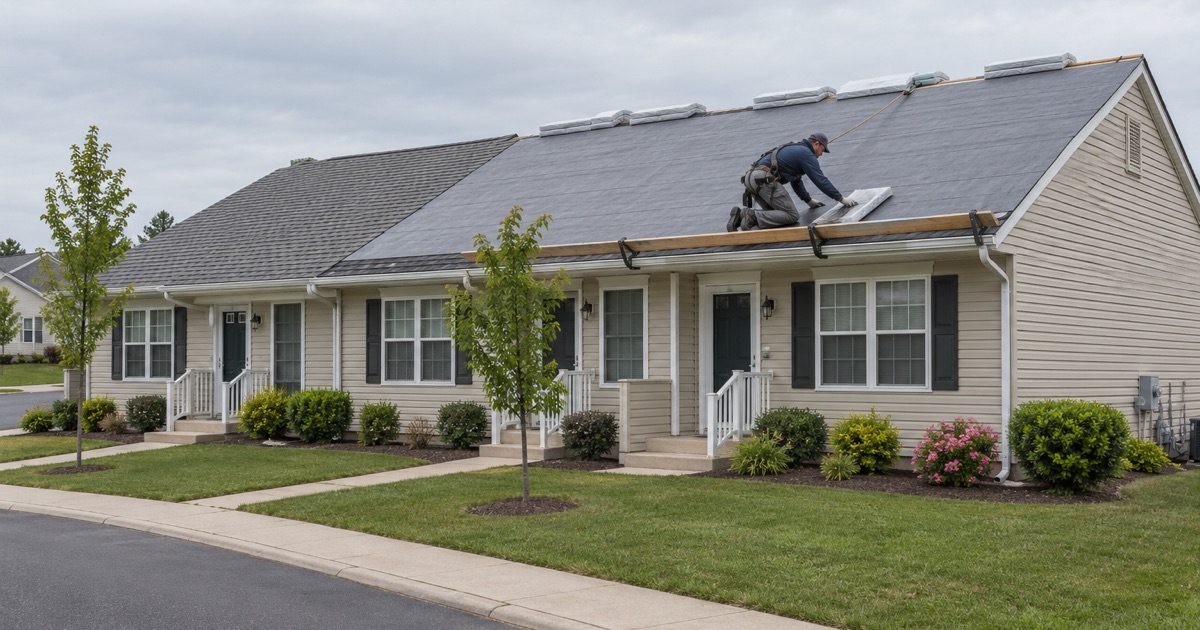
The homes here are not a street of detached houses. Census data for the area counts 273 housing units in two-unit buildings and 353 in buildings of three or four units, alongside 181 single-unit attached homes. Listings number units with letters on a single street address, such as 11 B Lark Street, which tells you several households share one structure.
A leak above one unit is therefore rarely one unit’s problem. Water that enters at a valley or a pipe boot can travel along the decking and show up two doors down, and a patch placed directly above the stain can miss the real entry point entirely. That is why our attic-first inspection matters more on a shared building than on a stand-alone house.
Roofs Reaching the End of Their Run
Of the 1,078 housing units the census counts here, 776 were built between 1950 and 1969, about 72 percent. Listings give build years of 1965 and 1969 for individual units. Buildings of that age have almost certainly been reroofed at least once, and some may carry more than one layer of shingles.
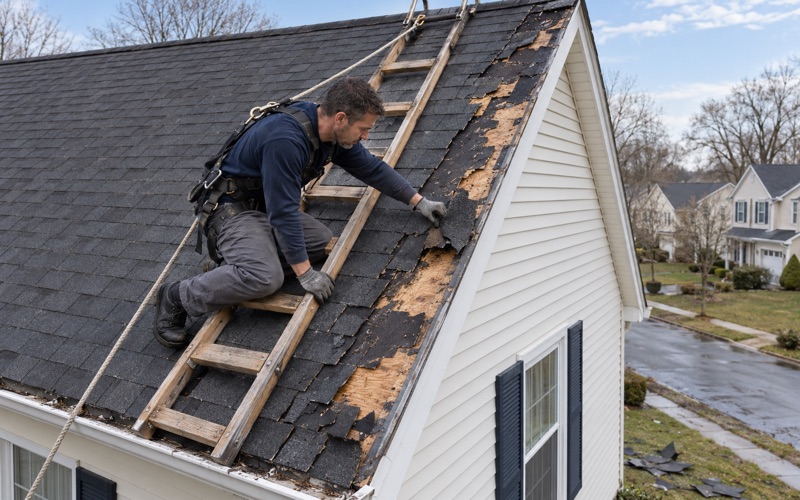
When we inspect one of these buildings, we look at how many layers are on it, the condition of the drip edge at the eaves and rakes, and whether the ridge vent has enough soffit intake to keep the attic dry. Small, low buildings like these often have tight attic spaces, and poor ventilation there shortens shingle life on every unit at once.
Flashing Where Units Meet
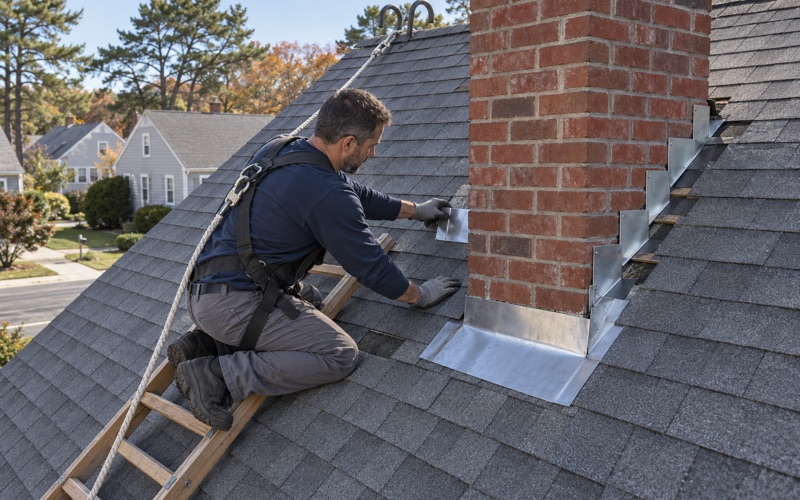
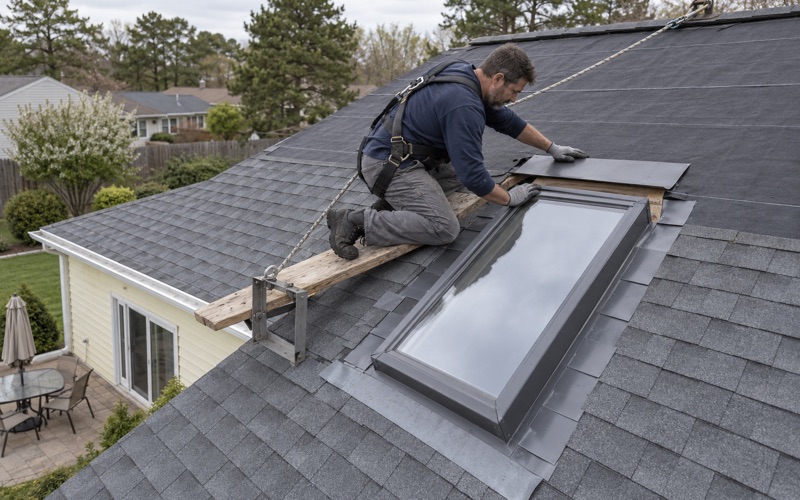
Attached buildings bring their own weak points. Step flashing along walls, pipe boots above each unit’s kitchen and bath, and the joints where one roof plane meets another are where water most often finds a way in. On older buildings the original flashing may have been reused or simply covered over at a past reroof.
Our written scopes list tear-off, decking, underlayment, flashing, ventilation and gutters as separate line items. On a building with several units, that breakdown lets a board see exactly which part of the price belongs to which piece of the work, rather than a single total that cannot be checked.
When the Decision Belongs to the Building
Reporting a Leak the Right Way
If you are a shareholder and water is coming in, protect the ceiling and belongings first, then report it through the co-op’s own channel. We are not the co-op’s contractor and have no arrangement with it. If the co-op asks us to look at a building, or a shareholder’s inquiry is passed along, we start in the attic and photograph what we find.
The photographs matter in a shared building. A board deciding whether to repair one section or replace an entire roof needs to see the evidence, not take a contractor’s word for it. We send the images with a short written note explaining where the water enters and whether a repair will hold.
Comparing Estimates on a Shared Roof
A cooperative spending shareholders’ money will usually want more than one price. Because our estimates break each part of the job into its own line, a board can lay ours beside another bid and compare them item by item. If one estimate includes new underlayment and the other does not, that difference is plain to see.
Decking is the item that most often causes surprises on a building of this age. If boards under the old roof turn out to be soft or rotted, we photograph them and show them before any are replaced, at a per-sheet price already written into the contract. Nobody is handed an unexpected bill after the tear-off.
Storms and Insurance Claims
After a storm, we photograph the damage and write it up for whoever holds the claim, whether that is the cooperative or an individual. When asked, our crew will meet the insurance adjuster on site and walk the roof with them, so the damage is seen in person rather than described secondhand.
Cedar Glen West sits in National Weather Service forecast zone NJZ020, Ocean, covered by the Mount Holly office. We match shingle wind ratings to the wind speed for the exact address rather than a general guess for the township, and our contracts follow New Jersey’s home improvement rules, including the three-day cancellation notice.
The Mobile Homes Inside the Census Area
A Separate Owner and a Separate Roof
The co-op is not the whole of Cedar Glen West. The census area between Ridgeway Boulevard and Ridgeway Road also includes a mobile home park and some scattered homes. Census data counts 180 mobile homes here, 152 of them owner-occupied, which makes them a meaningful share of the housing in the area.
These homes sit outside the cooperative’s building decisions, and their roofs are a different product from the shingled roofs on the co-op buildings. For an owner of one of these homes, the decision about the roof is usually theirs to make, and the call can come straight to us.
What We Check First
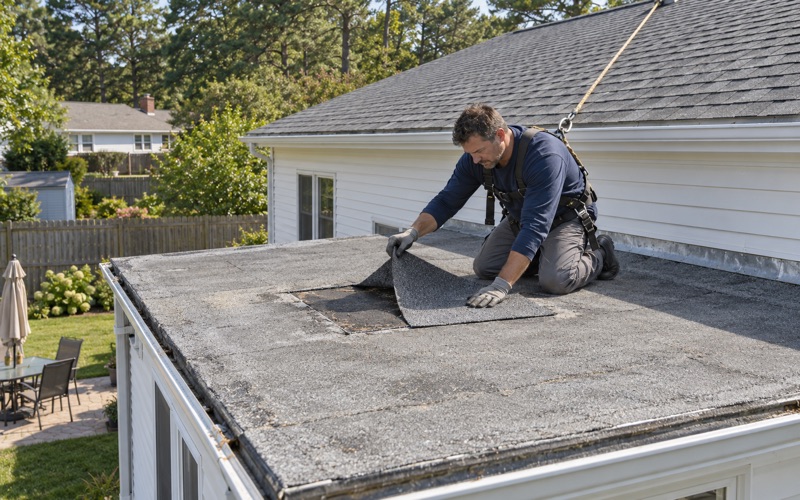
On a mobile home, we start the same way we do anywhere: we look for where the water actually gets in before quoting a fix. Seams, vents and penetrations through the roof are the usual suspects, and an honest look often shows a repair will do the job without a full replacement.
When replacement does make sense, we explain the options that suit the home’s existing roof structure and give a written scope with each part of the work listed separately. At the end of every work day, we clean the yard, driveway and gutters and run a magnet sweep for roofing nails, which matters on lots where neighbors are close by.
Planning Around Older Owners
Cedar Glen West is a 55+ community, and many owners would rather not be on a ladder or chase a crew for updates. We schedule ahead, explain each step before it happens, and send photographs of anything we find so an owner, or a family member helping them, can see the condition of the roof without climbing up to look.
If an owner spends part of the year elsewhere, we can inspect and photograph the roof while they are away and send the report the same day. Whether the roof belongs to a co-op building or a single home, the goal is the same: a clear picture of the problem and a plain answer about how to fix it.
- 20+ Years in Roofing
- Attic and Roof Leak Checks
- Line-Item Written Scopes