Brick Roofing has spent more than 20 years on roofing in Beachwood and the surrounding shore towns, and a large share of the calls we get from this borough start the same way: a house is about to go on the market, and the owner wants to know whether the roof and gutters will hold up when the inspector walks the property. That is a narrower question than whether a roof is old, and it deserves a narrower answer.
Our first job on a pre-sale visit is to tell you plainly what we see. If a handful of shingles are cracked or gone, we say so and price the repair. If a section of gutter is pulling away from the fascia, we show you the photograph and the fix. Replacement only comes up when the roof itself has reached the end of its life, and we explain why before any number is written down.
Sellers here are usually working against a closing date, a listing agent’s schedule and an inspection window that only opens two mornings a week. We plan the work around those dates so the roof is finished, the yard is cleaned and the gutters are clear well before anyone from the borough arrives.
Beachwood’s Resale Certificate of Occupancy
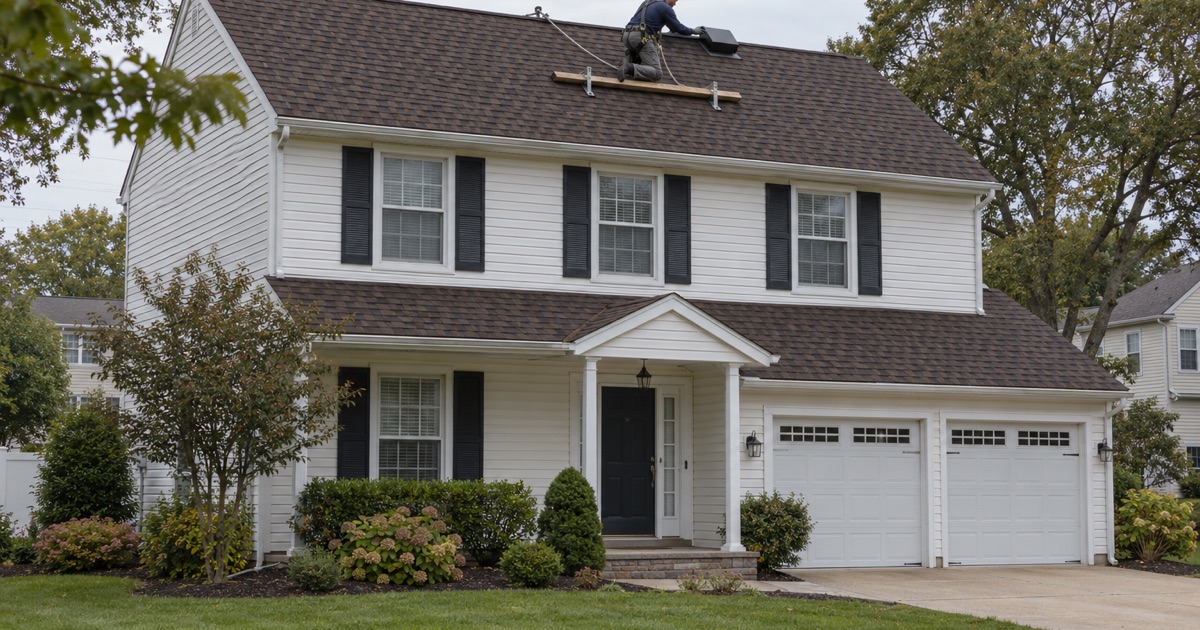
In Beachwood, a house does not change hands without a borough inspection. The certificate that comes out of it is what tells a buyer, a lender and the borough that the visible parts of the home were looked at and nothing unsafe turned up.
Why a sale brings the borough to your house
Borough code Section 17-12.3A says no owner shall sell a dwelling unit unless the owner first obtains a certificate of continued occupancy. The inspection behind it is described as a general inspection of the visible parts of the dwelling, carried out under the International Property Maintenance Code. A sale without the certificate puts both the seller and the buyer in violation, so it is not a step a closing can skip.
The resale certificate of occupancy is a housing inspection, not a building permit. Replacing the roof covering on a detached one- or two-family house is ordinary maintenance under N.J.A.C. 5:23-2.7 and needs no permit. Getting a certificate at sale does not change that rule; it simply means the roof and gutters will be seen by a code officer before the keys move.
Who inspects, when and what it costs
Applications go through the Division of Code Enforcement/Housing at Borough Hall, 1600 Pinewald Road. The current resale packet lists a $100 housing application fee, and taxes and utilities have to be verified as current before an inspection is scheduled. A Code Officer and a Fire Inspector both attend, and inspections are held on Tuesdays and Wednesdays between 9:00 a.m. and 12:00 p.m.
If the first visit turns up problems, the packet sets a reinspection fee of $50. The money is minor next to the calendar. A missed item can push the next visit into the following week, and that delay lands on a closing date that a buyer, a lender and two attorneys have already planned around.
Looking for roofing closer to Asbury Park? See Asbury Park Roofing.
What the Guidelines Say About the Roof and Gutters
The borough publishes Resale C/O Guidelines with the application. The packet states that they are only a guide and are not all inclusive, so we treat them as the floor for what an inspector will notice, not a list that settles every question. Two lines in them belong to our trade.
Deteriorated, missing or broken shingles
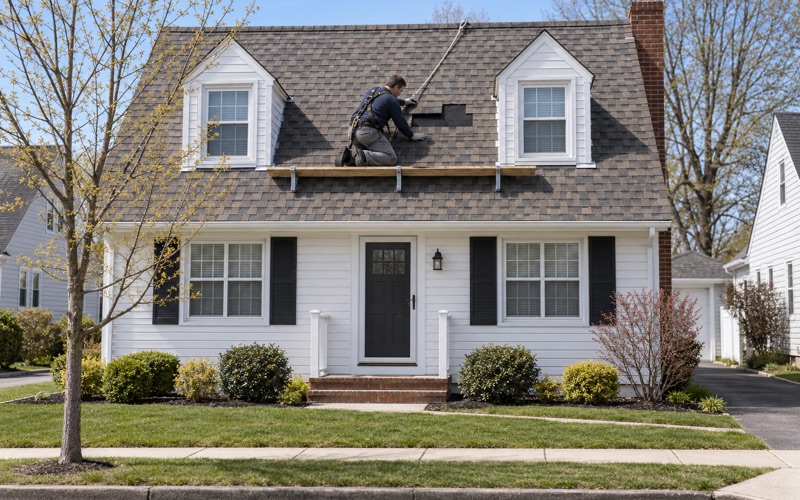
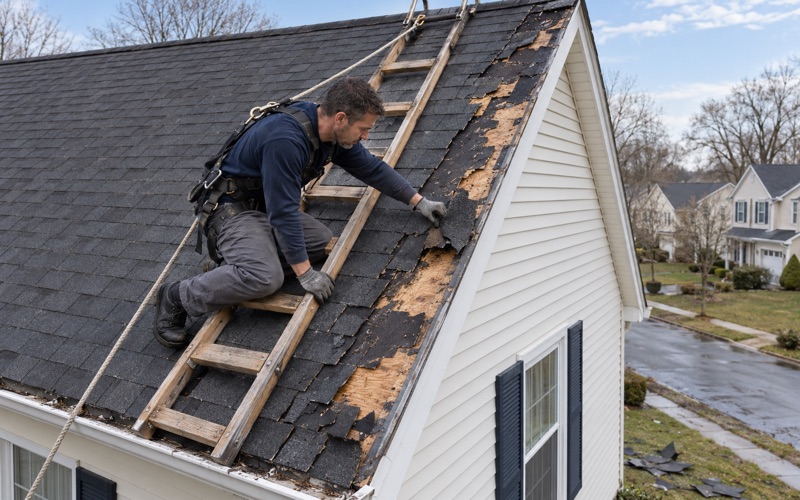
The roof line reads: deteriorated, missing or broken shingles must be replaced. Notice what that sentence asks for. It does not call for a new roof, and it does not say a roof of a certain age fails. It asks that the shingles on the house be whole and in place, which on most homes means a targeted repair rather than a tear-off.
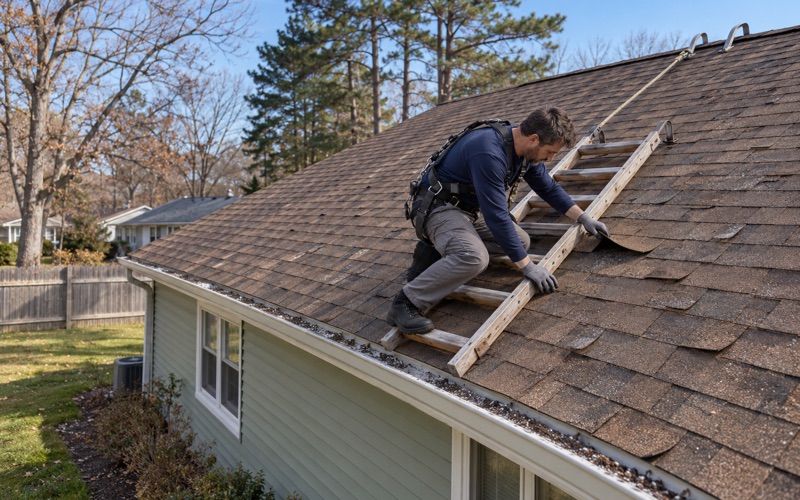
On a pre-sale visit we walk every slope and photograph tabs that have lifted, cracked or blown off, along with shingles that have worn down to the mat. We match the replacements as closely as the existing product allows. Where the surrounding shingles are brittle enough that repairs would break more than they fix, we tell you that directly and explain what a full re-roof would involve.
Gutters that are clean, secure and undamaged
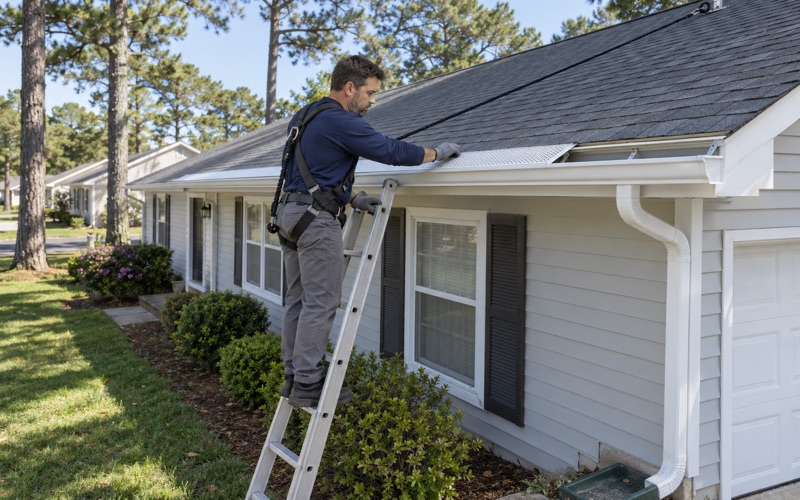
The guidelines say gutters must be free of leaves, properly secured and free from damage. That is three separate conditions. A clean gutter that sags off its hangers does not meet the line, and neither does a tight run with a split seam or a crushed corner where a ladder once leaned against it.
We clear the troughs, check every hanger and seam, and re-pitch any section that holds water. Damaged lengths are replaced, usually with seamless aluminum gutters and leaders, and loose runs are refastened into solid fascia. If the fascia board behind a gutter is soft, we show you before we hang anything on it, because new hangers will not hold in rotted wood.
Downspouts and the gutter over the steps
The same line says downspouts must be in place, and that a gutter must be located over steps. That last requirement catches more houses than people expect. A front stoop or side entry under a bare eave sends roof water straight onto the steps, where it freezes in winter and splashes against the foundation the rest of the year.
We look at every entry for a run above it, and at every downspout for its outlet and its connection to the gutter. A short added section over an entry and a reattached leader are usually a few hours of work. Leaving them for the inspector to find is how a straightforward sale picks up a second inspection morning.
Timing Roof Repairs Before the Inspection
The order of events matters more than the size of the job. Most of the pre-sale work we do in Beachwood is small, and the trouble comes when it is booked too late or done after the inspection rather than before it.
A pre-listing roof check
The best time to call is before the house is listed. A pre-listing check gives you photographs of every slope, the gutters and the downspouts, along with a written note of anything that falls under the guidelines. Every leak question also gets a look in the attic, so if there is staining on the sheathing we trace where the water actually gets in rather than guessing from the ground.
That early look lets you decide what to repair now and what to disclose. It also gives a listing agent something concrete to share when a buyer’s home inspector raises the roof, which often comes up regardless of the borough’s requirements.
Repair or replace, answered first
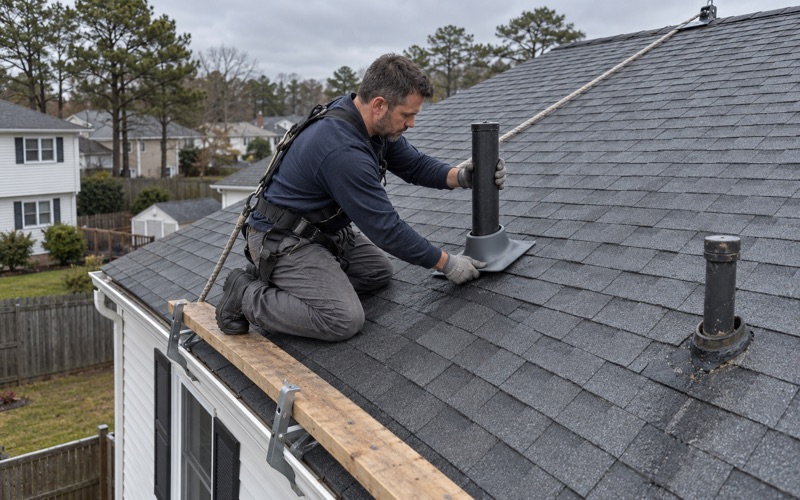
We give a straight answer on whether the roof can be repaired before replacement is ever discussed. For many sellers, a few shingles, a resealed pipe boot and a gutter repair are the whole job. When a roof truly is worn out, we say so and explain what we saw, so the decision is yours and is based on the roof rather than on the sale.
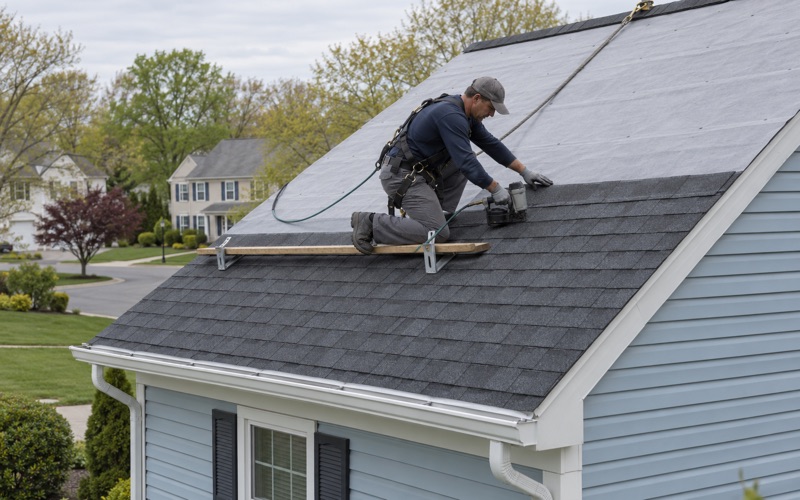
If replacement is the right call, the written scope lists tear-off, decking, underlayment, flashing, ventilation and gutters as separate lines. That makes it easy to compare our estimate against another one item by item, and easy for a buyer’s side to see what was done. Contracts follow New Jersey’s home improvement rules, including the three-day cancellation notice.
Working toward a Tuesday or Wednesday morning
With inspections held only on two mornings a week, we work backward from the date you have been given. Repairs are scheduled to finish several days early so there is room for weather. At the end of each work day the yard, driveway and gutters are cleaned, with a magnet sweep for roofing nails, so the property is ready to show between visits.
If an inspector does flag a roof or gutter item, we come back, fix that specific item and photograph the finished work for you to bring to the reinspection. We do not schedule or attend borough inspections, and no roofer can promise how one turns out; our part is making sure the items in our trade are done properly before the inspector arrives.
Beachwood’s 1970s and 1980s Houses at Resale
The houses that reach the market here share a few traits, and they shape the kind of roof work a sale tends to need. Knowing them ahead of time tells a seller where to look first.
A borough of detached, owner-occupied homes
Census figures show 4,245 of Beachwood’s 4,258 housing units are detached, and about 92.5 percent of occupied homes are lived in by their owners. In practice, nearly every resale here is a single-family house with its own roof, its own gutters and its own owner making the decision. There is rarely an association or a shared roof deck to work around.
The housing came mostly in a long growth period: 1,182 homes date from the 1970s and 875 from the 1980s. Many of those houses are now on their second or third roof covering. That makes it worth confirming how many layers are on a roof before pricing any replacement, because the state’s re-roofing rules call for a tear-off once two or more layers are already in place.
Solar panels and the fire certificate
A sale here also needs a separate certificate from the Bureau of Fire Prevention covering smoke alarms and carbon monoxide alarms. Since February 3, 2025, a house with solar panels, a generator or battery storage also needs a secondary power source label within 18 inches of the main panel and the meter at a change of occupancy. That label is outside our trade, but it is worth knowing about when a roof carries panels.
If a roof under solar panels needs repair or replacement before a sale, we put the panel removal and reinstall into the schedule from the start rather than discovering it on the day. That keeps the array, the roof work and the inspection date from colliding, and it gives the seller one plan instead of three separate appointments.
Paperwork a buyer can read
Every pre-sale job ends with photographs and a written description of what we repaired or replaced, which shingles, which gutter runs, and which downspouts. If decking turned out to be damaged once old shingles came off, the photographs show it, and the per-sheet price was already set in the contract.
That record helps on both sides of the table. Sellers can hand it to their agent, and buyers can read exactly what was done to the roof they are taking on. For a house about to change hands in Beachwood, a clear roof file is often what keeps the conversation focused on closing rather than on the gutters.
- 20+ Years in Roofing
- Attic and Roof Leak Checks
- Line-Item Written Scopes