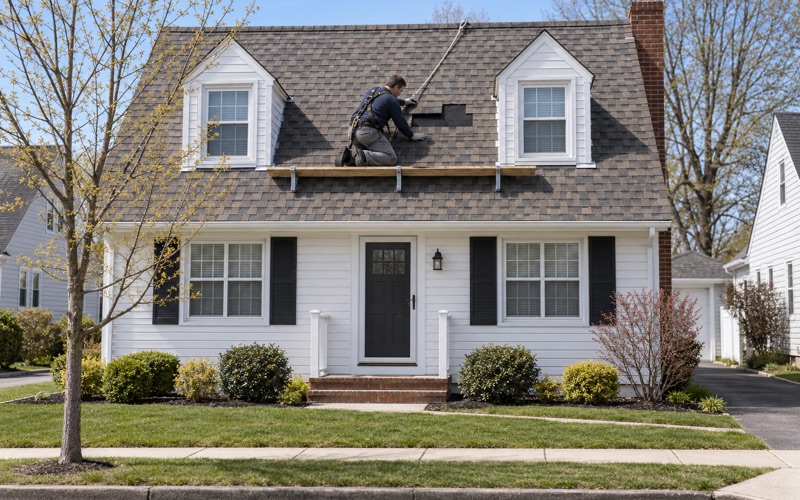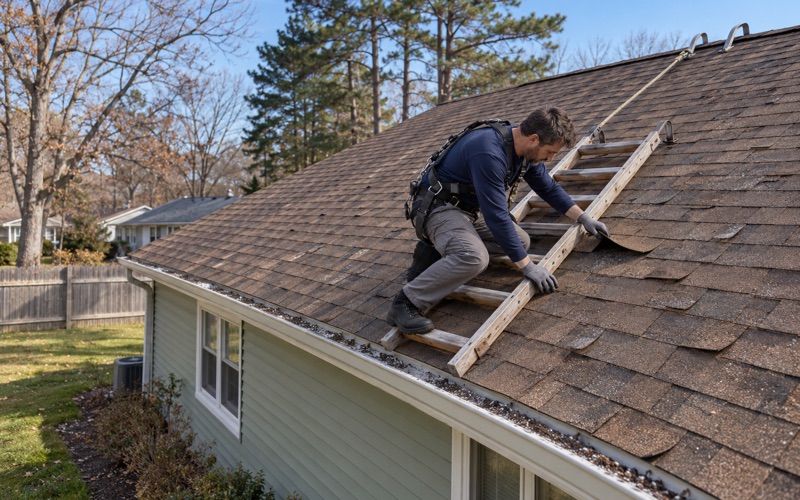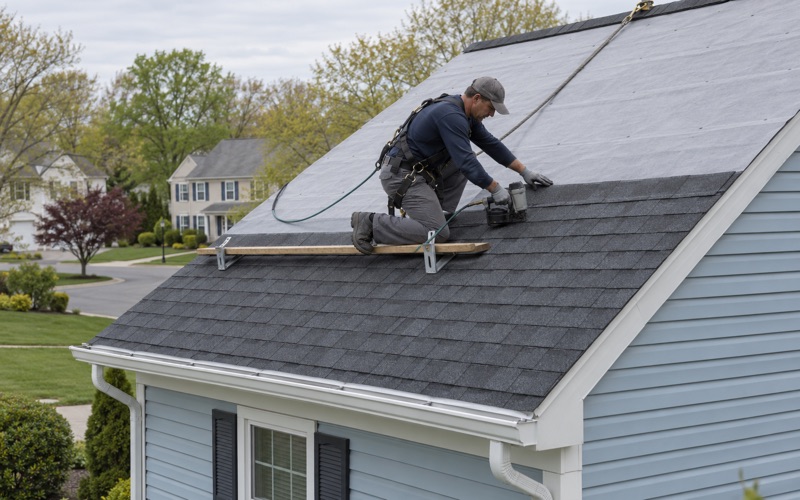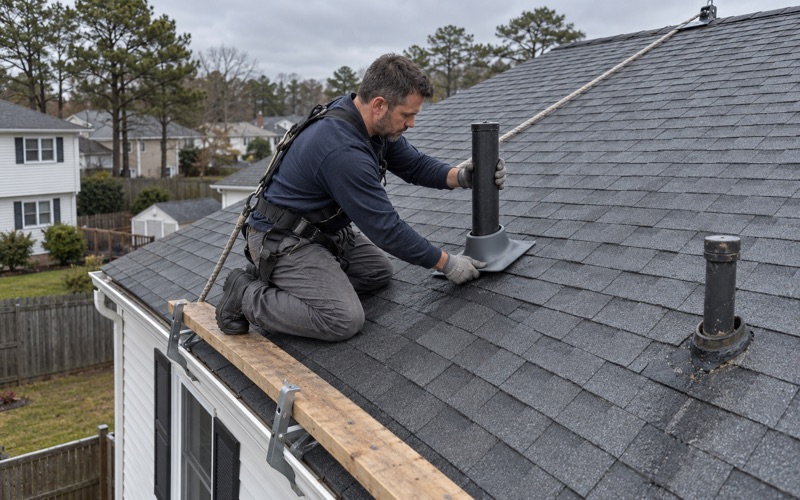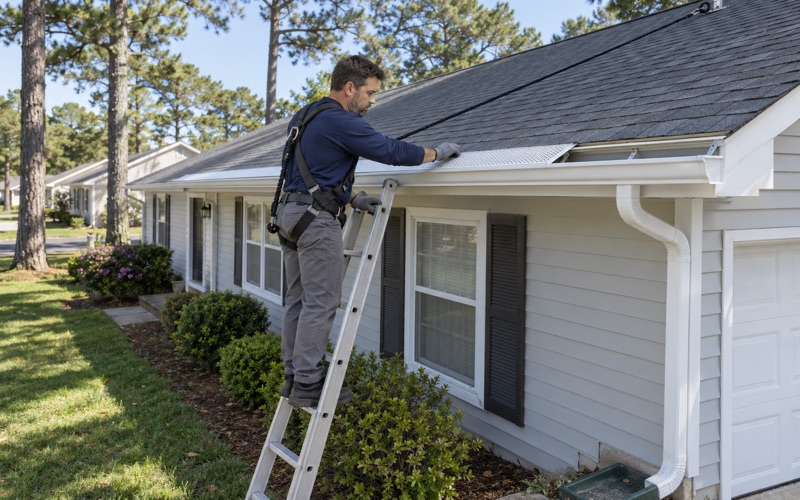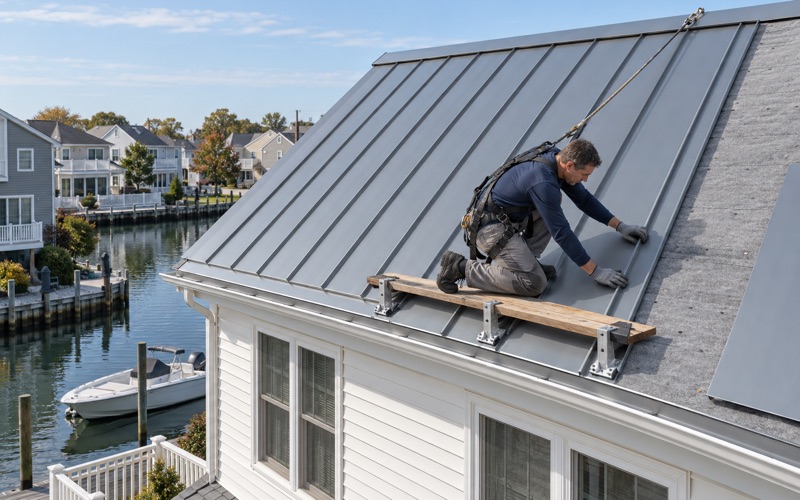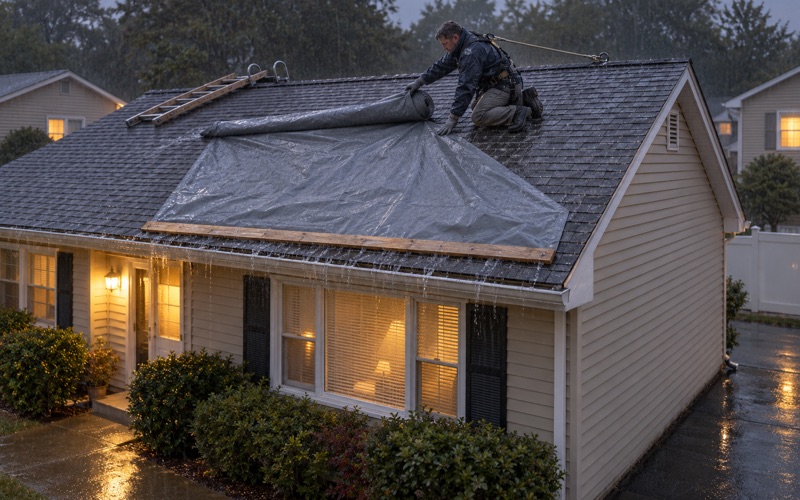
Brick Roofing has handled roofing in Asbury Park and along this stretch of the Jersey Shore for more than 20 years, and on a house this close to the Atlantic the first question we ask about a re-roof is not which shingle to use. It is what the metal underneath that shingle is made of. Nails, drip edge, flashing and vent collars hold a roof’s edges and joints together, and they sit in moist, salty air every single day.
Our estimates name that metal in writing. If we plan stainless steel nails or a particular drip edge, the line says so, which lets you hold one bid against another and see whether the coastal choice was made or quietly skipped. Tear-off, decking, underlayment, flashing, ventilation and gutters each get a separate line as well, so the comparison works item by item.
Not every call ends in a new roof. When water shows up on a ceiling, we go into the attic as well as onto the roof to trace where it actually gets in. Then we tell you plainly whether a repair will hold, before replacement is ever part of the conversation.
What Salt Air Did to the Casino’s Roof Trusses
A 1929 Landmark Closed by Rust
In May 2023 the city closed the Casino on the boardwalk indefinitely. According to the Asbury Park Press, an engineering inspection had revealed that the steel trusses holding up the Casino roof were starting to rust away. The building opened in 1929 as an arcade, so that steel had stood in ocean air for most of a century.
Mayor John Moor gave the reason in one sentence: “The salt air is getting into the steel, and it’s rusting away.” He tied it to the open-air environment the building sits in. The Coaster reported the same week that the trusses were no longer stable due to the corrosive effects of salt air.
Why a House Roof Should Take Note
A house is not a boardwalk pavilion, and nobody has examined the roofs of Asbury Park homes to measure how fast corrosion moves on them. What the Casino record does show is that the air along this oceanfront is capable of attacking structural steel, not just painted trim or a railing.
That same air drifts inland past Ocean Avenue and into the residential blocks behind it. It settles on whatever metal a roof exposes at its eaves, rakes, valleys and penetrations. So when we plan a roof here, we treat the metal parts as a decision made on purpose, rather than a default carried over from an inland job.
Looking for roofing closer to Tinton Falls? See Roofing in Tinton Falls.
The Metal Hidden in a Shingle Roof
Fasteners You Never See
A typical asphalt shingle roof is held down by thousands of nails. Each one passes through the shingle and underlayment into the sheathing, and the course above hides its head. Because they are covered, nails are easy to overlook in a bid, and an estimate that simply says “nails” tells you nothing about how they will stand up at the shore.
FEMA’s Hurricane Recovery Advisory No. 2, written in September 2004 for asphalt shingle roofing in high-wind regions, sets out fastener guidance worth knowing. It calls for roofing nails rather than staples, and for nails that extend through the underside of the sheathing or at least 3/4 inch into board planking. We follow both points on every shore roof we install.
Metal at the Edges and Joints
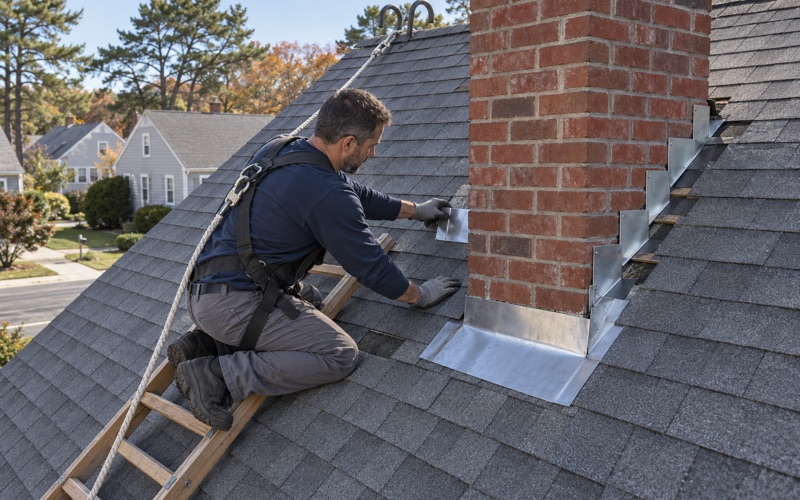
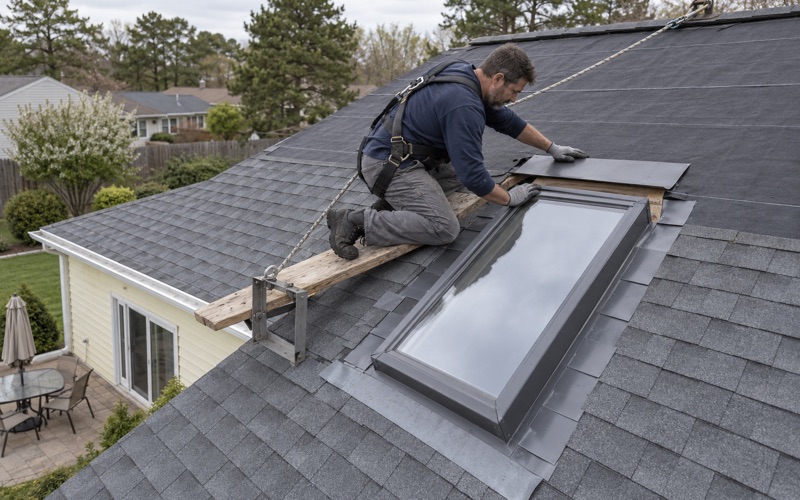
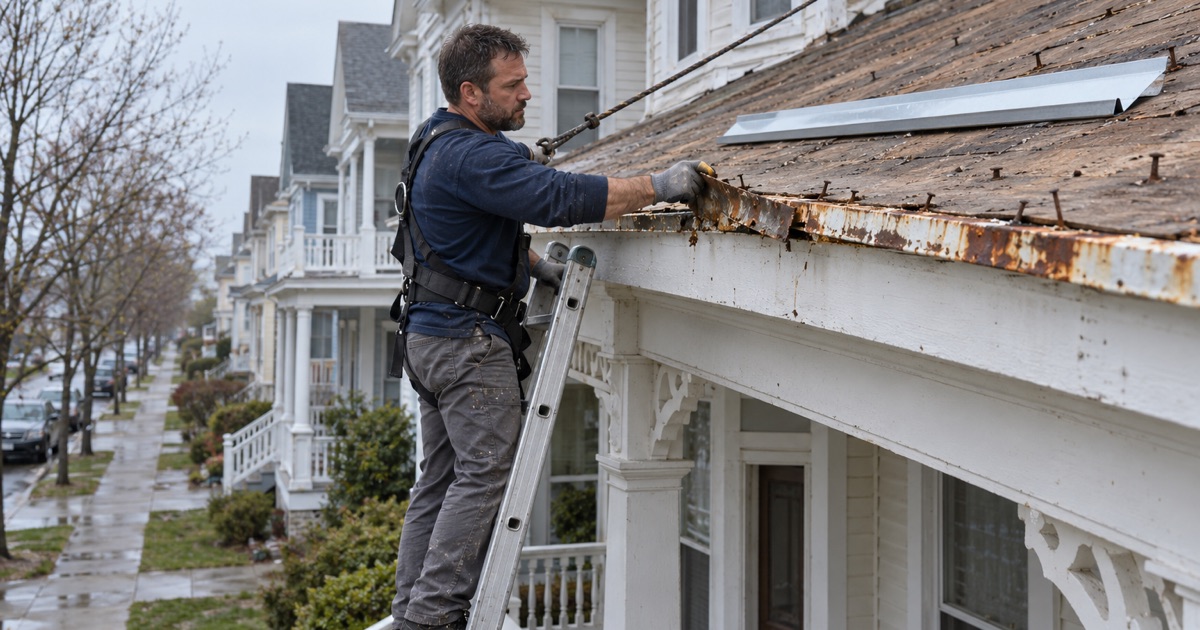
Beyond the nails, a shingle roof carries a run of sheet metal. Drip edge lines the eaves and rakes, step flashing climbs each sidewall in overlapping pieces, counter flashing laps over it at the chimney, and pipe boots and vent collars seal every penetration. Each one is a place where water gets turned, and each one is metal left out in the weather.
These parts are also where many leaks begin. When flashing corrodes or a collar loosens, water rides the edge of the metal under the shingles and surfaces somewhere else entirely. That is why our leak calls include the attic: the stain on the ceiling is rarely right below the piece that failed.
Chimneys, Dormers and Older Rooflines
The city’s 1890s housing was built in a full range of Victorian architecture, and those rooflines carry far more metal than a simple gable. Dormers, turrets, porch roofs tied into walls and multiple chimneys each add runs of step and counter flashing. Every extra joint is another strip of metal that has to survive the same air the Casino trusses did.
On a roof like that, we rebuild the flashing at each chimney and sidewall rather than bending old pieces back into place. Where a chimney is wide enough to trap water behind it, we add a cricket to split the flow. Where the brick has opened up, we repoint and set new counter flashing into a cut reglet so the seal does not depend on caulk alone.
Choosing Nails, Drip Edge and Flashing Near the Ocean
Stainless, Galvanized or Aluminum
The same FEMA advisory puts it directly: “Use stainless steel nails when building within 3,000 feet of saltwater.” The line appears again in FEMA’s 2005 coastal construction fact sheets. It is federal guidance rather than a New Jersey code rule, and we present it to you that way.
We have not mapped which blocks of the city fall inside that 3,000-foot line, so we look at each address on its own. Where a house sits close to the water, we price stainless steel nails as the base option and explain the cost difference. Further back, hot-dipped galvanized fasteners are a common coastal choice, and we lay out both so you decide with the numbers in front of you. On a cedar shake roof near salt water, we specify Type 316 stainless steel nails, since wood shakes are less forgiving of a fastener that stains or weakens.
Drip Edge, Step Flashing and Vent Collars by the Shore
The edge metal deserves the same thought. Aluminum drip edge, galvanized steel, and copper or stainless flashing each behave differently in salty air, and dissimilar metals touching one another can speed corrosion at the contact point. We match the flashing, drip edge and fasteners so they work together rather than against each other.
Pipe boots and vent collars are often the cheapest parts on a roof and among the first to give out. On a shore house we replace them along with the roof rather than reusing the old ones. The estimate names the material of each, so nothing is left to guesswork on installation day.
Wind Off Open Water
Salt is not the only thing coming off the ocean. Asbury Park falls in the National Weather Service’s Eastern Monmouth forecast zone, served by the Mount Holly office, and an open shoreline gives wind little to slow it down. We match shingle wind ratings to the design wind speed for your exact address instead of a town-wide guess.
On exposed lots that usually means a shingle rated to ASTM D7158 Class H or ASTM D3161 Class F, set with high-wind six-nail fastening. More nails per shingle is one more reason the nail metal matters, since every added fastener is another point the salt air can reach.
Checking for Corroded Fasteners at Tear-Off
What the Old Roof Tells Us
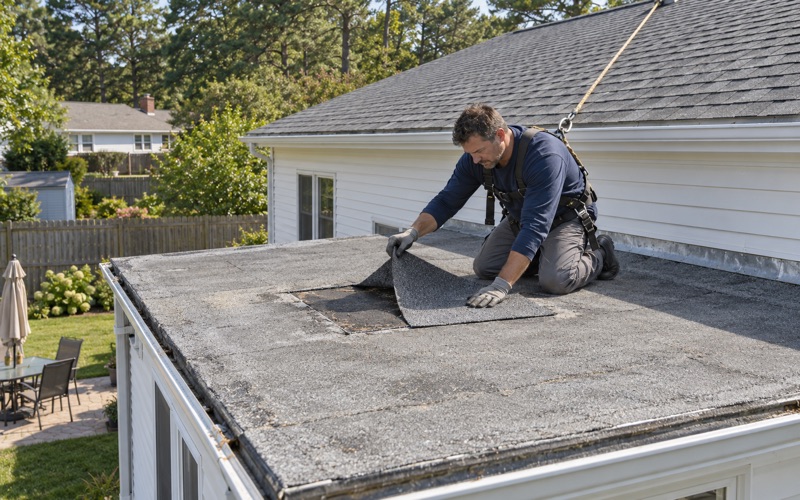
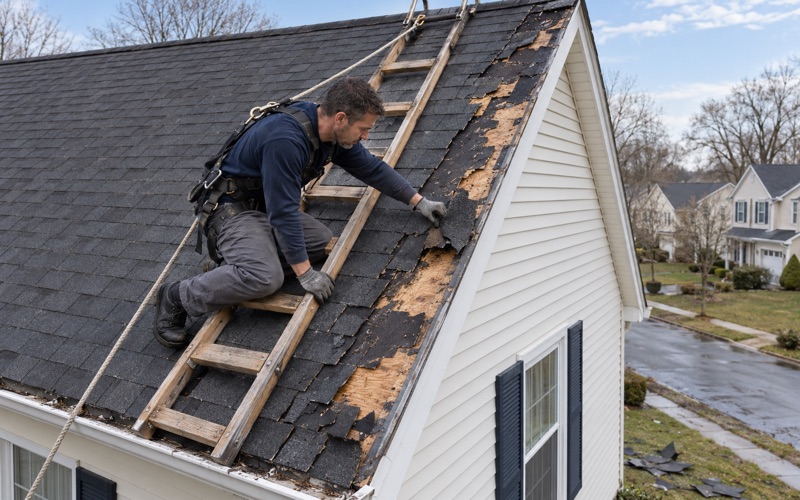
Tear-off is the one moment the hidden metal is fully exposed. As the old shingles come up, we look at the nails that held them, the old drip edge and the flashing against the chimney and walls. Rust staining around nail holes, flashing that crumbles when lifted, or fasteners that snap instead of pulling free all show how the previous materials handled the exposure.
That reading shapes the new roof. If old fasteners on one slope show heavy corrosion, it makes the case for upgrading the metal there, and we show you what we found rather than asking you to take it on faith. If the old metal held up well, we say that too, and the original plan stands without an upsell.
Decking, Photographed and Priced in Advance
Corroded nails can leave the sheathing around them soft or split. Any damaged decking we find once the old roof is off is photographed and shown to you before it is replaced. The contract sets a per-sheet price ahead of time, so a bad sheet never turns into an open-ended charge.
Much of the housing here is old. The Census Bureau’s 2024 five-year estimates date 3,225 of the city’s 8,681 housing units to 1939 or earlier, and roofs from that era often sit on board planking instead of plywood. We check what is underneath before choosing nail length, so the fasteners reach the 3/4 inch into planking that FEMA describes.
Permits, Paperwork and Cleanup
Replacing the roof covering on a detached one- or two-family house is ordinary maintenance under N.J.A.C. 5:23-2.7 and needs no construction permit. Three- and four-unit buildings, attached rows, larger buildings and work that affects structure fall outside that rule and go through the Asbury Park Construction Department at 1 Municipal Plaza. We tell you up front which side of that line your building is on.
In a condominium or association building, the roof may not be yours to replace at all. We check the master deed or bylaws first, so you know whether the decision belongs to you or to the association before anyone prices the job. That saves a homeowner from paying for an estimate on a roof the board is responsible for.
Our contracts follow New Jersey’s home improvement rules, including the three-day cancellation notice. At the end of every work day the crew cleans the yard, driveway and gutters, then runs a magnet across the ground for loose roofing nails.
- 20+ Years in Roofing
- Attic and Roof Leak Checks
- Line-Item Written Scopes