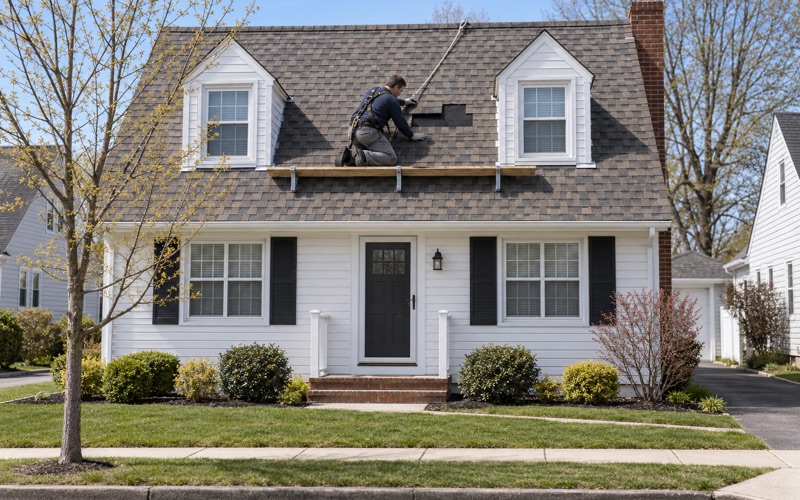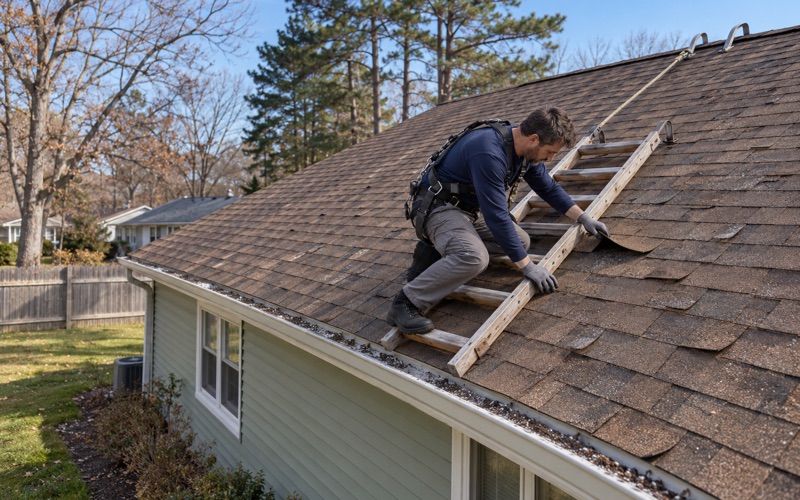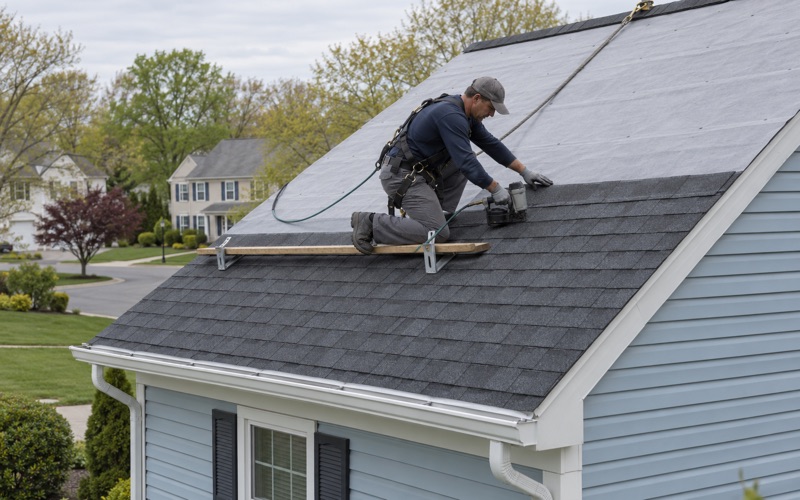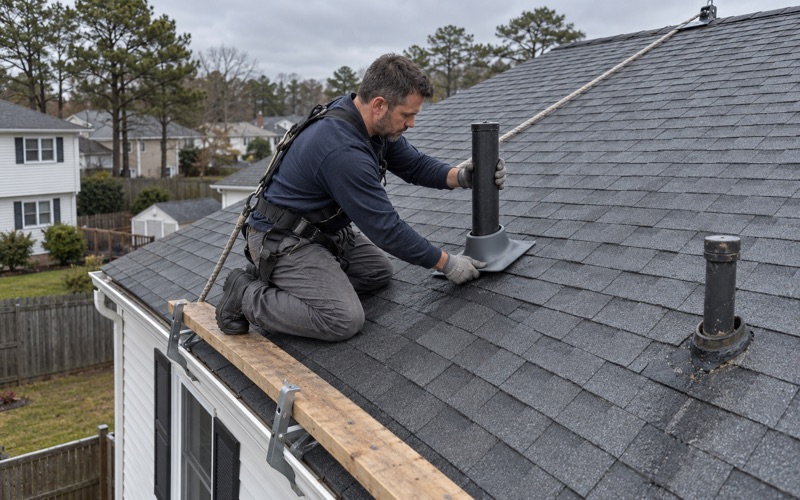
Brick Roofing has handled roofing in Allenwood and the surrounding part of Monmouth County for more than 20 years, and the work here starts the same way every time: with a clear look at what the roof is actually doing before anyone talks price. A stain on a bedroom ceiling, a shingle in the driveway or a gutter spilling over the front walk each point somewhere, and our job is to find where.
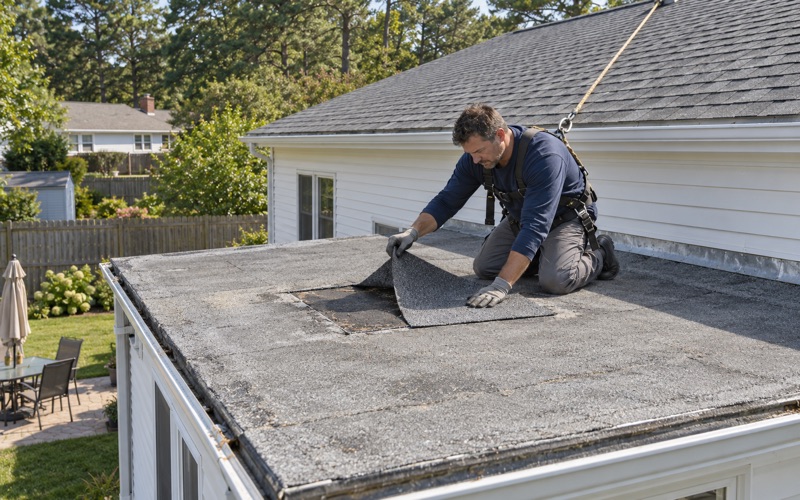
When a homeowner calls about a leak, we go into the attic as well as up on the roof. Water often travels along a rafter or the underside of the decking before it shows on drywall, so the drip and the entry point can sit several feet apart. Tracing it from inside is how we avoid pricing a repair in the wrong spot.
We also tell you plainly whether the roof can be repaired before replacement ever comes up. Plenty of roofs with a bad flashing detail or a few lifted tabs have years left in them, and saying so is part of the job. When a full roof does make sense, the estimate shows every piece of the work on its own line.
Allenwood’s Houses, Lots and Inland Setting
Detached, owner-occupied homes
Allenwood is a small census-designated place in the southern part of Wall Township, with no municipal government of its own. The Census Bureau’s survey counts every home here as a single-family detached house, with no condominiums, apartment buildings or attached homes in the tally, and about 95 percent of occupied homes are lived in by their owners.
That shapes how roof work goes. The person who calls us is almost always the person who decides, pays and lives under the result, with no association or landlord in between. We walk the owner through what we found, show photos from the roof and the attic, and leave the decision with them rather than pushing a timeline.
Half-acre to two-acre lots
The 2010 census counted 318 homes on 1.75 square miles of land, roughly 184 per square mile, which is spread out by Monmouth County standards. Real estate listings describe lots of half an acre to two acres, many backing onto preserved woods, though that comes from listings rather than a survey.
Larger lots change the logistics of a roof job. Driveways run longer, the dumpster may sit well back from the house, and the crew often carries material across lawn. We plan the dumpster spot, ladder positions and the path for tear-off with the owner before the first day, so the yard and plantings come through intact.
Western Monmouth, not the coast
The National Weather Service places Allenwood in its Western Monmouth forecast zone, handled by the Mount Holly office, rather than one of the coastal zones that cover the shore towns. That is a forecast boundary, not a climate record, but it fits the setting: Allenwood sits inland between Route 34 and the Garden State Parkway.
Wind still matters inland, so we match shingle wind ratings to the design wind speed for the exact address under DCA Bulletin 19-1 rather than assuming one number for the whole township. On most Allenwood roofs, though, the steady pressure comes from overhead branches and leaf fall more than from salt spray or storm surge.
Looking for roofing closer to Dover Beaches North? See Dover Beaches North Roofing.
Trees, Limbs and Shaded Roof Slopes
Limbs over the roofline
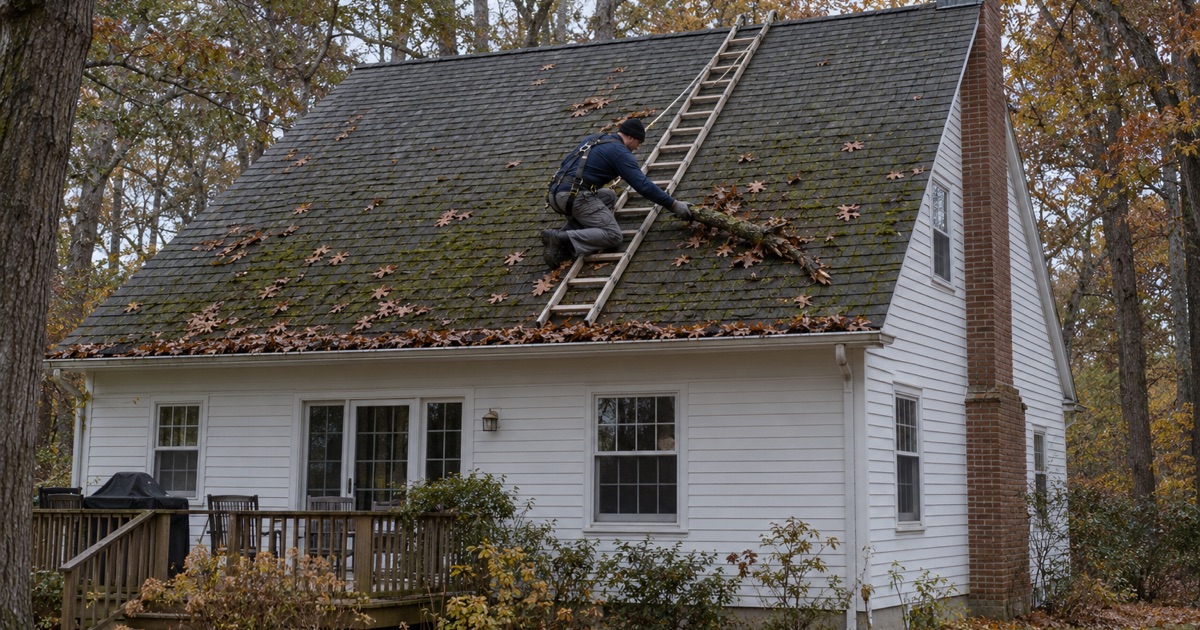
On a wooded lot, the trees that make a property attractive are also the closest neighbors a roof has. Branches that reach over the eaves can rub granules off shingles in a steady wind, drop twigs that pile up behind chimneys and skylights, and leave a constant layer of debris in valleys. None of that is measured for Allenwood specifically, but it follows from the setting.
When we inspect, we note any limb in contact with the roof or hanging close enough to scrape it, and we photograph the wear it has caused. Cutting limbs is work for an arborist, not a roofer, so we point out what needs attention and let the homeowner bring in a tree professional before or after our work.
Slopes that stay damp
A roof slope that sits in shade most of the day dries slowly after rain and dew. On north-facing planes under a canopy, that usually shows up as moss, algae streaks and leaf matter that stays wet against the shingles. Over time, damp debris holds moisture at the shingle edges and around flashing.
We look closely at those shaded slopes during any inspection, checking for soft spots in the decking, curled shingle edges and granule loss. Where a roof is due for replacement, architectural shingles with a good algae-resistant rating and a proper ridge vent with soffit intake help a shaded attic and roof dry out between rains.
Where shaded roofs leak
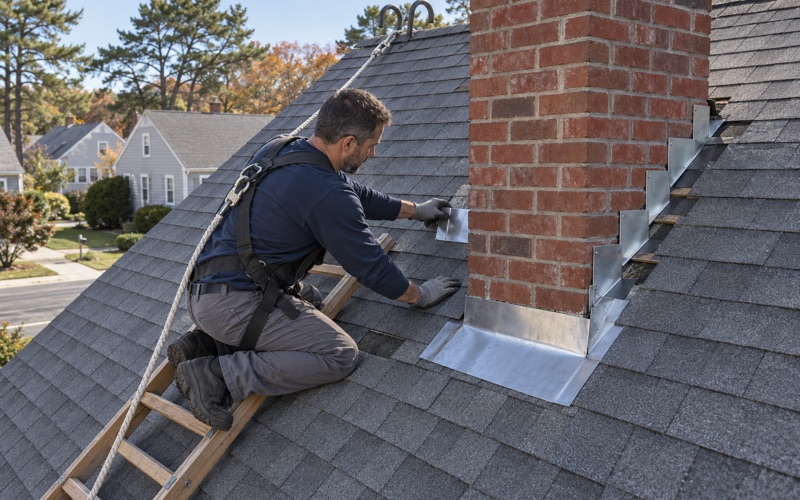
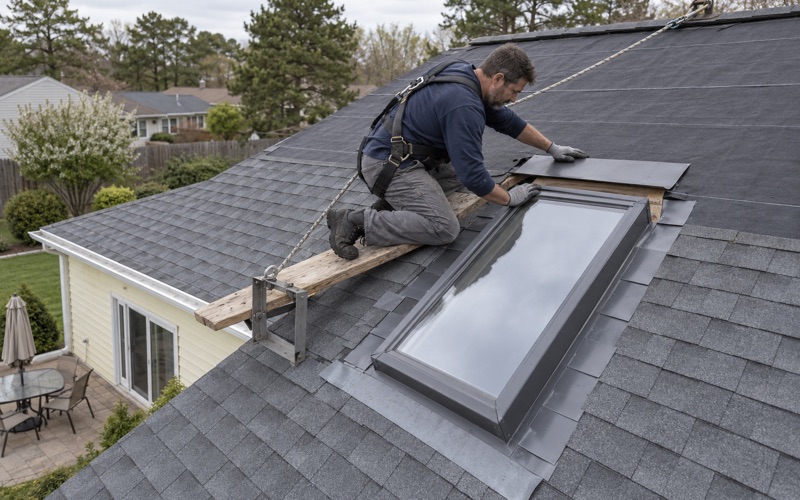
Leaks on wooded properties tend to start where debris collects: valleys, the upslope side of a chimney, around skylights and at pipe boots. A pile of wet leaves behind a chimney can push water past step flashing that would shed it fine on a clean roof.
That is why the attic matters so much here. We follow staining and wet sheathing back to the entry point, then check the flashing, counter flashing or chimney cricket at that spot. If a cricket is missing on a wide chimney, we explain why adding one keeps leaves and water from damming on the high side.
Gutters Under a Leaf Canopy
Overflow at the eaves
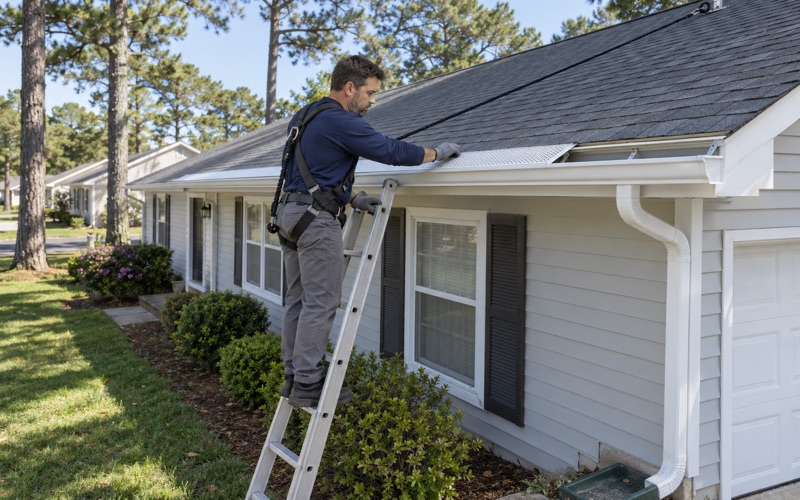
Gutters on a wooded lot fill faster than gutters in an open subdivision. Once leaves and seed pods clog a run or a leader, rainwater backs up and spills over the front edge, or worse, sits against the fascia and the roof edge. Repeated overflow can rot fascia boards and wet the decking along the eave.
When we look at a roof, we check the gutters, the drip edge behind them and the condition of the fascia. Drip edge at the eaves and rakes keeps water from wicking behind the gutter, and on older homes it is often missing entirely. Adding it during a re-roof is a small line item that protects the roof edge for years.
Seamless gutters and guards
If existing gutters are sagging, leaking at seams or undersized for the roof area they drain, we can replace them with seamless aluminum gutters and leaders. Fewer seams mean fewer places for leaves to snag and for water to drip through.
Gutter guards are worth discussing on lots with heavy leaf fall, though they are not a cure-all. Fine debris and pine needles can still sit on top of some guard styles. We talk through what kind of trees overhang the house and recommend a guard type that fits, or tell you honestly when regular cleaning is the better answer.
Daily cleanup on a wooded lot
Tear-off on a property surrounded by lawn, beds and leaf litter means roofing nails can hide easily. We clean the yard, driveway and gutters at the end of every work day, and the crew runs a magnet sweep across the work area so nails do not end up in a tire or a bare foot.
On larger lots that sweep covers more ground, so we plan the drop zones for old shingles and keep tarps along beds and walkways. By the time the job is done, the gutters are clear of tear-off debris and the property looks the way it did before we arrived, aside from the new roof.
Older Farmhouses at the Allenwood Crossroads
Houses from before the war
Allenwood grew up as a crossroads, with a general store there since about 1850 and the Allenwood Hospital, which opened in January 1921 as a tuberculosis sanatorium. The Census survey estimates that roughly a third of homes here were built before 1940, though the margins of error at a place this small are wide.
Older houses bring their own roof questions. We often find plank sheathing instead of plywood, several layers of shingles stacked over the years, and chimneys whose flashing and crown have been patched more than once. Under New Jersey’s rehabilitation subcode, a roof with two or more existing layers is torn off rather than covered again.
Decking found under the old roof
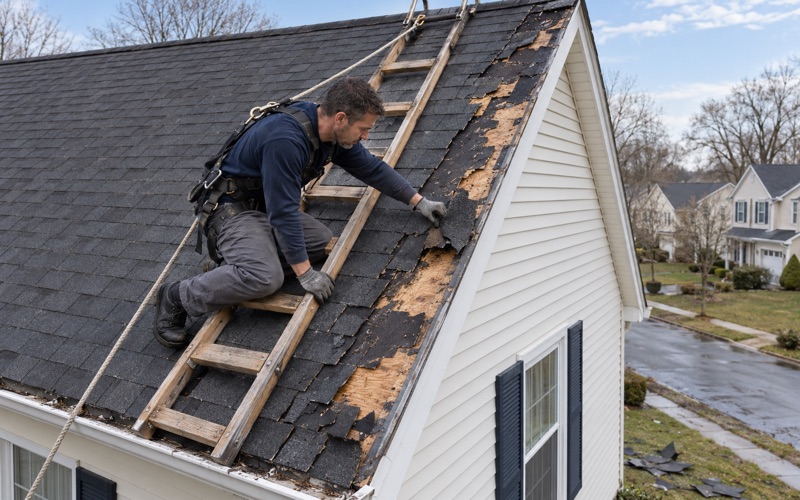
On an older house, nobody knows the full condition of the decking until the shingles come off. When we find rotted or damaged boards, we photograph them and show the owner before replacing anything. The per-sheet price for replacement decking is set in the contract up front, so there is no surprise number on the last day.
That approach matters most on homes that have been re-roofed several times, where earlier crews may have covered soft spots rather than fixing them. Seeing the photos lets you understand exactly what was replaced and why, and keep a record of it for the future.
Estimates you can compare
Our written scopes list tear-off, decking, underlayment, flashing, ventilation and gutters as separate lines. If you collect more than one estimate for your Allenwood house, you can line them up item by item and see whether each contractor is pricing the same roof.
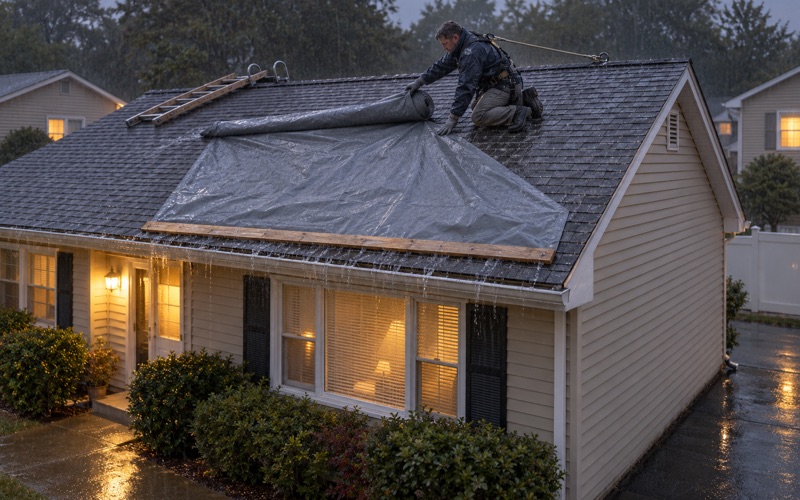
Every contract follows New Jersey’s home improvement rules, including the notice of your three-business-day right to cancel. If storm damage is involved, we photograph and document it for your own insurance claim and can meet the adjuster on site when you ask. Structural work beyond the roof covering goes through Wall Township’s construction office.
- 20+ Years in Roofing
- Attic and Roof Leak Checks
- Line-Item Written Scopes